7 Best Customer Success Platforms for B2B SaaS (2026)
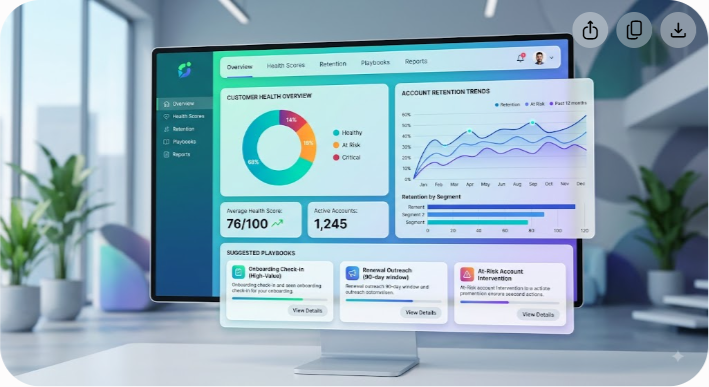
Choosing a Customer Success Platform (CSP) in 2026 isn't about buying a prettier dashboard—it's about preventing silent churn before a customer sends a cancellation email. Yet, almost 70 percent of B2B SaaS free trials and onboarding periods end without a clear buying or expansion decision because teams lack visibility into early product usage and account health.
If you pick the wrong platform, you will spend six months configuring custom health score formulas, burning engineering hours on broken integrations, and paying $30,000+ per year for software your Customer Success Managers (CSMs) actively avoid using.
The right platform, however, unifies your product analytics, billing engine, and CRM into proactive playbooks that save accounts weeks before renewal deadlines.
Below is the direct evaluation of the 7 best customer success platforms for B2B SaaS, categorized by team size, operational complexity, and target market.
Quick Comparison: The Top 7 CS Platforms at a Glance
| Platform | Best For | Standout Feature | Implementation Time | Typical Pricing Tier |
|---|---|---|---|---|
| Gainsight | Enterprise (1,000+ accounts, dedicated CS Ops) | Enterprise-grade health models & multi-product support | 12 - 24 weeks | High (Custom quote, $30k+/yr) |
| ChurnZero | Mid-market B2B SaaS with product usage focus | In-app WalkThroughs & automated trigger plays | 4 - 8 weeks | Mid-to-High (Custom quote) |
| Vitally | Fast-growing B2B SaaS & high-touch CSM teams | Collaborative workspace, Docs, & bi-directional sync | 2 - 4 weeks | Mid-tier (Tiered by ARR/seats) |
| Planhat | Revenue-led CS teams & flexible data modeling | Custom data architecture & commercial forecasting | 8 - 12 weeks | Mid-to-High (Custom quote) |
| Totango | Scaled & segmented CS programs | Modular Composable CS architecture & pre-built journeys | 4 - 8 weeks | Tiered (Free tier to Enterprise) |
| Custify | Lean & small-to-mid CS teams | Rapid setup, clear health drivers, & out-of-the-box UI | 1 - 2 weeks | Mid-tier (Flat/Accessible pricing) |
| ClientSuccess | CSM-first teams focused on relationship building | Simple SuccessScore grid & easy task management | 2 - 4 weeks | Mid-tier (Per-CSM seat model) |
1. Gainsight: The Enterprise Operating System
Best for: Large enterprise SaaS organizations with complex account structures and dedicated CS Operations teams.
Gainsight remains the gold standard for enterprise customer success operations. It is designed for multi-product enterprises that manage matrixed account hierarchies, global CSM teams, and multi-million-dollar renewal portfolios.
Where Gainsight Wins
- Deep Data Modeling: Handles complex, multi-layered account hierarchies (e.g., parent companies, subsidiaries, regional branches, and individual product licenses) better than any competitor.
- Sophisticated Health Scorecard Builder: Allows CS Ops leaders to weight product telemetry, executive sponsor engagement, ticket volume, financial health, and survey sentiment into dynamic, multi-factor scores.
- Ecosystem & Community: Massive admin ecosystem (Gainsight NXT), extensive integrations with Salesforce enterprise setups, and robust executive reporting suites.
Where Gainsight Struggles
- Lengthy Deployment: Implementation routinely takes 3 to 6 months and requires a certified Gainsight administrator.
- High Total Cost of Ownership: Platform fees, mandatory implementation partner charges, and ongoing admin overhead make it impractical for companies under $10M ARR.
2. ChurnZero: The Mid-Market Engine for Product Usage & Automation
Best for: Mid-market B2B SaaS companies that want to trigger automated plays directly from real-time user behavior.
ChurnZero is built for teams that rely heavily on product telemetry. If your CSMs need to know the exact moment an account's feature usage drops by 30% over a 14-day rolling window, ChurnZero excels.
Where ChurnZero Wins

- In-App Engagement: Includes native in-app messaging, banners, and user WalkThroughs, letting CS teams run user onboarding tours without waiting on product engineering resources.
- Automation Plays: Outstanding trigger system for sending internal alerts via Slack/Teams or executing email sequences based on behavioral changes.
- CSM Efficiency: Clean interface that synthesizes daily tasks, renewal timelines, and usage drop-offs into actionable command centers.
Where ChurnZero Struggles
- Requires Clean Usage Data: If your product event tracking (via Segment, Mixpanel, or custom webhooks) is messy or incomplete, setting up ChurnZero becomes frustrating.
- UI Customization Limits: The interface prioritizes execution and playbooks over custom docs or modular workspace design.
3. Vitally: The Modern, Collaborative CS Workspace
Best for: Modern, fast-moving B2B SaaS teams wanting a clean UI, collaborative docs, and fast time-to-value.
Vitally has emerged as the favorite among mid-market SaaS companies that find legacy enterprise systems clunky. It treats customer success like a modern workspace, combining data tables, task boards, and shared customer portals into a Notion-like interface.
Where Vitally Wins
- Docs & Collaborative Projects: Enables teams to create mutual action plans (MAPs) directly inside the tool and share them with clients for seamless onboarding.
- Bi-Directional CRM Sync: Integrates smoothly with Salesforce and HubSpot, ensuring changes made in Vitally sync back instantly to your sales team.
- Intuitive UI: Minimal learning curve for CSMs. The platform looks and feels like a modern SaaS product, encouraging high daily usage.
Where Vitally Struggles
- Enterprise Scale Limits: Highly matrixed corporate hierarchies with complex permission layers can stretch Vitally's data model.
- Advanced In-App Messaging: Lacks native, deep in-app onboarding tools compared to dedicated tools like ChurnZero.
4. Planhat: The Flexible Platform for Revenue & Operations
Best for: RevOps-driven CS organizations that want deep customization, commercial analytics, and flexible data schemas.
Planhat strikes a rare balance: it offers enterprise power comparable to Gainsight while providing modern flexibility. It views customer success primarily through a commercial lens, unifying customer health with renewal forecasting and expansion metrics.
Where Planhat Wins
- Custom Data Architectures: Allows teams to build custom data models and relationships without complex database re-engineering.
- Commercial & Revenue Tracking: Strong built-in tools for tracking Net Revenue Retention (NRR), Gross Revenue Retention (GRR), and expansion pipelines alongside health scores.
- Portals & Presentations: Allows you to expose clean data dashboards directly to your enterprise clients during QBRs (Quarterly Business Reviews).
Where Planhat Struggles
- Configuration Overhead: Because it is so flexible, setup requires clear strategy up front; without strong CS Ops planning, it can become over-engineered.
- Pricing Premium: Positions itself as a premium software suite, pricing out early-stage startups.
5. Totango: The Segmented & Composable Pioneer
Best for: Growth to enterprise SaaS teams that need pre-packaged CS workflows and modular scaling.
Totango is built around modular CS software apps (called SuccessBLOX). Instead of building every workflow from scratch, teams can install pre-built modules for onboarding, renewal management, risk management, and expansion.
Where Totango Wins
- Composable Architecture: Easy to start small (e.g., just targeting onboarding) and expand into full lifecycle management as the team grows.
- Hybrid Motion Support: Great at handling both high-touch account management and scaled/digital-touch motions for low-tier self-serve accounts.
- Entry-Level Accessibility: Offers flexible entry tiers, making it easier to evaluate before committing to enterprise contracts.
Where Totango Struggles
- UI Disconnects: Navigating between different SuccessBLOX can sometimes feel disjointed compared to all-in-one workspaces.
- Custom Reporting: Deep, cross-functional ad-hoc reporting can require a steeper learning curve.
6. Custify: The Lean & Rapid-Deployment Alternative

Best for: Small-to-midsize B2B SaaS teams wanting simple set up, clear health tracking, and practical automation without enterprise bloat.
Custify focuses on doing the core jobs of customer success exceptionally well without forcing teams into months of onboarding. It maps out account lifecycles, aggregates product usage, and triggers tasks for CSMs when accounts fall out of ideal health targets.
Where Custify Wins
- Rapid Time-to-Value: Most teams can go live in 1 to 2 weeks, connecting billing, CRM, and analytics with minimal developer assistance.
- Transparent Health Drivers: Visually shows why an account is scored green, yellow, or red—avoiding black-box metric calculations.
- Cost-Effective: Friendly pricing structures tailored for post-seed and Series A SaaS companies.
Where Custify Struggles
- Limited Enterprise Complexity: Not designed for Fortune 500 corporate structures or hyper-complex multi-currency enterprise contracts.
- Third-Party Ecosystem: Fewer native integrations out-of-the-box compared to legacy market leaders.
7. ClientSuccess: The Relationship-First Management Suite
Best for: High-touch CSM teams focused on relationship health, executive touchpoints, and clear account planning.
ClientSuccess keeps the human relationship at the center of account management. If your revenue comes from high-ACV (Average Contract Value) deals where personal engagement, sponsor alignment, and structured QBRs drive retention, ClientSuccess provides an ideal operational framework.
Where ClientSuccess Wins
- SuccessScore Grid: Simple visual matrix tracking customer relationship health across multiple human and quantitative dimensions.
- Account Planning: Excellent native features for mapping executive sponsors, tracking engagement cadence, and running renewal playbooks.
- High CSM Adoption: The clean, simple design means individual CSMs actually update their accounts regularly.
Where ClientSuccess Struggles
- Lightweight Product Telemetry: Less suited for pure self-serve or product-led growth (PLG) motions that rely heavily on complex event streams.
- Basic Automation Engine: Lacks the deep, multi-branching automated play engines found in ChurnZero or Gainsight.
How to Choose the Right CS Platform for Your SaaS Stage
The most common mistake SaaS leaders make is buying a customer success platform built for a stage they haven't reached yet. Software subscriptions can quietly bleed growing businesses dry if you over-pay for enterprise bloat you cannot staff or configure.
Match your selection to your current stage and operational focus:
Early Stage (Under $3M ARR, 1 to 4 CSMs)
- Primary Focus: Establishing basic account visibility, tracking manual touchpoints, and setting up clean onboarding checklists.
- Recommended Options: Custify or Vitally.
- Why: Fast implementation (1-3 weeks), low admin burden, and clean UI that doesn't require a full-time CS Ops engineer.
Mid-Market ($3M to $20M ARR, Dedicated CS Team)
- Primary Focus: Automated churn prevention, structured playbooks, usage monitoring, and collaborative mutual action plans.
- Recommended Options: Vitally, ChurnZero, or ClientSuccess.
- Why: Powerful automation capabilities, deep product analytics ingestion, and high day-to-day CSM adoption.
Enterprise ($20M+ ARR, Dedicated CS Ops & Multi-Product Portfolio)
- Primary Focus: Complex account hierarchies, global permissions, strict governance, and multi-variable NRR forecasting.
- Recommended Options: Gainsight or Planhat.
- Why: Architected to handle high-complexity data sets, executive board reporting, and matrixed customer accounts.
4 Costly Implementation Pitfalls to Avoid
Deploying a CS platform touches your CRM, billing engine, support desk, and product analytics simultaneously. Avoid these common traps:
- Launching Without a Unified Customer ID: If an account is recorded as Acme Inc in Salesforce, acme_123 in Stripe, and org_789 in PostHog, your CS platform will ingest duplicate or fragmented data. Resolve your primary identity key before signing a contract.
- Building "Black-Box" Health Scores: Avoid creating complex, 15-variable health score formulas on day one. If a CSM doesn't understand why an account turned red, they won't trust the system. Start with 3 tangible signals: active license usage, recent support tickets, and executive contact recency.
- Automating Email Outreach Too Early: High-touch enterprise clients easily spot canned automated emails sent from a CSM's address. Use automation initially to trigger internal Slack/Teams alerts or assign tasks to human CSMs, rather than sending automated external emails.
- Ignoring CRM Ownership: Clarify which tool owns account fields. Your CRM should remain the single source of truth for contract values and close dates, while your CS platform serves as the single source of truth for post-sale health, onboarding milestones, and adoption signals.
Final Verdict
There is no single "best" customer success platform—only the right platform for your operational maturity:
- Choose Gainsight if you are an enterprise with a dedicated CS Ops team and complex account matrices.
- Choose ChurnZero if your retention relies on real-time product usage and automated in-app engagement.
- Choose Vitally if you want a modern, highly collaborative workspace with collaborative docs and fast setup.
- Choose Planhat if you need flexible data modeling and commercial revenue metrics.
- Choose Custify or ClientSuccess if you need a lightweight, high-adoption tool without enterprise complexity.
Evaluating your SaaS tool stack, software spend, or post-sale operations? At Saasbonus, we provide hands-on reviews, direct software breakdowns, and practical playbooks to help B2B SaaS teams pick the right software the first time—avoiding subscription traps and maximizing software ROI.