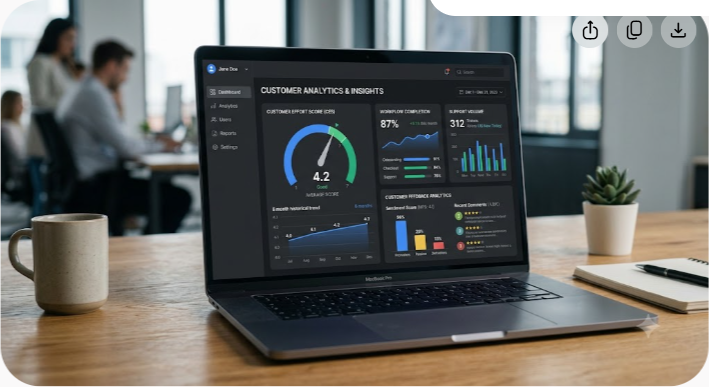
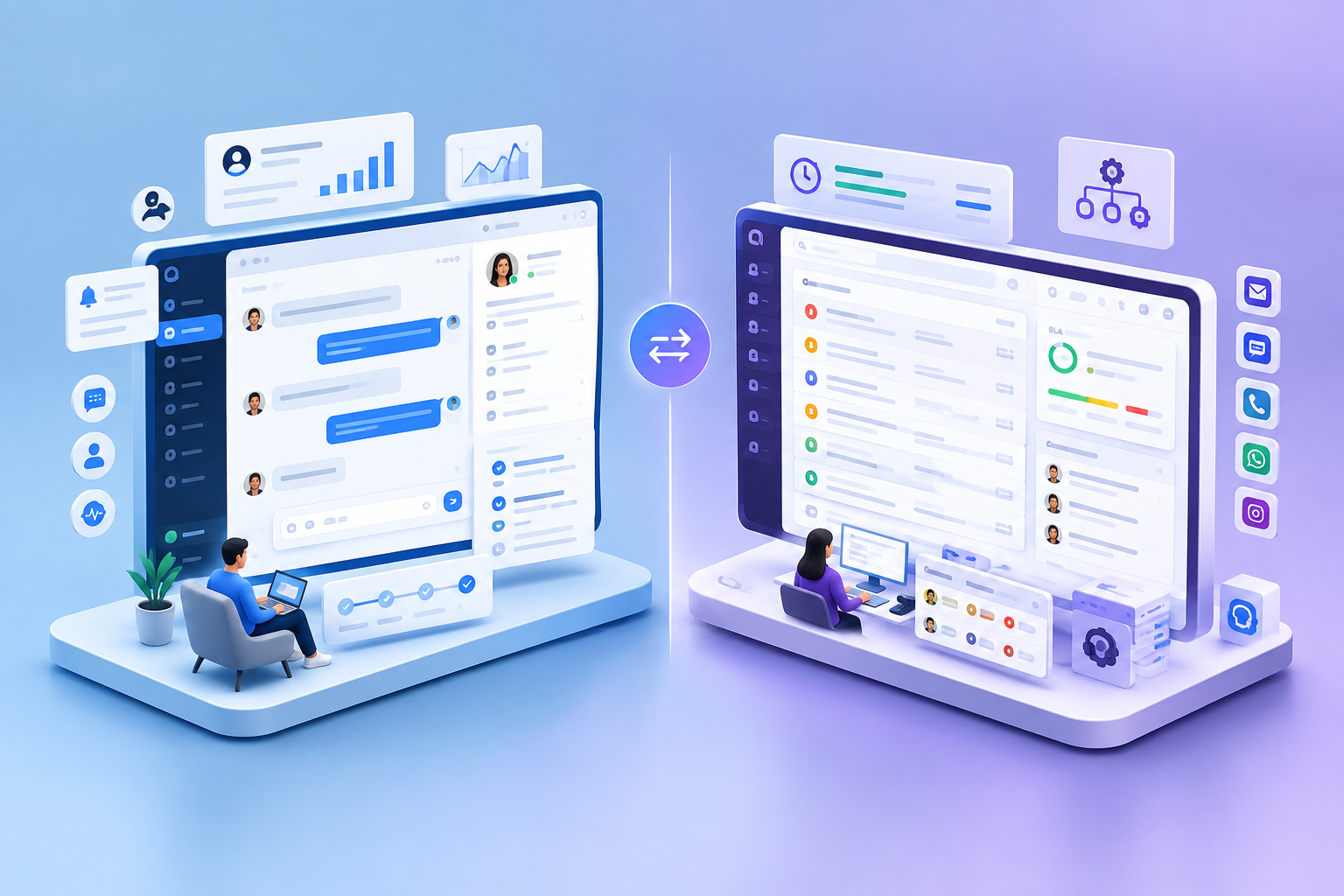
Automate Enterprise SaaS Onboarding in Appcues: Playbook
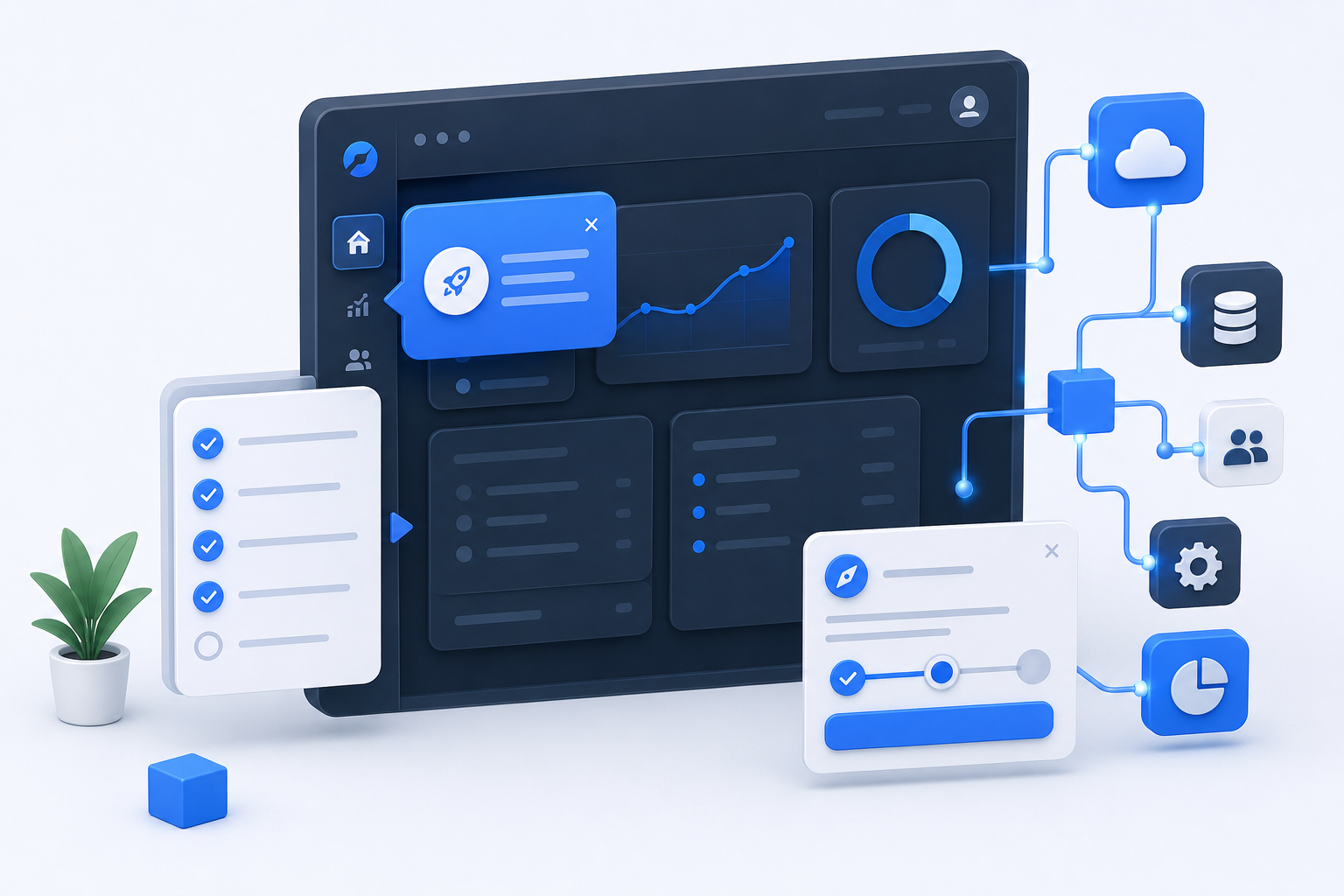
Enterprise SaaS onboarding fails the moment a team treats a $100,000 account like a $20 self-serve user. When a major organization signs a contract, you are rarely onboarding a single person. You are onboarding dozens of stakeholders across distinct departments, each with different security permissions, business goals, and technical skill sets. Hand-holding every user through manual Zoom calls does not scale, yet dropping them into a generic product tour leads directly to low adoption, delayed Time-to-Value (TTV), and contract churn.
To scale enterprise SaaS onboarding without inflating your Customer Success headcount, you must combine high-touch human strategy with automated, context-aware in-app guidance. Appcues provides the infrastructure to build these personalized, automated onboarding paths—provided you architect the underlying data, user segmentation, and trigger logic correctly.
This guide breaks down the framework for automating enterprise SaaS onboarding inside Appcues, from synchronizing CRM account data to mapping multi-role user journeys and measuring product activation.
The Enterprise Onboarding Dilemma: Scale vs. Personalization
Traditional product-led growth onboarding relies on self-guided linear tours. A user signs up, sees a four-step modal sequence, and is left to explore the dashboard. In contrast, traditional enterprise onboarding relies on manual onboarding managers who host weeks of training calls, send PDF implementation guides, and track progress on spreadsheets.
Neither extreme works for scaling mid-market and enterprise SaaS accounts effectively. Purely manual onboarding creates massive operational bottlenecks, extending Time-to-Value to months. Purely generic self-serve onboarding confuses enterprise end-users who only care about the specific feature set tied to their job role.
Automating enterprise SaaS onboarding in Appcues bridges this gap. By passing enterprise-grade account attributes and user roles into Appcues, you can trigger targeted, role-based workflows that feel like a high-touch consultant guided the experience.
Step 1: Laying the Data Foundation for Enterprise Tracking
Before launching a single flow or modal in Appcues, you must configure your data architecture. Enterprise onboarding automation is only as smart as the data feeding it. If Appcues only knows a user's email address and sign-up date, you cannot build sophisticated enterprise workflows.
Essential User and Account Attributes
To drive dynamic onboarding, your engineering or analytics team must pass both user-level and account-level (group) properties to Appcues via the Appcues SDK, Segment, or reverse-ETL tools like Census or Hightouch.
- Account Level Properties (Group Level): Account Tier (e.g., Enterprise, Mid-Market), Plan Type, Contract Renewal Date, Dedicated Customer Success Manager (CSM) Name, SSO Enabled Status, and Custom Feature Flags.
- User Level Properties: Job Role (e.g., Workspace Admin, End-User, Billing Admin, Read-Only Observer), Department, Technical Proficiency, Onboarding Status, and Last Active Date.
- Custom Event Triggers: Key setup milestones such as `API_Key_Created`, `Integration_Connected`, `Team_Member_Invited`, and `First_Report_Exported`.
Syncing CRM Data (HubSpot / Salesforce) into Appcues
When an enterprise contract closes, the deal data originates in your CRM (Salesforce or HubSpot). To automate onboarding immediately upon contract signing, configure a pipeline that writes key CRM fields directly to Appcues user profiles.
When a deal moves to Closed-Won in Salesforce, your integration should instantly tag the associated Account Executive, assign the CSM, set the `account_tier = enterprise`, and identify the primary implementation champion. When that champion logs into your application for the first time, Appcues detects these attributes instantly and triggers an enterprise-specific welcome flow rather than a standard trial onboarding sequence.
Step 2: Mapping Role-Based Onboarding Paths
In an enterprise deployment, an Executive Sponsor, a System Administrator, and an Everyday End-User should never see the same onboarding experience. Automating onboarding requires mapping distinct, trigger-based paths for each persona.
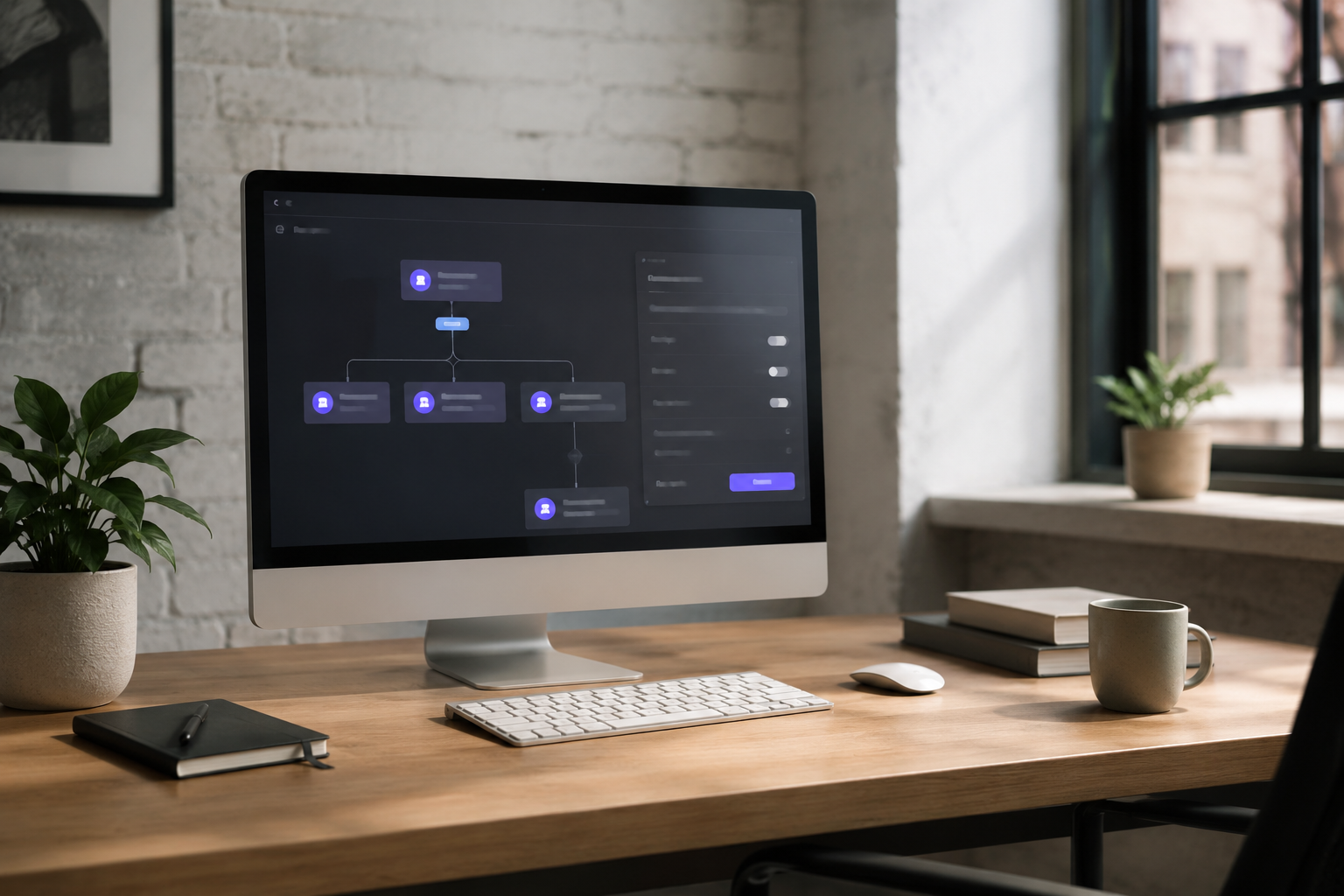
Path 1: The Workspace Administrator (Technical Setup)
The admin cares about security, team provisioning, and integrations. Their onboarding priority is not learning everyday features; it is configuring the platform so their team can work.
- Primary Goal: Connect integrations, configure Single Sign-On (SSO), and invite team members.
- Appcues Automation: A persistent slideout checklist highlighting administrative setup steps. Once the event `SSO_Configured` fires, Appcues automatically checks off the item and updates the checklist dynamically.
Path 2: The Executive Sponsor (ROI and Reporting)
Executive sponsors rarely log in daily. When they do, they want high-level metrics and team performance reporting to justify contract renewal.
- Primary Goal: View high-level analytics dashboards and schedule quarterly review touchpoints.
- Appcues Automation: A targeted tooltip sequence guiding them directly to executive reporting features, followed by a light modal allowing them to book a sync with their dedicated CSM directly via an embedded scheduling link.
Path 3: The End-User (Daily Workflow Execution)
End-users need to accomplish a specific daily task as quickly as possible without getting overwhelmed by enterprise configuration options.
- Primary Goal: Complete their core job-to-be-done (e.g., launch a campaign, create a ticket, run a query).
- Appcues Automation: Short, interactive hotspots and contextual pinpoints that trigger only when the user navigates to specific high-value screens for the first time.
Step 3: Building Interactive Appcues Workflows
Once user attributes and role mappings are set, construct the actual in-app components in Appcues. Enterprise SaaS onboarding relies on an orchestrated combination of Appcues Checklists, Pinpoints, Tooltips, and Flow Logic.
Utilizing Appcues Checklists as Onboarding Control Centers
Appcues Checklists serve as the home base for enterprise onboarding. Unlike intrusive pop-up modals that disrupt user flow, a checklist sits unobtrusively in the corner of the application, displaying real-time progress.
Build dynamic checklists that adapt based on user completion. For example, if an enterprise admin completes 3 out of 5 setup steps, the checklist remembers state across sessions. Furthermore, configure checklist items to trigger specific nested Appcues flows when clicked, guiding the user straight to the button or setting required to complete that task.
Branching Logic and Flow Triggers
Avoid building rigid 10-step tours. Instead, leverage Appcues native targeting and branching rules:
- Trigger on Event vs. Page Load: Trigger onboarding flows only when users perform specific actions or visit relevant pages, rather than displaying pop-ups immediately upon login.
- Frequency Controls: Set flows to display only once, or repeat until a specific user property changes (e.g., `has_completed_onboarding = true`).
- Skip Patterns: Allow experienced users to dismiss flows easily. Forcing enterprise users through unskippable pop-ups creates friction and frustration.
Step 4: Bridging In-App Automation with High-Touch Human Support
Automation in enterprise onboarding should not replace human interaction; it should enhance and scale it. The most successful SaaS onboarding strategies combine automated Appcues flows with CSM workflows managed in tools like Gainsight, Totango, or HubSpot.
Automated CSM Alerts Based on In-App Inactivity
When an enterprise account stalls during onboarding, immediate intervention is necessary. Use Appcues Webhooks or Segment integration to send event data to your Customer Success platforms.
If an enterprise workspace admin creates an account but fails to trigger the `Integration_Connected` event within 7 days, trigger an automated notification to the assigned CSM. The CSM can then reach out with a targeted message offering direct technical support.
In-App Booking and Support Escalation

Embed CSM scheduling tools directly inside Appcues modals for enterprise tiers. If an enterprise user hits a roadblock or reaches a complex setup step, present an inline Appcues banner offering direct access to their dedicated CSM's calendar or a dedicated enterprise support channel.
Comparing Onboarding Models: Self-Serve vs. Automated Enterprise
Understanding the operational differences between onboarding tiers helps align internal Customer Success and Product teams around automated workflows.
| Feature / Metric | Self-Serve Onboarding | Traditional Manual Enterprise | Automated Enterprise (Appcues) |
|---|---|---|---|
| Primary Drive | Product-led (Self-guided) | Human-led (Calls/PDFs) | Hybrid (Data-driven In-App + CSM) |
| Time-to-Value (TTV) | Very Fast (Minutes/Hours) | Slow (Weeks/Months) | Fast (1–3 Days) |
| Cost to Scale | Extremely Low | High (Requires linear headcount) | Low to Moderate |
| Personalization | Low to Moderate | High (Custom per client) | High (Dynamic Role & Attribute Based) |
| CS Team Effort | Reactive / Automated | Heavy Hands-On | Proactive / Exception-Based |
| Completion Tracking | In-app Product Analytics | Manual Spreadsheets / CS Tool | Real-Time Appcues Dashboards |
Common Pitfalls in Enterprise Appcues Automation (and Solutions)
Even experienced SaaS product teams make critical mistakes when automating enterprise onboarding workflows. Avoid these common traps:
1. Over-Tooltipping the Product
Covering a web application in dozens of bright tooltips creates visual clutter and frustrates enterprise users. Solution: Limit initial onboarding flows to 3–4 essential steps. Use subtle Pinpoints or embedded Inline Content rather than modal takeovers wherever possible.
2. Ignoring Custom Enterprise Permissions
In large enterprises, some users lack administrative permissions to invite team members or connect integrations. If your Appcues checklist urges a standard user to connect an integration, they will hit a permission wall and abandon the process. Solution: Ensure your targeting rules check user role permissions before showing administrative tasks.
3. Failing to Account for Staging vs. Production Environments
Enterprise software frequently runs in sandbox or staging environments before going live. If your Appcues flows are bound hard to specific domain URLs, they may fail when transitioning from sandbox to production environments. Solution: Use flexible URL path matching in Appcues targeting settings rather than explicit full domain matching.
Measuring Enterprise Onboarding Success in Appcues
To evaluate the return on investment of your automated onboarding strategy, track core activation and efficiency metrics inside Appcues and your product analytics stack.
- Flow Completion Rates: Track what percentage of users start and complete key role-based onboarding flows. Drop-offs indicate where flows are too long or confusing.
- Product Activation Rate: Define your account-level activation metric (e.g., an enterprise account with at least 5 active users and 1 active integration). Compare activation rates before and after implementing automated Appcues flows.
- Time-to-Value (TTV): Measure the duration between contract start date and the moment the enterprise account reaches its primary value milestone.
- CSM Onboarding Capacity: Monitor how many new enterprise accounts a single CSM can successfully manage simultaneously. Automated in-app guidance typically increases CSM onboarding capacity significantly.
At Saasbonus, we evaluate modern SaaS tools, architecture strategies, and growth frameworks to help engineering and product teams make smarter software investments. Automating your onboarding infrastructure in Appcues reduces friction, protects Net Revenue Retention (NRR), and ensures your high-value enterprise accounts realize software value quickly.
Frequently Asked Questions
How does Appcues handle multi-tenant enterprise accounts?
Appcues manages multi-tenant setups by tracking account-level identifiers alongside individual user IDs. By sending a consistent group or account ID through the SDK, Appcues allows you to target onboarding workflows to entire organizations, track account-wide completion metrics, and customize experiences based on specific tenant attributes or enterprise subscription tiers.
Can Appcues flows be personalized for individual enterprise clients?
Yes. By syncing customer properties from your CRM (such as company name, CSM name, or custom feature flags) into Appcues user profiles, you can dynamically insert these attributes into Appcues text elements, show custom branded banners, and display tailored call-to-action buttons specific to that account.
What is the ideal length for an enterprise onboarding flow in Appcues?
An effective enterprise onboarding flow should consist of no more than 3 to 5 steps per sequence. Rather than overwhelming users with long, comprehensive tours, break onboarding down into contextual micro-flows that trigger only when a user navigates to a relevant section or attempts a specific task for the first time.
How do you trigger Appcues flows based on internal CRM deal stages?
Sync your CRM deal stages (such as Salesforce or HubSpot) to your analytics or reverse-ETL tool, which pushes updated account attributes into Appcues. When a deal state changes to Closed-Won, the user profile updates instantly, triggering specialized enterprise onboarding checklists upon the client's next login.
How do Appcues onboarding flows impact SaaS net revenue retention (NRR)?
Automated Appcues flows improve Net Revenue Retention by accelerating Time-to-Value and driving deep feature adoption early in the customer lifecycle. Enterprise accounts that achieve full user activation and integration setup within the first 30 days show significantly lower churn rates and higher expansion rates during renewal cycles.