Clerk vs Auth0 (2026): Best Auth Platform for SaaS
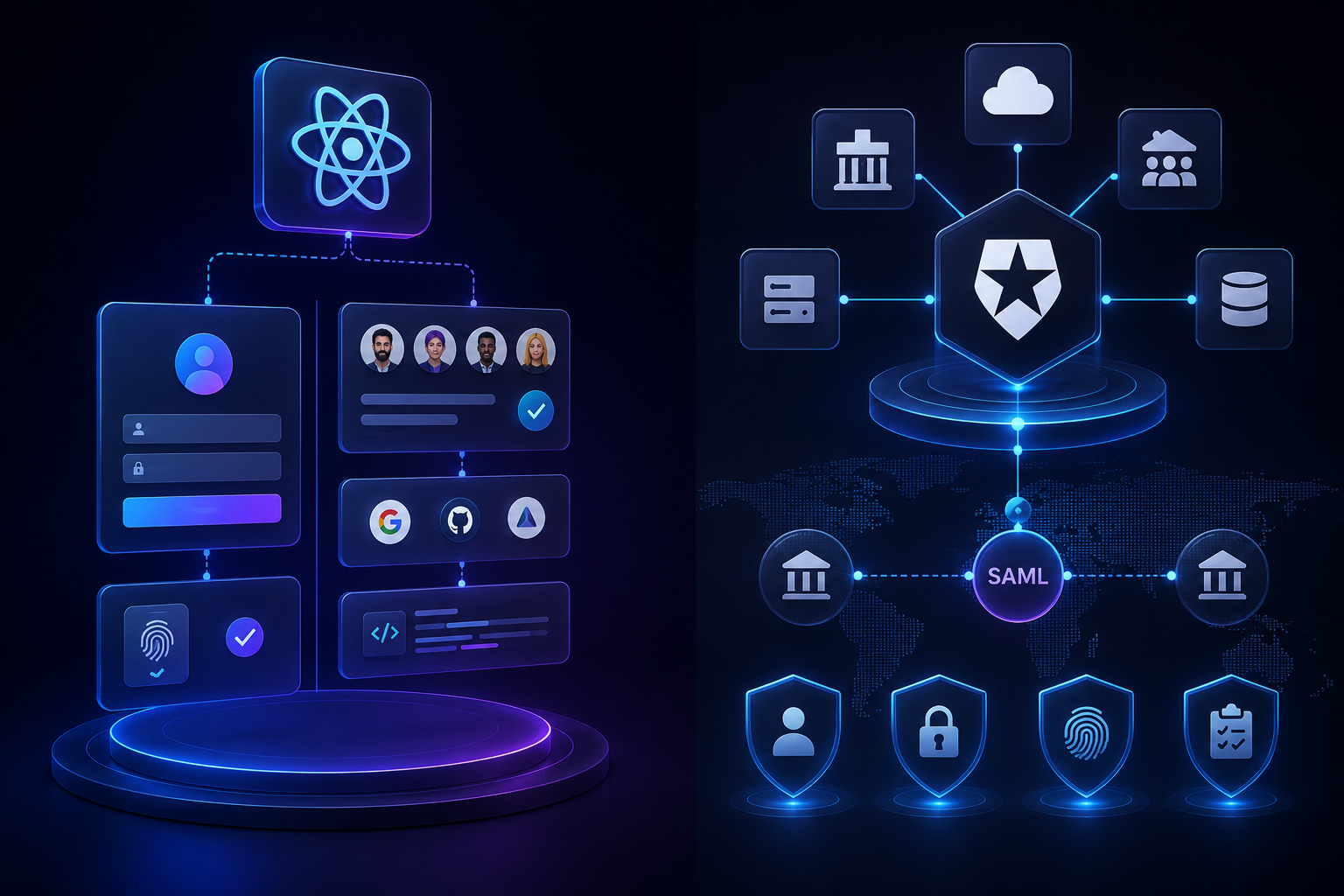
Choosing an authentication engine for a B2B or B2C SaaS platform in 2026 is no longer just about validating passwords and issuing JSON Web Tokens (JWTs). It is a strategic architectural decision that dictates how fast your engineering team can ship core features, how smoothly your enterprise buyers can onboard their employees through SAML SSO, and how quickly your monthly infrastructure bill scales as your active user base grows.
For years, Auth0 was the uncontested default choice for identity management. Backed by Okta, Auth0 built an enterprise-grade identity-as-a-service (IDaaS) empire with deep protocol support and compliance certifications. However, the rise of modern React and Next.js stacks brought Clerk onto the scene, offering a frontend-first, component-driven approach that turns weeks of identity boilerplate into minutes of integration work.
This comparison breaks down Clerk and Auth0 across developer experience, B2B multi-tenancy, enterprise readiness, passkey adoption, security compliance, pricing at scale, and migration complexity to help you make the right choice for your software stack.
The Core Verdict in 60 Seconds
If you are building a modern React, Next.js, or Remix SaaS product and want to launch B2B multi-tenant organization management without building custom team UI boilerplate, Clerk is the superior choice for sub-100,000 monthly active user (MAU) scale. It provides pre-built UI components, native organization primitives, conditional passkeys out of the box, and a generous free tier covering up to 50,000 active users.
If you are an established enterprise SaaS selling to Fortune 500 procurement teams, require complex multi-protocol federation (SAML, OIDC, WS-Fed, LDAP), need FedRAMP High compliance, or rely on fine-grained relationship-based access control (Zanzibar-style authorization via Auth0 FGA), Auth0 remains the industrial-strength standard. While its pricing scales steeply once you add enterprise connections, its compliance footprint and integration depth remain unmatched.
Direct Architectural Comparison
| Feature / Metric | Clerk | Auth0 (Okta) |
|---|---|---|
| Target Stack & Audience | React, Next.js, Remix, Vue, Modern Full-Stack | Polyglot, Legacy Enterprise, Any Framework/Language |
| Free Tier Allowance | Up to 50,000 Monthly Active Users (MAUs) | Up to 25,000 MAUs (B2C Free) / Limited B2B Trial |
| Base Paid Pricing | $25/mo Pro (includes 50,000 MAUs, then $0.02/MAU) | $35-$150/mo Essentials (500 MAUs), $800/mo Pro |
| Enterprise SSO Pricing | 1 connection included on Pro, extra connections ~$75/mo | 1-3 included depending on plan, extra connections ~$100/mo |
| B2B Multi-Tenancy | Native Organizations, Invites, Roles, Domain Auto-Join | Auth0 Organizations API, Custom Rules, or Actions |
| UI Components | Fully customizable drop-in React components (` | Universal Login hosted page, embedded Lock SDK |
| Passkey / WebAuthn Support | Native, Conditional UI enabled by default | Native, requires manual orchestration configuration |
| Directory Sync (SCIM) | Available on Business/Enterprise tiers | Native SCIM support across enterprise plans |
| Fine-Grained Access Control | Basic Role-Based Access Control (RBAC) | Auth0 FGA (Relationship-Based Access Control) |
| Custom Logic Engine | Webhooks, Edge Middleware, Next.js Server Actions | Auth0 Actions (Node.js execution environment) |
| Compliance Footprint | SOC 2 Type II, HIPAA (with BAA on Enterprise) | SOC 2 Type II, HIPAA, ISO 27001, FedRAMP High |
Developer Experience and Framework Integration
The fundamental divide between Clerk and Auth0 lies in where the authentication logic lives relative to your application's user interface.
Clerk: Component-Driven Frontend Integration
Clerk approaches authentication from the perspective of modern component-based architecture. Instead of redirecting users away to an external identity provider page, Clerk provides pre-built React, Next.js, and Remix components that render directly inside your layout.
Integrating Clerk into a Next.js App Router project requires dropping `
- `
` and ` ` wrappers for conditional UI rendering. - `
` for managing user profiles, multi-factor authentication (MFA) devices, and active sessions. - `
` for switching between B2B workspace contexts. - `auth()` and `currentUser()` server utilities for fetching user IDs and claims directly inside React Server Components or API handlers.
Because Clerk handles UI rendering directly inside your DOM tree, you maintain complete visual consistency with your app's CSS variables, Tailwind classes, or styled-components. Customizing primary accent colors, font families, and border radii requires passing a simple theme object to `
Auth0: Protocol-First Universal Login
Auth0 operates as a centralized Identity Provider (IdP). While Auth0 offers embedded SDKs (like Auth0 Lock), the official and security-recommended implementation path uses Universal Login. When a user clicks 'Log In', your application initiates an OAuth 2.0 / OpenID Connect authorization code flow, redirecting the browser to an Auth0-hosted domain.
While Universal Login ensures maximum security by keeping credentials completely isolated from your frontend code, it introduces integration trade-offs for modern web applications:
- Context Switching: Users leave your application domain (unless you configure custom domains) to log in, which can degrade conversion rates on consumer and self-serve B2B apps.
- Styling Overhead: Customizing the Universal Login page requires working with Liquid templates, CSS overrides, or HTML page templates within the Auth0 Dashboard rather than using your native design system components.
- Framework Coupling: Integrating Auth0 with Next.js App Router relies on `@auth0/nextjs-auth0`. While stable, managing session tokens across edge middleware, server-side rendering (SSR), and client-side hydrations often requires explicit handling of encrypted session cookies and token refresh logic.
Winner on Developer Experience: Clerk. For engineering teams using React, Next.js, or Remix, Clerk cuts time-to-first-login from half a day down to 15 minutes.
B2B SaaS Multi-Tenancy and Organization Management
If you are building a B2B SaaS application where customers operate within teams, workspaces, or organizations, authentication is only half the battle. You also need to manage organization membership, invitations, role-based permissions, and workspace switching.
Architectural Approach to Multi-Tenancy
| Tenant Requirement | Clerk Implementation | Auth0 Implementation |
|---|---|---|
| Data Structure | Native `Organization` primitive linked to `User` | Auth0 Organizations API entities |
| User Onboarding | Drop-in invitation UI and domain auto-join | Custom API code and invitation flows |
| Session State | Embeds `org_id` and `org_role` natively in JWT | Managed via custom Auth0 Actions and claims |
| Enterprise Routing | Self-serve or dashboard domain mapping | Custom SAML IdP routing per tenant |
Clerk's Native B2B Primitives
Clerk built its platform around the premise that every modern B2B SaaS needs organization primitives out of the box. Rather than forcing you to build database schemas for workspaces and memberships, Clerk treats `Organization` as a core identity object alongside `User`.
Out of the box, Clerk provides:
- Pre-built Team Management UI: The `
` component handles team member lists, invitation workflows by email, role assignments (Admin, Member, or custom roles), and workspace deletion. - Domain-Based Auto-Join: Allow employees with verified company email addresses to automatically discover and join their company's existing workspace upon signup.
- Active Organization State: Clerk's session token natively embeds `org_id`, `org_slug`, and `org_role`. Switching organizations in the UI immediately updates the session context across your server components and API routes without requiring a full page refresh.
Building this level of organization switching, invitation handling, and permission checking from scratch typically takes 4 to 8 weeks of full-stack engineering effort. Clerk reduces this to a configuration toggle.

Auth0 Organizations
Auth0 addresses multi-tenancy through its Auth0 Organizations feature. Auth0 Organizations allows developers to model business customers as distinct logical entities within a single Auth0 tenant.
Auth0 Organizations excels at enterprise-level multi-tenancy requirements:
- Tenant-Specific Branding: Render distinct logos and color schemes on the Universal Login page depending on which customer organization is attempting to log in.
- Organization-Specific Identity Providers: Route enterprise users directly to their company's dedicated Azure AD/Entra ID or Okta instance, while routing startup users to a standard email/password or Google social login flow.
- Branded Metadata and Connections: Map custom enterprise SAML attributes directly into identity tokens on a per-organization basis.
However, Auth0 does not provide ready-to-use frontend React components for managing organization members or sending invites. You must build your own UI for team member management using the Auth0 Management API or Auth0 My Applications portal.
Winner on B2B Multi-Tenancy: Clerk for self-serve B2B SaaS teams wanting fast time-to-market. Auth0 for enterprise B2B applications requiring custom identity provider routing per enterprise tenant.
Enterprise Readiness: SSO, SAML, SCIM, and Fine-Grained Access Control
As your SaaS product moves upmarket to close enterprise deals, IT procurement teams will ask three non-negotiable questions:
- Do you support Single Sign-On (SSO) via SAML 2.0 or OIDC?
- Do you support automated user provisioning via Directory Sync (SCIM)?
- Can we define granular access controls across our organizational hierarchies?
Enterprise SSO (SAML / OIDC Federation)
Both platforms support SAML 2.0 and OpenID Connect federation with major identity providers like Okta, Microsoft Entra ID (Azure AD), Google Workspace, Ping Identity, and OneLogin.
- Auth0 has spent over a decade perfecting SAML federation. It supports complex multi-attribute mapping, custom assertion signing, unsolicited SAML responses (IdP-initiated SSO), and multi-domain key rotation. If an enterprise customer has a legacy SAML 2.0 implementation, Auth0 will almost certainly connect to it without friction.
- Clerk has expanded its Enterprise SSO features significantly. You can configure SAML connections directly through the Clerk Dashboard or allow enterprise admins to self-serve their SAML setup via managed onboarding flows. For standard Okta and Entra ID integrations, Clerk performs seamlessly.
Directory Sync (SCIM Provisioning)
System for Cross-domain Identity Management (SCIM) allows enterprise IT departments to automatically create, update, and deactivate user accounts in your SaaS whenever an employee is hired or leaves the company.
- Auth0 includes robust SCIM support, syncing user provisioning lifecycle events directly into your Auth0 tenant user store.
- Clerk offers SCIM directory sync on its higher-tier plans, mapping external IdP user directories into Clerk Organizations.
Authorization: RBAC vs. FGA (Fine-Grained Authorization)
As permissions grow complex, basic Role-Based Access Control (RBAC) often breaks down. Consider an enterprise document editor: a user might be an 'Admin' in Organization A, but only have 'Viewer' access to Document X in Folder Y.
- Clerk supports RBAC with custom roles and permissions assigned at the organization level. However, if you need object-level or relationship-based access control (ReBAC), you must handle that logic inside your own application database or pair Clerk with an external authorization engine like Oso or Permit.io.
- Auth0 offers Auth0 FGA (Fine-Grained Authorization), based on Google's Zanzibar paper. Auth0 FGA allows you to model relationship-based permissions directly alongside your authentication layer, resolving complex authorization graphs in milliseconds.
Winner on Enterprise Readiness: Auth0. Its compliance footprint, advanced SAML edge-case handling, and fine-grained authorization capabilities give it a clear edge for enterprise procurement compliance.
Authentication Methods, Passkeys, and UX Polish
Modern user authentication has evolved beyond simple email/password pairs. Security standards now emphasize frictionless, phishing-resistant authentication methods.
| Authentication Feature | Clerk Implementation | Auth0 Implementation |
|---|---|---|
| Passwordless | Email Magic Links, One-Time Passcodes (OTP) | Email Magic Links, OTP |
| Social Logins | 20+ Out-of-the-box OAuth Providers | 30+ OAuth Providers |
| Passkeys (WebAuthn) | Native Conditional UI Enabled by Default | Native Support via Configuration |
| Multi-Factor Auth (MFA) | TOTP Apps, SMS, Backup Security Keys | TOTP, Push Notifications, SMS, Hardware Keys |
Passkeys and WebAuthn Adoption
Passkeys leverage device biometrics (Touch ID, Face ID, Windows Hello) to eliminate passwords entirely. However, user adoption depends heavily on how seamlessly passkeys are presented during the login flow.
- Clerk enables WebAuthn and Conditional UI (passkey autofill) by default. When a user clicks an email input field, their browser automatically prompts them to authenticate with a saved passkey. Cross-vendor analysis shows that Clerk applications often achieve higher passkey conversion rates out of the box due to these thoughtful default UX patterns.
- Auth0 fully supports WebAuthn and passkeys, but enabling conditional UI and web-autofill often requires explicit configuration within Universal Login scripts or custom orchestration flows.
Social Logins and Passwordless
- Social Auth: Both platforms support standard social connections (Google, GitHub, Microsoft, Apple, Discord). Auth0 supports a slightly wider array of niche international social providers.
- Passwordless: Both platforms support email magic links and one-time passcodes (OTP). Clerk provides zero-friction email code verification components that auto-advance as the user types.
MFA Experience
Multi-Factor Authentication is critical for security compliance:
- Clerk provides built-in MFA flows including TOTP authenticator apps, SMS codes, and downloadable backup codes. Users can manage their MFA hardware keys directly inside the pre-built `
` component without custom backend API endpoints. - Auth0 supports TOTP, SMS, Duo, and Auth0 Guardian push notifications. Auth0 allows security administrators to write adaptive MFA rules using Auth0 Actions (e.g., triggering MFA only when a user logs in from a new IP address or country).
Winner on UX Polish and Passkeys: Clerk. Its out-of-the-box conditional passkey implementation and drop-in profile management components yield higher conversion and lower user drop-off.
Pricing Breakdown and Cost Trajectory at Scale
Understanding the financial math of identity infrastructure is vital. A platform that feels cheap during product development can quickly turn into a significant line item as active user counts multiply.
Free Tier Comparison
- Clerk: Offers a generous Hobby Tier supporting up to 50,000 MAUs (Monthly Active Users) per application. It includes unlimited social connections, passwordless auth, MFA, and B2B Organizations without imposing short trial expiration dates.
- Auth0: Provides a Free Tier supporting up to 25,000 MAUs for basic B2C authentication. However, critical features like custom domains, role-based access control, or B2B Organization features require upgrading to paid plans.
Paid Tier Pricing & Overages
Once you cross the free thresholds, the pricing models diverge dramatically:
- Clerk Pro Plan: Starts at $25/month, which includes 50,000 MAUs. Additional active users cost $0.02 per MAU.
- Auth0 Essentials / Professional: B2B plans start between $35 and $150/month for a small baseline (e.g., 500 MAUs). B2B Essentials costs scale significantly, often reaching $1,500 to $2,100/month as you scale toward 10,000 B2B active users.
The Enterprise SSO Tax
When evaluating B2B authentication pricing, you must factor in the cost per SAML/OIDC enterprise connection:
- Clerk: Includes 1 Enterprise SSO connection on the Pro plan ($25/mo). Additional connections cost roughly $75/month each.
- Auth0: B2B Essentials includes up to 3 enterprise connections. Additional enterprise connections cost $100/month per connection, capped at 30 connections before requiring an Enterprise custom agreement.
Estimated Total Cost by Scale (B2B SaaS Context)

| Monthly Active Users (MAUs) | Enterprise SSO Connections | Estimated Clerk Monthly Bill | Estimated Auth0 Monthly Bill |
|---|---|---|---|
| 5,000 MAU | 0 Connections | $0 (Free Hobby Tier) | $150 - $300 (Essentials) |
| 25,000 MAU | 2 Connections | $100 ($25 base + 1 extra SSO connection) | $800 - $1,200 (Professional) |
| 50,000 MAU | 5 Connections | $325 ($25 base + 4 extra SSO connections) | $1,800 - $2,500 |
| 100,000 MAU | 10 Connections | $1,700 ($25 base + 50k overage + 9 SSO connections) | $3,000 - $4,500+ |
Note: Real-world pricing varies based on custom enterprise agreements, volume discounts, and optional add-ons like enhanced audit logs or dedicated support SLAs.
Winner on Pricing: Clerk. For early-stage startups and growing SaaS companies up to 100,000 MAUs, Clerk offers vastly superior cost predictability and a far higher free-tier ceiling.
Custom Business Logic: Auth0 Actions vs. Clerk Webhooks & Middleware
Every SaaS application eventually requires custom authentication logic—such as blocking signups from disposable email domains, enriching user sessions with data from Stripe, or sending custom event telemetry to Mixpanel.
Extensibility Architecture Comparison
| Extensibility Mechanism | Auth0 Actions | Clerk Webhooks & Edge Middleware |
|---|---|---|
| Execution Context | Serverless Node.js inside Auth0 pipeline | Your own application backend or edge runtime |
| Execution Type | Synchronous (blocks login flow) | Asynchronous (event-driven) and Edge Middleware |
| State Mutation | Inline JWT claim modification | Dashboard token templates and backend database updates |
| Vendor Lock-in | High (Code runs on Auth0 platform) | Low (Logic resides in your application repo) |
Auth0 Actions: In-Flight Execution Engine
Auth0 features a serverless execution engine called Auth0 Actions. Actions allow you to write synchronous JavaScript/Node.js code that executes at specific execution points during the identity lifecycle:
- Pre User Registration: Inspect incoming email addresses and reject registrations from unauthorized domains before the user record is created.
- Post Authentication: Query an external database or CRM and inject custom claims directly into the issued JWT access token.
- Post Change Password: Trigger internal compliance workflows whenever credentials are modified.
Because Actions execute inside Auth0's authentication pipeline, you can modify session payloads synchronously without deploying your own backend infrastructure. However, writing complex code inside Auth0 Actions can create vendor lock-in, as migrating away requires rewriting all custom serverless functions for a new platform.
Clerk Webhooks and Edge Middleware
Clerk delegates custom business logic to your own application backend using an asynchronous Webhook model paired with Edge Middleware:
- Synchronous Control at the Edge: Protect routes, inspect session tokens, check user roles, and redirect unauthenticated requests using standard Next.js edge middleware or server functions.
- Asynchronous Event Streaming: Subscribe to Clerk webhooks (`user.created`, `organization.invitation.created`, `session.ended`) using webhook infrastructure. When an event fires, your API endpoints process the payload and update your application database.
- Session Token Customization: Customize session JWT claims directly within the Clerk Dashboard by mapping user and organization metadata into the token template.
By keeping your business logic inside your native application codebase rather than inside vendor-hosted scripts, Clerk keeps your system architecture modular and easier to test locally.
Winner on Extensibility: Auth0 for synchronous in-flight token modification. Clerk for clean architectural separation and local developer testability.
Security, Compliance, and Data Sovereignty
Identity providers are high-value targets for security threats. Evaluating their security guarantees and regulatory compliance is vital.
Security Certifications
- Auth0 holds the gold standard in enterprise compliance: SOC 2 Type II, ISO/IEC 27001, ISO/IEC 27018, HIPAA compliance (with Business Associate Agreements), PCI-DSS attestation, and FedRAMP High authorization (via Okta). If you sell software to federal agencies or strict healthcare systems, FedRAMP High capability makes Auth0 a clear choice.
- Clerk maintains SOC 2 Type II compliance and provides HIPAA compliance under dedicated Enterprise agreements. For the vast majority of commercial B2B SaaS applications, Clerk's security certifications satisfy standard vendor security questionnaires.
Data Sovereignty and Regional Hosting
- Auth0 allows enterprise tenants to choose specific data residency regions (US, EU, Australia, Japan, UK) to comply with localized data protection laws like GDPR.
- Clerk supports regional data residency for European and global deployments on its higher-tier plans, ensuring user PII remains within designated geographical boundaries.
Winner on Security & Compliance: Auth0. Its FedRAMP High certification and comprehensive compliance portfolio remain the benchmark for enterprise software deals.
Migration Path: Moving Between Clerk and Auth0
Selecting an authentication platform does not mean you are permanently trapped. If your application outgrows Clerk or if you decide to replace Auth0 to streamline your developer experience, migrating user data is straightforward provided you plan ahead.
1. Password Hash Migration
Neither platform forces your users to reset their passwords during a migration, provided you can export or import password hashes. Both Clerk and Auth0 support standard hashing algorithms including bcrypt, scrypt, argon2, and PBKDF2.
- Migrating Auth0 to Clerk: Export user records along with their bcrypt password hashes via the Auth0 Management API or dashboard export tool. Bulk import these records into Clerk using Clerk's Backend API. When users sign in on Clerk for the first time, Clerk verifies their cleartext password against the imported hash and seamlessly updates internal security state.
- Migrating Clerk to Auth0: Clerk allows you to export user profile data and hashed credentials, enabling migration into Auth0 via bulk user import APIs.
2. Lazy (Just-in-Time) Migration
If you cannot export password hashes (for instance, if credentials are locked behind legacy encryption keys), you can implement a Lazy Migration pattern:
- When a user attempts to log in on your new system, proxy their credentials to the legacy vendor's authentication endpoint.
- If the legacy vendor authenticates the user successfully, create a new user record with the input credentials in your new platform.
- Mark the user as migrated in your database, ensuring future logins execute entirely against the new provider.
Step-by-Step Decision Framework
To simplify your platform evaluation, follow these structured criteria based on your tech stack, business model, and operational scale:
- Evaluate your frontend tech stack.
- If you build with React, Next.js, or Remix, evaluate Clerk first for native UI components and hooks.
- If you support a polyglot architecture with legacy backend stacks (Java, .NET, Python, PHP), choose Auth0 for broad framework versatility.
- Determine enterprise compliance needs.
- If your sales pipeline requires FedRAMP High compliance or custom SAML edge cases, select Auth0.
- If standard SOC 2 Type II and HIPAA compliance fulfill your vendor assessments, Clerk meets all criteria.
- Assess B2B organization UI requirements.
- If you need ready-to-use team switching, invitation flows, and domain auto-join without custom UI development, select Clerk.
- If you need custom branded login portals for each enterprise tenant, select Auth0.
Choose Clerk If:
- You are building a B2B or B2C SaaS using React, Next.js, Remix, or Vue.
- You want native B2B Organization management, invitations, and role switching out of the box without building frontend boilerplate.
- You want to ship modern authentication features (Passkeys, Magic Links, Multi-Factor Auth) in hours rather than weeks.
- Predictable costs matter—you want a free tier covering up to 50,000 active users with transparent pay-as-you-grow pricing.
- You prefer embedding authentication UI directly into your React DOM tree over redirecting users to external login pages.
Choose Auth0 If:
- You are an established enterprise organization migrating legacy multi-framework backend architectures (Java, .NET, Python, PHP, Ruby).
- You sell primarily to enterprise procurement teams requiring FedRAMP High compliance, complex SAML/OIDC federation setups, or specialized security audits.
- You need fine-grained, relationship-based authorization models using Google Zanzibar architecture via Auth0 FGA.
- You require inline synchronous script execution during the login pipeline via Auth0 Actions.
- You already rely on Okta across your corporate enterprise security infrastructure.
Strategic Takeaways
The software landscape demands that engineering teams focus their capital and development hours on core product differentiation rather than reinventing identity management infrastructure.
For the vast majority of modern B2B SaaS startups and scaling software products built on React ecosystems, Clerk delivers the fastest time-to-market, superior user experience polish, and significantly better cost efficiency up to 100,000 active users. Meanwhile, Auth0 remains the enterprise gold standard for legacy polyglot environments and strict procurement compliance.
At Saasbonus, we publish independent, hands-on engineering comparisons and software analysis to help development teams choose the right infrastructure options the first time. Evaluating your architectural dependencies early ensures your team builds on an identity layer that scales cleanly alongside your product roadmap.