Clerk vs Stytch: Best B2B SaaS Auth Engine in 2026?
Choosing an authentication engine for a B2B SaaS platform is no longer just about validating passwords and issuing JSON Web Tokens. In modern software engineering, authentication forms the core foundation of tenant isolation, multi-tenancy, enterprise readiness, role-based access control, and user onboarding. Selecting the wrong auth vendor early in your build cycle creates architectural debt that takes months of refactoring to escape.
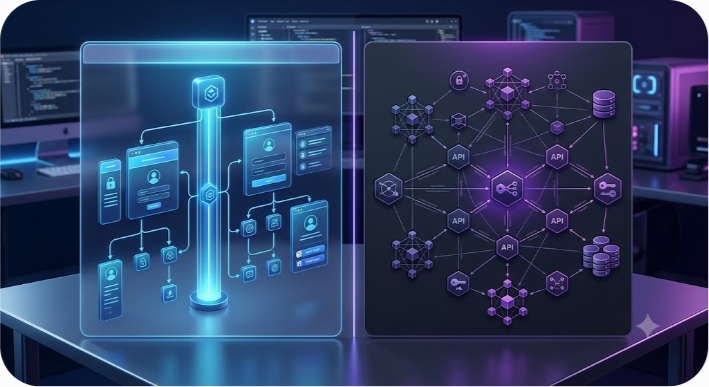
For engineering teams building on modern stacks, two platforms consistently dominate technical shortlists: Clerk and Stytch. While both promise to eliminate the pain of building auth from scratch, they approach identity from radically different directions. Clerk is an embedded-UI-first platform built primarily around polished React and Next.js components. Stytch is an API-first, headless authentication platform designed for multi-platform reach, deep multi-tenancy customization, and integrated fraud prevention.
At Saasbonus, we evaluate SaaS infrastructure through hands-on technical testing and practical total cost of ownership modeling. If you are building a React-first or Next.js B2B application and need to ship production-ready sign-in, organization management, and user profiles in hours, Clerk is the fastest path to launch. If you are building across web and mobile, require a fully custom headless UI, need embedded enterprise SCIM and SSO configuration, or authenticate AI agents alongside human users, Stytch is the superior architectural choice.
Below is the complete, unvarnished comparison of Clerk versus Stytch across architecture, multi-tenancy, developer experience, enterprise features, security, and long-term pricing.
The Fundamental Difference: UI-First vs. API-First Architecture
To understand where Clerk and Stytch diverge, you must understand their core architectural philosophies. Neither approach is universally better, but each solves a completely different engineering priority.
Clerk: The Embedded UI Platform
Clerk pioneered the concept of complete, drop-in user management components. Instead of providing raw API endpoints or bare hooks that require you to build form fields, error handlers, and state management, Clerk provides pre-built React components like UserButton, SignIn, SignUp, and OrganizationSwitcher.
These components are not mere iframe embeds; they are styled, customizable, and deeply integrated into front-end framework lifecycles. Clerk manages user state, session rotation, multi-factor authentication triggers, and organization switching natively inside the component tree. For React, Next.js, Remix, and Astro developers, this eliminates thousands of lines of boilerplate front-end code.
However, this UI-first philosophy means Clerk is opinionated. Customizing the look and feel requires working within Clerk's appearance prop and CSS variables. While highly flexible for standard design systems, pushing past their component paradigm or porting the exact same user flow to a native iOS or Android app introduces friction.
Stytch: The Headless Identity Engine
Stytch was built from the ground up as an API-first identity platform. While Stytch offers SDKs with pre-built UI elements and hosted login options, its primary surface area is headless. Stytch gives developers direct access to raw authentication APIs, headless JavaScript/TypeScript SDKs, and native mobile SDKs for Swift and Kotlin.
In a Stytch architecture, your application owns 100% of the Document Object Model and user interface. You write standard HTML forms or React components and hook them directly into Stytch authentication state methods. This provides complete design freedom and makes Stytch completely framework-agnostic.
Furthermore, Stytch treats authentication, fraud detection, and network-level risk signals as a unified layer. It provides native support for device fingerprinting, account takeover detection, and machine-to-machine authentication for background workers and autonomous AI agents out of the box.
Multi-Tenancy and Organization Management for B2B SaaS
In consumer applications (B2C), an identity is simply an individual user. In B2B SaaS, an identity exists within an organization (a tenant). Modern B2B auth requires handling parent-child organization hierarchies, domain-based auto-join rules, role assignment, tenant isolation, and multi-organization user membership.
Clerk's B2B Architecture: Organizations and MROs
Clerk treats Organizations as a first-class primitive in its SDKs. When B2B multi-tenancy is enabled, Clerk attaches an active organization context to the global user session.
From a developer perspective, implementing organization switching in Clerk takes single-digit minutes using the pre-built OrganizationSwitcher component. When a user switches organizations in the UI, Clerk automatically updates the active session JWT to include the target organization ID, the user's role within that organization, and their associated permissions.
Clerk measures B2B usage using Monthly Retained Organizations (MROs). Under Clerk's structure:
- Every project includes 100 Monthly Retained Organizations at no additional charge.
- Additional organizations cost $1.00 per month each on standard paid tiers.
- Organization membership limits apply based on your plan unless an add-on is purchased.
Clerk supports custom roles and permission sets, allowing engineering teams to define granular access control lists directly in the Clerk Dashboard and check them in code via simple helper functions like has({ permission: 'org:billing:manage' }).
Stytch's B2B Architecture: Native Multi-Tenancy

Stytch handles multi-tenancy with a dedicated B2B product suite specifically engineered for enterprise software isolate-and-route patterns. In Stytch, every B2B request operates within an explicitly defined Organization context.
Stytch's multi-tenancy engine provides several advanced features natively:
- Unlimited Organizations: Unlike platforms that charge per tenant, Stytch includes unlimited organization records out of the box across all plans.
- Just-in-Time (JIT) Provisioning: Stytch allows you to enforce email domain matching at the organization level (e.g., automatically adding anyone signing in with a @company.com email to Company Inc.'s tenant).
- Organization-Level Auth Policies: You can enforce distinct authentication rules per customer organization. For example, Enterprise Client A can enforce mandatory hardware passkeys or SAML SSO, while Small Business Client B can use email magic links and passwordless OTPs.
- Built-in Member Roles & Role-Based Access Control (RBAC): Stytch provides fine-grained RBAC mapping where custom roles can be tied to specific organization scopes and inherited across child entities.
Where Clerk focuses on giving the end-user a convenient UI component to switch teams, Stytch focuses on giving the SaaS developer full programmatic control over complex multi-tenant policies.
Developer Experience: Drop-in Components vs. Headless Flexibility
Developer Experience (DX) is often the deciding factor for early-stage engineering teams choosing between Clerk and Stytch. However, fast initial DX does not always equal long-term architecture flexibility.
Clerk's DX: Zero to Auth in 15 Minutes
Clerk offers what is arguably the smoothest DX in the React and Next.js ecosystem today. To protect a route in Next.js using Clerk, you wrap your application in
tsx import { SignedIn, SignedOut, SignInButton, UserButton } from '@clerk/nextjs';
export default function Header() { return (
This abstraction handles token caching, session refresh, CSRF protection, and UI rendering automatically. If your stack is exclusively React, Next.js, Remix, or Astro, Clerk eliminates almost all identity-related frontend work.
The tradeoff appears when your application moves beyond web platforms. If you need to build a native Android app in Kotlin or an embedded desktop tool, Clerk's non-React SDKs feel secondary, and you must fall back to their backend APIs or generic OAuth protocols.
Stytch's DX: Complete Structural Autonomy
Stytch's developer experience appeals to teams that view auth as an integrated subsystem rather than a UI overlay. Stytch provides robust SDKs across React, Node.js, Python, Go, Ruby, Swift, and Kotlin.
In a Stytch application, authenticating a user with a B2B magic link or passkey looks like a clean function call within your own event handler:
typescript import { useStytchB2BClient } from '@stytch/react/b2b';
export function LoginForm() { const stytch = useStytchB2BClient();
const handleLogin = async (email: string, organizationId: string) => { await stytch.magicLinks.email.loginOrSignup({ email_address: email, organization_id: organizationId, login_redirect_url: 'https://your-app.com/authenticate', }); };
// Render your custom UI controls here }
Because Stytch does not enforce a UI paradigm, you have absolute freedom over form layouts, validation rules, multi-step onboarding flows, and brand design. You never have to battle CSS specificity issues or override vendor modal component trees.
Enterprise Readiness: SAML SSO, SCIM, and Compliance
When selling B2B SaaS to mid-market and enterprise buyers, single sign-on (SAML/OIDC) and automated user provisioning (SCIM) shift from nice-to-have features to contract-blocking requirements. How Clerk and Stytch handle these enterprise bridges impacts both engineering time and unit economics.
Enterprise Single Sign-On (SAML & OIDC)
Both vendors support enterprise identity providers including Okta, Microsoft Azure AD (Entra ID), Ping Identity, and Google Workspace.
- Clerk: Integrates SAML connections into its Pro and Business plans. In Clerk's pricing model, one enterprise connection is included in standard paid plans, while additional enterprise SSO connections incur an add-on fee ($75 per connection per month on Pro tiers, with volume discounts as you scale). SSO flow management is handled natively within Clerk's components.
- Stytch: Includes up to 5 SSO/SCIM connections free on its base tier and offers flat, usage-based scaling beyond that. Stytch enables enterprise customers to establish SAML, OIDC, or OAuth connections with custom attribute mapping out of the box.
SCIM Provisioning and Embedded Admin Portals
SCIM (System for Cross-domain Identity Management) allows enterprise IT departments to automatically provision and de-provision user seats when employees are hired or terminated in Okta or Azure AD.
This is where Stytch provides a distinct B2B operational advantage: the Stytch Embeddable Admin Portal. Instead of your engineering team building a custom settings UI where enterprise IT admins configure SAML metadata, certificates, and SCIM endpoint keys, Stytch provides a pre-built, embeddable portal UI. You drop this component into your application's settings dashboard, and your enterprise customer's IT team can self-serve their entire SSO and SCIM setup without ever opening a support ticket.
Clerk handles user provisioning through webhooks, SCIM integrations, and administrative APIs, but requiring self-serve enterprise setup generally involves leveraging custom API integrations or enterprise add-on features.
Security, Risk Engine, and Machine-to-Machine Auth
Identity is the primary attack vector for modern web applications. Credential stuffing, account takeover (ATO), bot attacks, and API exploitation require sophisticated defenses.
Stytch's Security Engine and Fraud Detection

Stytch incorporates continuous risk detection directly into its authentication pipeline. Leveraging global telemetry network signals and native device fingerprinting, Stytch evaluates every login attempt in real time:
- Device Fingerprinting: Tracks device signals across browser sessions to detect anomalous logins, session hijacking, and proxy usage.
- Risk-Based MFA: Allows developers to trigger step-up multi-factor authentication only when an incoming request originates from an unknown device, untrusted IP, or suspicious network.
- Invisible Bot Detection: Replaces annoying CAPTCHA challenges with background telemetry, preserving conversion rates while blocking automated brute-force attacks.
- Machine-to-Machine (M2M) & AI Agent Auth: Stytch includes native support for issuing and validating M2M tokens, API keys, and service account credentials. As B2B SaaS applications increasingly deploy autonomous AI agents that act on behalf of users or organizations, Stytch provides a unified identity framework covering both human users and AI agents.
Clerk's Security Architecture
Clerk maintains comprehensive security controls including automatic token rotation, short-lived JWT session tokens, passkey support, and robust bot mitigation mechanisms.
Clerk also provides user impersonation out of the box. This allows your customer support or engineering teams to log into an organization as a specific user to troubleshoot issues without requiring the user's password or altering security logs. While Clerk handles session security and passwordless flows exceptionally well, its feature set focuses primarily on application-level identity rather than deep network fraud intelligence or M2M infrastructure.
Deep Pricing Analysis: Understanding MAU vs. MRU and Total Cost of Ownership
Authentication pricing structures can be deceptive. A platform that appears cheap at 1,000 users can suddenly become a major cost center at 50,000 active users or 200 customer organizations.
Understanding Clerk's Pricing Model (MRU and MRO)
Clerk uses a Monthly Retained User (MRU) pricing metric, which differs slightly from traditional Monthly Active User (MAU) models. An MRU is defined as a user who authenticates or interacts with the system and returns 24 or more hours after signing up. This avoids charging teams for single-visit bounce traffic.
Clerk's tier structure functions as follows:
- Hobby Plan: Free for up to 50,000 MRUs per application. Includes basic APIs, pre-built UIs, up to 100 Monthly Retained Organizations, and community support.
- Pro Plan: Starts at $25 per month (or $20 per month billed annually). Includes 50,000 MRUs, custom domain support, multi-factor authentication, removal of Clerk branding, and 1 included Enterprise SSO connection. Additional MRUs above 50,000 are billed at $0.02 per user per month.
- Business Plan: Starts at $300 per month (or $250 per month billed annually). Includes 10 dashboard seats, 30-day log retention, SOC 2 Type 2 report access, and priority support.
- Add-ons: Additional Enterprise SSO connections cost $75 per month each on Pro. Additional Monthly Retained Organizations beyond the included 100 cost $1.00 per organization per month.
Understanding Stytch's Pricing Model
Stytch operates a pay-as-you-go usage-based model with standard tiers:
- Free / Pay-As-You-Go Tier: $0 base platform fee. Includes 10,000 monthly active users and AI agents, unlimited organizations, 5 free SSO or SCIM connections, 1,000 M2M tokens, and the full suite of authorization and RBAC features.
- Scale Tiers: Additional MAUs and enterprise connections scale linearly with predictable volume discounts. Because unlimited organizations and basic SSO/SCIM connections are included early, B2B SaaS applications with hundreds of small organizational tenants often experience significantly lower platform fees on Stytch.
Total Cost of Ownership Scenario
Consider a growing Series A B2B SaaS application with 30,000 active users spread across 300 customer organizations, requiring 5 enterprise SAML connections for key client accounts:
- Clerk Cost Calculation:
- Base Pro Tier: $25/month (covers up to 50,000 MRUs)
- Extra Organizations: 200 extra MROs beyond included 100 = $200/month
- Extra Enterprise Connections: 4 additional connections beyond included 1 = $300/month
- Total Estimated Monthly Cost: $525/month
- Stytch Cost Calculation:
- Base Usage: 30,000 MAUs within usage tier (~$0.005-$0.01/MAU average depending on authentication mix)
- Organizations: 300 Organizations = $0 (unlimited included)
- Enterprise SSO Connections: 5 connections = $0 (5 included)
- Total Estimated Monthly Cost: ~$150 - $300/month
While Clerk's 50,000 MRU free tier makes it virtually free for low-organization consumer or early B2B builds, applications that quickly add hundreds of distinct customer tenants (MROs) or require several SAML connections will find Stytch's pricing structure more cost-effective as tenant count scales.
Side-by-Side Comparison Matrix
The table below summarizes the key technical and business differences between Clerk and Stytch.
| Evaluation Metric | Clerk | Stytch |
|---|---|---|
| Primary Architectural Surface | Drop-in React / Next.js components | Headless SDKs + direct REST APIs |
| Optimal Stack Fit | React, Next.js, Remix, Astro | Framework-agnostic (Node, Python, Go, iOS, Android, React) |
| Free Usage Allowance | Up to 50,000 MRUs (Hobby tier) | Up to 10,000 MAUs + AI Agents |
| Organization Primitive | Pre-built UI Organization Switcher | Programmatic multi-tenancy engine |
| Included Organizations | 100 MROs included, then $1/mo each | Unlimited Organizations included |
| Enterprise SSO (SAML/OIDC) | 1 included on Pro, $75/mo each extra | 5 included on standard tier |
| Enterprise SCIM Provisioning | Supported via webhooks/add-ons | Supported with Embeddable Admin Portal |
| Role-Based Access Control | Custom roles and permissions in dashboard | Dynamic organization-level RBAC policies |
| Fraud & Risk Prevention | Basic bot detection and rate limiting | Native device fingerprinting, risk-based MFA |
| Machine-to-Machine / AI Agent Auth | API keys & M2M support | Built-in M2M tokens for background workers & AI agents |
| User Impersonation | Included natively in dashboard | Supported via admin API flows |
Common Implementation Traps to Avoid
Regardless of which identity engine you select, engineering teams frequently make critical implementation mistakes during initial setup:
- Hardcoding Organization Scopes into Database Schemas: Never store vendor-specific organization IDs directly as raw unindexed foreign keys without an abstraction layer. Always maintain an internal tenants or workspaces table in your primary database (e.g., PostgreSQL) and map the auth provider's organization ID (clerk_org_123 or stytch_org_123) to your internal UUID. This keeps your database schema vendor-neutral.
- Relying Exclusively on Front-End JWT Validation: Front-end session checks like
or client-side hook checks validate token presence, not data access rights. Always re-verify session tokens, active organization claims, and user roles on your backend API endpoints or Server Actions using official server SDKs.
- Ignoring Webhook Idempotency: Both Clerk and Stytch send asynchronous webhooks for events like user.created, organization.updated, or organization.deleted. Network retries can cause the same webhook event to land on your server multiple times. Always make your webhook handlers idempotent by recording processed event IDs in Redis or your database.
- Underestimating Enterprise SSO Onboarding Friction: Enterprise clients often take days to configure their IdP metadata. If you force admins to coordinate with your support engineering team via back-and-forth emails, onboarding stalls. Leveraging self-serve configuration portals—such as Stytch's embeddable Admin Portal or building a dedicated admin UI using Clerk's SDKs—drastically reduces enterprise time-to-value.
Final Decision Framework: Which Should You Pick?
Choosing between Clerk and Stytch comes down to evaluating your frontend architecture, team composition, multi-platform requirements, and enterprise roadmap.
Choose Clerk if:
- You are building a web application using React, Next.js, Remix, or Astro.
- You want to eliminate frontend UI dev work for authentication, user profiles, and team switching.
- Your core objective is shipping a polished B2B or B2C product MVP in record time.
- You value pre-built customer support tools like single-click user impersonation.
Choose Stytch if:
- You need a headless, custom-branded UI across web and native mobile apps (iOS, Android, React Native).
- You are building a complex multi-tenant B2B platform with hundreds of organizations requiring distinct auth policies.
- You need to give enterprise buyers an embedded, self-serve portal for SAML SSO and SCIM provisioning.
- You require continuous risk engine signals, device fingerprinting, or native authentication for autonomous AI agents.
At Saasbonus, we help software teams select and integrate the best SaaS infrastructure tools without overpaying or over-engineering. If you are comparing authentication providers, database layers, or monitoring platforms, explore our independent software breakdowns to make confident architectural decisions from day one.