Consolidating Your Go-To-Market Stack: When to Unify CRM, PM, and Support Tools

It is 4:00 PM on a Friday, and you are staring at a line item in your departmental budget that makes your stomach drop. It is a recurring subscription renewal for a point solution your sales team swore they could not live without eighteen months ago. Nobody has logged into the admin panel in four months. The champion who insisted on buying it left the company last November. Yet here it is, automatic-renewing for another year, silently draining cash while your team toggles between twelve different browser tabs just to figure out why a key account is churning.
We have all been there. You scale past Series A, your headcount creeps up, and suddenly your software stack looks like a junk drawer. You bought a specialized CRM because the pipeline view was pretty. You grabbed a standalone project management tool because engineering hated product management features in the old suite. Then you added a niche customer support ticketing app because the shared inbox broke down under the weight of your first mid-market expansion push. Before you know it, your go-to-market teams are drowning in a swamp of disconnected apps, fragmented customer data, and escalating license fees.
Consolidating your go-to-market stack is no longer just a tidy housekeeping exercise for your finance department. It is a survival strategy. Let us break down how you got here, why the status quo is quietly killing your margins, and exactly when and how to unify your CRM, project management, and support tools without bringing your business to a grinding halt.
The Anatomy of Tech Stack Bloat
Software sprawl does not happen overnight. It creeps up through a thousand tiny, reasonable decisions. A department head wants a specific reporting metric. A new hire refuses to use legacy tooling because they used a slicker app at their previous startup. Procurement gives the green light because a fifty-dollar monthly per-user fee feels negligible against a growing ARR baseline.
Multiply that by thirty tools across marketing, sales, customer success, and product delivery, and you are left with an $85,000 invisible leak. Worse than the financial waste is the operational friction. Your sales reps live in Salesforce or HubSpot, updating deal stages and pipeline forecasts. Your project managers track delivery milestones in Asana or Monday.com. Your customer support agents handle ticket resolutions and bug escalations in Intercom or Zendesk.
When a high-value customer reports a critical implementation blocker, what happens? Your support rep has to ping the account executive on Slack to see if the deal terms promised custom development. Then they have to bug a project manager to check if engineering has bandwidth. Three days pass. The customer feels bounced around. The data lives in three different silos, and nobody has a single source of truth.
This fragmentation creates the 4:00 PM pipeline mirage. Your revenue dashboards look great because top-line acquisition numbers are high, but your net retention rate is quietly bleeding out because customer friction goes unnoticed until renewal time. Unifying your core systems stops this bleed by forcing customer context to flow freely across departments.
The True Cost of Point Solutions
For years, the conventional wisdom favored the best-of-breed approach. The logic was simple: buy the absolute best CRM on the market, the absolute best project management tool, and the absolute best helpdesk. Specialized tools usually offer deeper feature sets out of the box.
That logic breaks down when your organization hits the mid-market transition point. Best-of-breed assumes you have dedicated operations engineers whose sole job is to maintain custom Zapier workflows, custom API connectors, and messy data synchronization scripts. When those webhooks inevitably break-usually during a major product release or a routine API update-your data falls out of sync.
Consider the hidden costs of maintaining three distinct pillars in your GTM stack:
- Integration debt: Every custom integration requires maintenance. When fields change or schemas update, things break silently. You end up hiring a RevOps specialist just to keep the duct tape from peeling off.
- Context switching tax: Studies show that knowledge workers waste hours every week bouncing between applications. Every time a team member leaves the CRM to check a support ticket, then jumps to a project board to update a task, focus shatters.
- Onboarding friction: Training a new sales rep or customer success manager takes weeks longer when they have to master four different interfaces just to manage a single client lifecycle.
- Shadow IT and security risks: When employees find official tools cumbersome, they spin up free trials of unauthorized software, putting your customer data compliance and security postures at risk.
Recognizing the Breaking Point: When to Unify
How do you know when you have crossed the line from healthy tool adoption to toxic stack bloat? You do not need to guess. The operational symptoms are glaringly obvious if you know what to look for.
First, look at your weekly sync meetings. If twenty percent of your leadership meeting is spent arguing about whose data is correct-Marketing saying a lead originated from one campaign, Sales claiming it came from another, and Success reporting a completely different onboarding timeline-your systems are lying to you.
Second, check your software utilization rates. Run an audit through your single sign-on provider or billing portal. If you are paying for fifty enterprise seats of a project management tool, but only twenty-two people log in more than once a week, you are funding a ghost town.
Third, watch your customer satisfaction scores during handoffs. The most dangerous gap in a growing company is the abyss between sales closed-won and customer success onboarding. If customers consistently complain that they have to repeat their requirements to the implementation team because the context stayed trapped in the sales rep's head or CRM notes, your stack is actively damaging your client relationships.
If you see two or more of these warning signs, it is time to seriously evaluate consolidating your CRM, project management, and support infrastructure into a more unified operational core.
Mapping the Unified GTM Architecture

Consolidating does not necessarily mean throwing out every tool you own and forcing your entire company into a single monolithic, clunky platform that does everything poorly. True consolidation is about rationalizing data flows and reducing redundant interfaces.
You want to establish a unified core architecture built around three interconnected pillars:
- The Commercial Core (CRM & Revenue Data): Where deals, accounts, contacts, and contract values live.
- The Delivery Core (Project Management & Task Tracking): Where client onboarding milestones, technical deliverables, and internal resources are managed.
- The Relationship Core (Support & Customer Success): Where tickets, health scores, feedback loops, and renewals live.
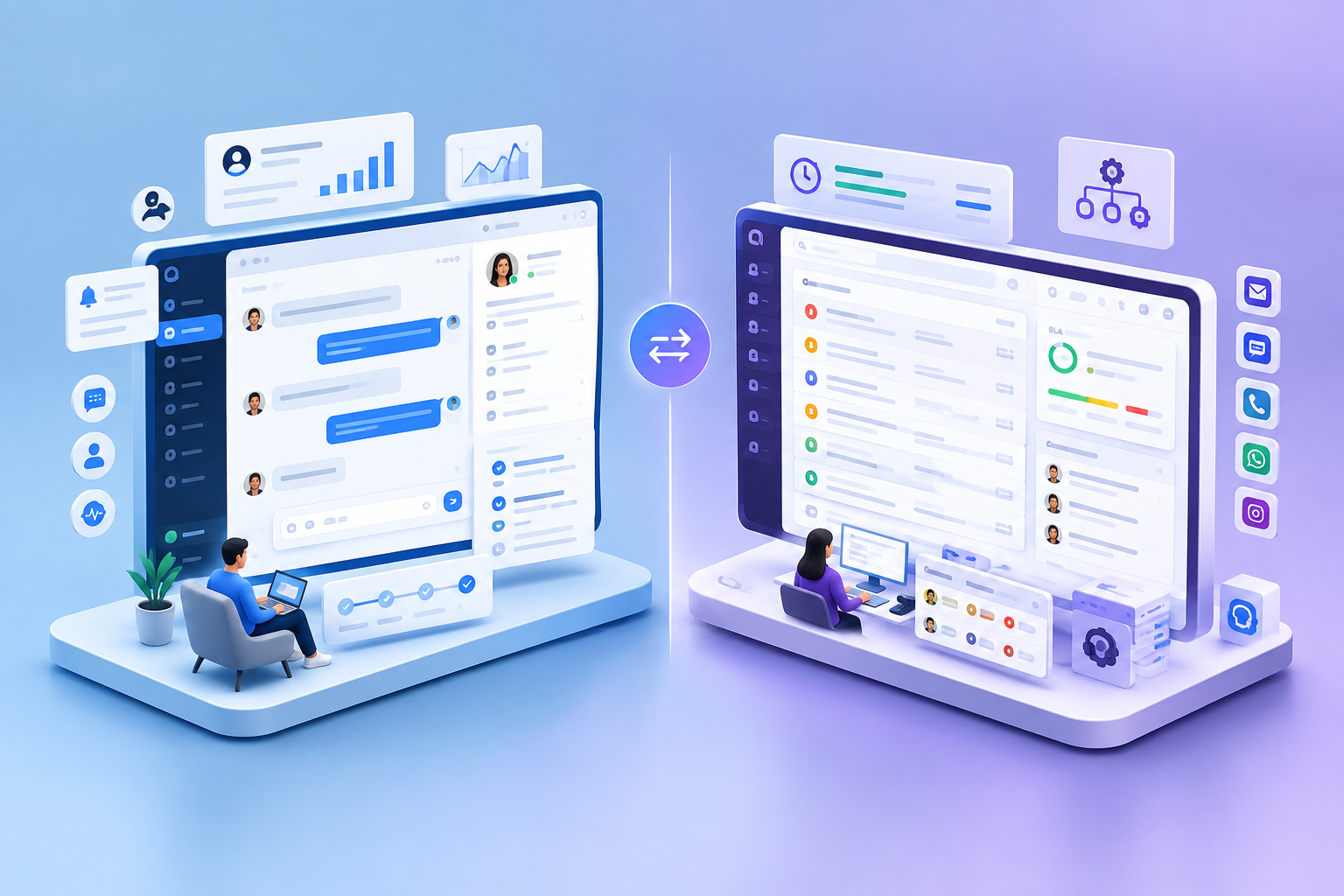
When these three pillars talk to each other natively-either because they live within the same platform ecosystem or share deep, out-of-the-box native data models-magic happens. A support agent opening a ticket can see the client is up for renewal in sixty days and has an open professional services project running behind schedule. A sales rep closing a mid-market deal can instantly spin up a templated onboarding project board directly from the CRM record.
Step-by-Step Guide to Stack Consolidation
Jumping headfirst into a massive software migration without a plan is a recipe for operational chaos. You cannot afford to halt revenue generation while you rebuild your tech stack. You need a methodical, phased approach.
Step 1: Conduct an Unapologetic Tech Stack Audit
Pull every single software invoice from the past twelve months. List every tool, its annual cost, its primary owner, its renewal date, and its active user count. Do not rely on assumptions. Ask department leads to justify each tool's existence based on measurable business outcomes, not convenience.
You will almost certainly find redundant tools. For instance, you might discover that marketing is using one project management tool for campaign planning while product and engineering use another, and customer success is tracking tasks in a third. This is your low-hanging fruit for immediate consolidation.
Step 2: Define Your Core Workflows, Not Feature Wishlists
When evaluating unified platforms or integration suites, do not get blinded by shiny feature lists. Focus entirely on your core operational workflows. Map out the exact journey a lead takes from the moment they book a demo, through contract signing, implementation onboarding, and ongoing support.
Identify the friction points in that journey. Where does data get lost? Where do handoffs fail? Your consolidation strategy must directly target and eliminate those specific friction points.
Step 3: Choose Between All-in-One Suites and Best-of-Integrated Ecosystems
You generally have two paths for unification:
- The Unified Suite: Adopting a platform that natively houses CRM, ticketing, and project management under one roof. This minimizes integration maintenance and ensures uniform user experience, though individual modules might lack the hyper-specialized depth of standalone point solutions.
- The Connected Ecosystem: Choosing core anchor platforms (such as HubSpot or Salesforce ecosystems) that have deeply integrated native apps or acquisitions covering project management and support, eliminating brittle third-party middleware.
Evaluate your team's technical maturity. If you do not have dedicated internal developers or RevOps engineers, lean heavily toward the unified suite or tightly curated ecosystem approach.
Step 4: Pilot with a Single Business Unit
Never roll out a massive GTM stack migration company-wide on day one. Pick one specific business unit or regional team-perhaps your mid-market sales and onboarding squad-to act as the pilot group.
Let them stress-test the new consolidated workflow for thirty days. Listen to their feedback, iron out missing data fields, and refine the automation rules. Once they are winning with the new setup, roll it out sequentially to the rest of the organization.
Step 5: Sunset Legacy Tools Cleanly
Once the migration is complete and historical data has been safely archived, pull the plug on the legacy tools. Do not keep them running in a read-only state just in case someone needs to look up an old record from three years ago. Export the database to a cold storage data warehouse if necessary, and cancel the subscription immediately. If you leave old tools active, people will drift back to their old habits.
Overcoming Cultural Resistance to Change
The hardest part of consolidating a GTM stack is not the technical data migration. It is the human element. Software is deeply tied to daily habits, and people hate having their workflows disrupted.
Your sales reps will complain that the new interface has one fewer click or that a particular report looks different. Your support team might feel that a combined CRM and helpdesk view exposes too much noise or clutter.
To overcome this resistance, you must tie the consolidation directly to their success and compensation. Show them how the unified stack saves them two hours of administrative busywork every day. Frame the change not as an IT mandate, but as a revenue accelerator that helps them hit quotas and deliver better experiences to clients.
Provide hands-on training sessions rather than just dropping a link to a knowledge base article. Designate internal champions within each department who can answer questions peer-to-peer.
The Long-Term Payoff of a Clean GTM Engine
When you successfully consolidate your CRM, project management, and support tools, the transformation throughout your organization is profound.
Your finance team stops waking up in a cold sweat over runaway software subscription renewals. Your revenue operations become transparent, predictable, and clean. Most importantly, your customers stop feeling like they are interacting with three different disconnected companies when they talk to your sales, delivery, and support teams.
Tech stack consolidation isn't about pinching pennies on software licenses. It is about clearing away the clutter so your team can focus on what actually matters: closing deals, delivering exceptional value, and growing a sustainable business.
Take a hard look at your browser tabs, your departmental budget lines, and your team's daily friction points. If it feels like your software is running your company instead of your company running your software, you know what time it is. It is time to unify.