Engineering Reliability: Moving Past the 8:00 PM Emergency Zoom Call
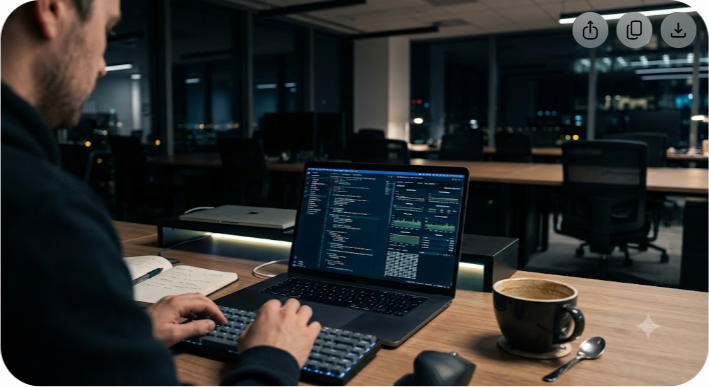
It is 8:15 PM on a Tuesday. Your kitchen is quiet, the dishes are done, and you were just about to sit down with a book. Then, your phone buzzes. It is that specific, jarring vibration that signifies your on-call rotation has been breached. Five minutes later, you are staring at a dimly lit Zoom screen. Your lead engineer looks exhausted, your front-end developer is mid-bite into a cold dinner, and everyone is trying to decipher an error log that is screaming unintelligible nonsense at 3:00 AM server time.
We have all been there. This is the ritual of the 'emergency Zoom call.' It is a rite of passage that eventually turns into a cage. If your team is stuck in a cycle of constant firefighting, you are not just burning out your best talent—you are burning through your company’s runway, one midnight patch at a time.
The Cost of the Midnight Heroics
There is a strange, toxic pride that often forms around these late-night sessions. You finish the fix at 11:30 PM, everyone high-fives in the Slack channel, and the system is back up. You feel like a hero. But let’s look at the actual cost.
First, there is the immediate productivity tax. The engineer who stayed up until midnight isn't going to be writing high-quality code at 9:00 AM the next day. They are going to be sleep-deprived, irritable, and prone to making the very mistakes that cause the next outage.
Then there is the long-term attrition risk. The best engineers—the ones who truly understand your architecture—don't stay at companies where their work-life balance is a suggestion. They leave for shops where reliability is treated as a core product feature, not an afterthought left for the graveyard shift. When they walk out the door, they take the institutional knowledge of why the system breaks in the first place, leaving the remaining team even more vulnerable.
Why Your Monitoring Is Lying to You
Most teams approach reliability by adding more alerts. If a page goes down, they add a monitor to watch that specific page. If a database spike occurs, they add a threshold alert. Eventually, your inbox becomes a graveyard of ignored emails and Slack notifications that lose all meaning. This is alert fatigue, and it is the single biggest contributor to the 8:00 PM panic.
When everything is an emergency, nothing is. If your team receives fifty alerts a day, they stop treating them like indicators of a problem and start treating them like ambient background noise. True reliability comes from signals, not alerts. A signal is actionable. A signal tells you exactly what is failing, why it is failing, and—crucially—what the impact is on the user.
Shifting from Firefighter to Architect
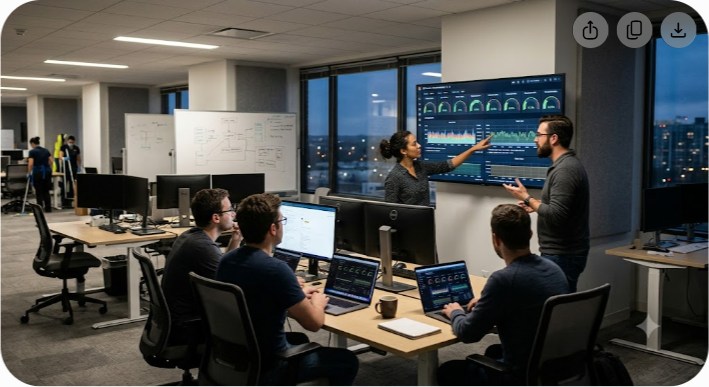
To move past the emergency call, you have to change your relationship with failure. You have to stop viewing outages as 'bad luck' or 'inevitable tech debt' and start viewing them as engineering design failures.
Think about the last three times you were on a Zoom call at 8:00 PM. Were they caused by truly unpredictable events, or were they the result of known issues that you just hadn't prioritized yet? Almost always, it is the latter.
We often fall into the trap of 'shipping features over fixing foundations.' It’s easy to measure the business value of a new integration. It is incredibly hard to quantify the business value of a more robust database connection pool or a smarter circuit breaker pattern. But the moment you start treating reliability work as a feature in your sprint cycles, everything changes.
Building Observability That Actually Works
If you can't see it, you can't fix it. Observability isn't just about logs; it’s about understanding the internal state of your system through its outputs.
Ask your team: If the system goes down right now, do we know why in under five minutes? If the answer is no, you don't need a new deployment pipeline; you need better instrumentation. Stop logging 'Error encountered' and start logging 'User X failed to process payment because Service Y timed out.'
This isn't about collecting more data; it's about collecting the right data. It’s about building dashboards that represent the customer experience, not just the server load. If the CPU hits 90% but your users are successfully completing transactions, is it actually an emergency? Maybe it’s just a busy Tuesday.
The Post-Mortem That Doesn't Point Fingers
When the emergency is over, the natural inclination is to find someone to blame. 'Why did Dave deploy that code without a canary test?' This is the fastest way to kill your engineering culture.
Shift your focus to the systemic failure. Instead of asking 'Who messed up?', ask 'How did our process allow this to reach production?' Maybe the code review checklist was too long. Maybe the staging environment isn't a true mirror of production. Maybe the documentation for that service was outdated.
When you stop blaming the engineer and start blaming the process, you uncover the real, deep-seated issues that lead to late-night calls. Once those issues are identified, you must prioritize fixing them. If you hold a post-mortem and then don't allocate time in the next sprint to fix the root cause, you have wasted your team's time.
Embracing 'Good Enough' Stability

We often aim for 99.999% availability, chasing the dream of a system that never fails. This is a trap. For most mid-market companies, the cost of achieving five-nines is astronomical and rarely translates into actual revenue growth.
Sometimes, the best reliability strategy is to design for graceful degradation. If your third-party payment provider is down, can you queue the transactions instead of erroring out? If your search service fails, can you return a cached version? Building a system that 'fails open' or 'fails gracefully' is often cheaper and more effective than building a system that never fails at all.
Empowering Your Team to Say 'No'
At Saasbonus, we talk a lot about picking the right software, but picking the right battles is just as important. Your engineering team needs to have the agency to push back on feature requests when the current architecture is fragile. If the building is on fire, you don't keep adding floors to the top of it.
Create a culture where reliability is a shared responsibility. When the product team understands that a 'quick fix' today results in an emergency call tomorrow, they become your partners, not your adversaries. Transparency is the antidote to the 8:00 PM Zoom call.
The Role of Tech Stack Simplicity
Look at your tech stack. How many different monitoring tools, logging services, and cloud providers are you using? Complexity is the enemy of reliability. Every new tool you add is another point of failure, another set of credentials to manage, and another interface your team has to learn.
Consolidation is not just about saving budget; it’s about cognitive load reduction. When your team has to jump between five different interfaces to figure out why an API is slow, you are losing precious minutes. Simplify. Standardize. Reduce the number of moving parts.
Cultivating a Healthy On-Call Culture
On-call shouldn't be a hazing ritual. It should be a well-compensated, well-supported role.
- Follow-the-Sun: If you have a global team, move your on-call rotations to people in their working hours. No one should be answering pages at 3:00 AM.
- Post-Shift Relief: If someone is on call all night, they are off the next day. No exceptions. Respecting their time is the only way to retain them.
- Shadowing: Have junior engineers shadow senior engineers on call. It’s the best way to train them, and it distributes the burden.
Breaking the Cycle
Moving past the 8:00 PM emergency Zoom call isn't an overnight fix. It’s a series of small, intentional choices. It’s choosing to write that test instead of shipping that feature. It’s choosing to refactor that messy service instead of adding a band-aid. It’s choosing to respect your engineers' personal lives over the illusion of immediate perfection.
Your production environment should be boring. If it’s exciting—if it’s keeping you up at night—you’re doing it wrong. Start by auditing your last five outages. Look for the common threads. Then, pick one process to change, one alert to silence, or one architecture debt to pay down.
When you stop the cycle of emergency, you don't just get your evenings back. You get a team that is more focused, a product that is more stable, and a company that is actually built to scale. It’s time to move the Zoom calls to business hours—or better yet, eliminate them entirely. Your team will thank you, and frankly, so will your customers. A reliable system is the most powerful marketing tool you can have. People don't remember the features you shipped in a rush; they remember the stability you provide every single day. Let’s make that the new standard. It is currently 10:23 PM in Ahmedabad, and I hope your production environment is quiet.