How to Implement Dynamic Usage-Based Pricing in SaaS
Transitioning a SaaS company from flat-rate seats to dynamic usage-based pricing can significantly boost Net Revenue Retention (NRR), yet engineering teams frequently underestimate the technical complexity of building an event-metering pipeline. Moving to usage-based billing requires an architectural shift across your database, payment gateway, and customer success workflows.
If you charge based on consumed resources—like API calls, compute hours, ingested gigabytes, or AI tokens—you must move from static invoicing to an asynchronous, event-driven architecture. Building a dynamic pricing system demands real-time usage tracking, idempotent event ingestion, scalable aggregation engines, and proactive customer notifications to prevent bill shock.
What Is Dynamic Usage-Based Pricing in SaaS?
Dynamic usage-based pricing is a monetization model where the amount a customer pays scales fluidly with their actual consumption of a specific product metric, modified in real time by factors such as volume tiers, time of usage, capacity demands, or enterprise feature multipliers.
Unlike static consumption pricing—where a user pays a fixed rate like $0.01 per API call indefinitely—dynamic usage-based pricing adapts automatically to behavioral and operational context.
Total Monthly Bill = Base Platform Fee + SUM(Event Volume x Tier Rate x Dynamic Multipliers)
The Three Layers of Dynamic Usage Pricing
- The Base Unit Metric (What you count): The atomic unit of value delivered. Examples include gigabytes stored, vector embeddings calculated, active seats, or CPU hours consumed.
- The Tier/Volume Structure (How the count translates to price): Graduated, volume-based, or overage-style brackets that decrease the marginal cost per unit as consumption scales.
- The Dynamic Multipliers (Contextual pricing adjustments): Modifiers applied to raw events based on runtime conditions. For instance, processing a job during peak infrastructure hours might incur a 1.2x multiplier, while running an LLM query using a premium model might carry a 5x metric weight compared to a standard model.
Why Modern B2B SaaS Is Abandoning Flat Seat Licensing
Per-seat pricing creates a fundamental alignment mismatch: it penalizes companies for adding users who consume very few resources while failing to capture incremental revenue from heavy power users.
Comparing Pricing Models
- Traditional Seat Model: A user count is set at provisioning time, generating a flat invoice where customer cost remains disconnected from true resource consumption.
- Dynamic Usage Model: Application services stream raw usage events into an ingestion pipeline to produce a dynamic bill aligned directly with monthly consumption.
Alignment of Value and Cost
When your price scales directly with usage, your self-serve customers pay an accessible entry fee, while enterprise workloads automatically expand your expansion revenue without requiring a dedicated sales rep to negotiate every contract change.
Lower Customer Acquisition Cost Friction
Lowering the barrier to entry with a consumption-based tier allows developers and department managers to integrate your software with minimal upfront procurement friction. You land early and expand organically.
Protection Against COGS Volatility
In an infrastructure environment driven by API integrations, AI model calls, and cloud compute, your Cost of Goods Sold (COGS) scales directly with user activity. Fixed monthly seat pricing leaves your gross margins vulnerable to heavy users who cost more to serve than they pay in subscription fees.
Static vs. Dynamic Usage Pricing: A Direct Comparison
Understanding the structural differences between billing paradigms helps you architect the right backend system.
| Feature / Metric | Flat-Rate Seat Billing | Static Usage-Based Billing | Dynamic Usage-Based Billing |
|---|---|---|---|
| Pricing Trigger | User provisioning | Raw unit volume threshold | Unit volume + Contextual modifiers |
| Revenue Predictability | High, linear | Medium, variable | Variable, highly expandable |
| Margin Protection | Vulnerable to heavy users | Moderate | High (Prices align with real COGS) |
| Engineering Complexity | Minimal (Standard Stripe setup) | Moderate (Daily event aggregates) | High (Real-time idempotent event pipeline) |
| Value Alignment | Low | High | Excellent |
| Bill Shock Risk | None | Moderate | High (Requires real-time alert systems) |

Step 1: Selecting the Right Value Metric
Choosing the wrong metric breaks your monetization strategy. If you choose a metric that does not track closely with internal customer value, users will deliberately throttle their usage of key features just to keep their bill down.
Guidelines for Value Metric Selection
- Predictable for the Buyer: The customer must understand how their everyday actions directly affect their bill. Tracking raw database read IOPS confuses business users, but tracking active monthly records makes intuitive sense.
- Scalable for the Seller: The metric must scale alongside your infrastructure costs. If a user ingests 10x more data, your metric should capture that growth to defend your gross margins.
- Hard to Game: If customers can easily alter their software integration to bypass tracking without losing functionality, your metric will fail.
- Value-Correlated: As the metric increases, the customer should clearly see their own business metrics improving as a direct result.
Popular Value Metrics by Category
- Infrastructure & Developer Tools: Compute hours, gigabytes processed, bandwidth egress, vector queries executed.
- AI & Machine Learning Services: Input/Output tokens generated, image renders, GPU execution seconds.
- Communication & Messaging: Delivered SMS segments, active phone numbers, email volume, voice agent conversation minutes.
- Fintech & Revenue Platforms: Gross payment volume percentage (GPV), synced transactions, active ledger accounts.
Step 2: Designing the Technical Architecture for Metering
Never couple your primary transactional database or billing engine directly to your event ingestion pipeline. Modern payment gateways are excellent ledger systems, but they are not designed to ingest thousands of raw streaming telemetry events per second.
The Five-Layer Metering Pipeline
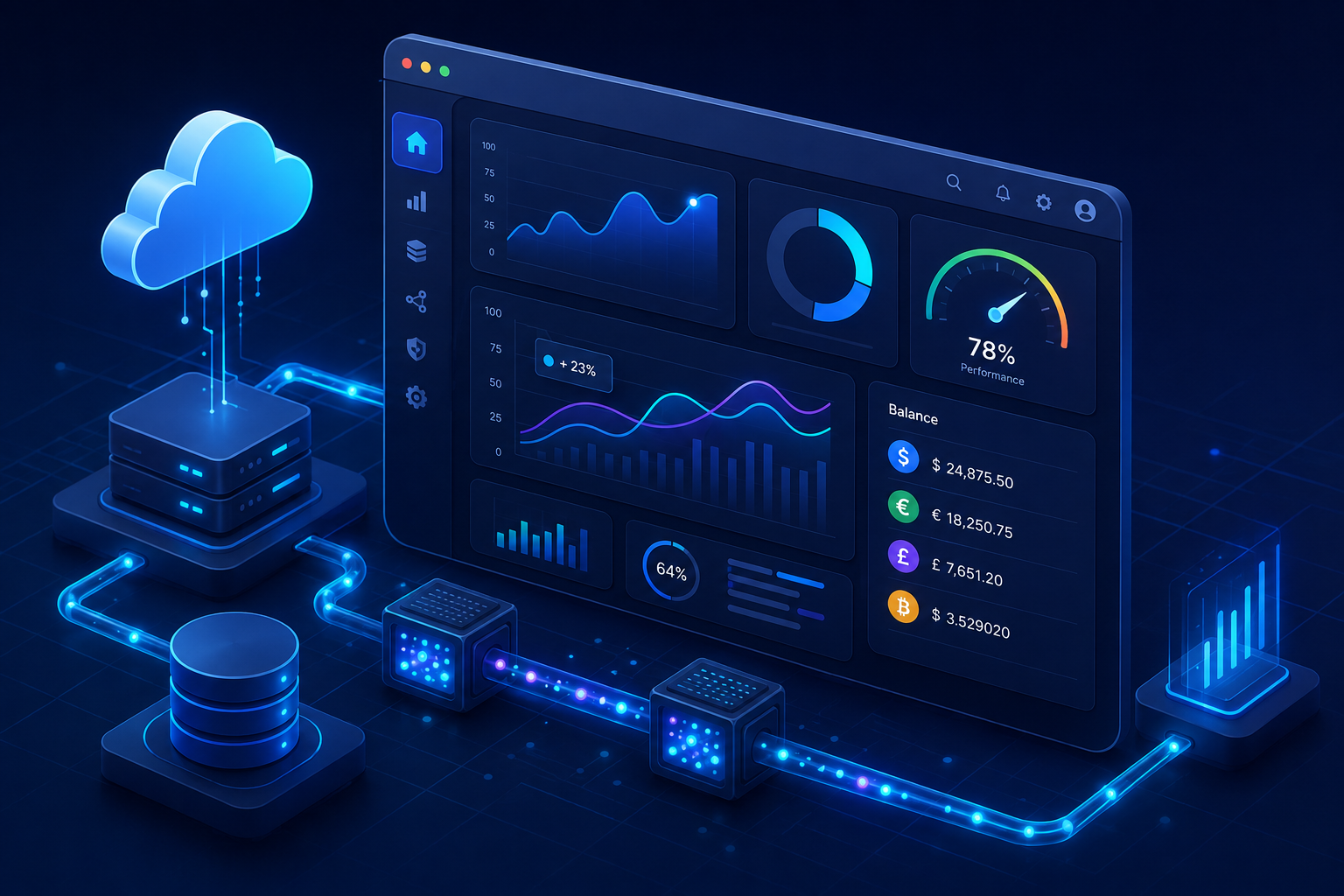
- Application Layer: Microservices emit event telemetry asynchronously during user execution.
- Gateway Layer: An API gateway validates incoming requests, authenticates account tokens, and enforces rate limits.
- Stream Processing Layer: A high-throughput message broker like Apache Kafka or NATS buffers incoming events.
- Analytical Store: Columnar data stores like ClickHouse or TimescaleDB aggregate metrics into rollups.
- Billing Sync Engine: A scheduled worker transforms aggregated unit counts into billing ledger line items.
Ingestion Layer
Your application microservices must emit metering events asynchronously. Never block a user API response to write a usage record to a database. Use a high-throughput message bus like Apache Kafka, RabbitMQ, or NATS to capture raw event payloads.
json { "event_id": "evt_9876543210_abc", "customer_id": "cust_org_4412", "timestamp": "2026-08-05T20:51:36Z", "metric_name": "ai_voice_synthesis_seconds", "properties": { "model": "neural_v2", "region": "us-east-1", "duration_seconds": 42.5, "peak_time_multiplier": 1.2 } }
Deduplication and Idempotency Engine
Network retries, client-side re-transmissions, and distributed systems mean your billing API will receive duplicate event payloads. Every usage event must include a globally unique event_id. Store incoming keys in a fast key-value cache like Redis with a 72-hour TTL to reject duplicates instantly before processing.
Aggregation Engine
Raw event logs must be aggregated into billable usage metrics. Use an analytical columnar database like ClickHouse or TimescaleDB to run hourly rollups. Summing raw rows on the fly in a standard transactional database during an end-of-month billing run will lock up your primary database and degrade application performance.
Billing Synchronization Engine
Once or twice daily—or at the end of a billing cycle—your system calculates aggregated usage numbers and pushes them to your primary payment gateway using a batch usage reporting endpoint.
Step 3: Structuring Your Dynamic Pricing Formulas
Once your pipeline tracks usage accurately, you can apply dynamic pricing logic. Here are three standard architectural patterns for dynamic pricing:
1. Graduated Tiered Pricing with Dynamic Multipliers
Under graduated tiering, units consumed within specific bands incur distinct prices, modified by usage context.
- Units 1 to 10,000: $0.005 / unit
- Units 10,001 to 100,000: $0.003 / unit
- Units 100,001+: $0.001 / unit
- Dynamic Modifiers: If a workload runs on high-priority enterprise infrastructure, multiply the final unit cost by 1.5x.
2. Peak Infrastructure Capacity Charges
If your SaaS business carries high cloud overhead during regional business hours, apply dynamic hourly surge rates to shift non-urgent background workloads to off-peak times.
- Standard Window (08:00 - 20:00 UTC): $0.10 / compute minute
- Off-Peak Window (20:01 - 07:59 UTC): $0.04 / compute minute
3. Credit-Based Token Systems
For complex multi-featured platforms, billing different variables (storage, compute, AI calls, seats) on separate line items can make invoices confusing. Instead, abstract raw metrics behind a unified balance of platform credits.
- 1 Credit = 10 API Queries
- 1 Credit = 0.5 AI Image Generations
- 1 Credit = 1 MB Storage / Month
Customers buy monthly credit bundles (for example, $500/month for 50,000 credits) and draw down their balance dynamically based on their mix of feature consumption.

Step 4: Prepaid vs. Postpaid Implementation Models
When building dynamic pricing, you must choose whether customers pay before or after consumption.
| Workflow Phase | Prepaid Credit Draw Model | Postpaid Arrears Billing Model |
|---|---|---|
| 1. Initial Setup | Customer purchases $1,000 in account credits | Customer registers credit card or ACH details |
| 2. Active Usage | System deducts credits per telemetry event | System logs usage volume in aggregate database |
| 3. Billing Trigger | Auto-recharge fires when balance hits $100 threshold | Monthly billing run fires charge or invoice |
Prepaid Credit Draws (Low Financial Risk)
- Customers purchase credits upfront or sign a committed-use annual contract.
- As usage events enter the pipeline, their stored credit balance drops.
- When the balance hits a pre-set low-water mark (such as 10% remaining), your engine automatically charges their payment card to top up the credit pool.
- Best for: Infrastructure platforms with volatile consumption profiles that carry high underlying COGS (such as LLM APIs or serverless compute).
Postpaid Arrears Billing (Low Friction for Buyers)
- Customers use the product freely throughout the billing cycle.
- At the end of the 30-day period, your aggregation engine tallies all usage, runs dynamic calculations, and issues an invoice to their credit card or via ACH.
- To manage financial risk, set dynamic safety limits: if an account's unpaid usage reaches $2,000 halfway through the month, trigger an immediate mid-cycle charge.
- Best for: Established enterprise B2B SaaS platforms with creditworthy enterprise buyers.
Managing Technical and Operational Edge Cases
The hardest part of building usage-based pricing isn't tracking a standard user journey—it's handling edge cases cleanly without losing revenue or alienating customers.
1. Late-Arriving Telemetry
What happens when an offline mobile device, self-hosted deployment, or disconnected agent submits usage data three days after the monthly invoice was finalized?
- Solution: Maintain strict accounting ledger boundaries. Never edit a past, paid invoice. Append late-arriving events to the current open billing window as adjustments, tagging the record with its original execution timestamp.
2. Network Outages and Gateway Timeouts
If your primary metering engine experiences an outage, do you block application usage or let requests pass unmetered?
- Solution: Implement local client-side buffer queues. Allow edge services to write usage events locally to disk or a distributed queue (such as a Redis stream) with automated exponential backoff retries. Never drop user requests due to a metering sync delay.
3. Mitigating Bill Shock and Runaway Scripts
If a developer on your customer's team accidentally leaves an unthrottled loop running over the weekend, it can generate tens of thousands of dollars in unexpected charges on a basic account. Demanding full payment leads to churn and negative public reviews, while waiving the charge leaves you covering high COGS.
- Solution: Build automated guardrails into your application:
- Send proactive alerts at 50%, 80%, and 100% of average historical usage.
- Allow account admins to configure hard usage caps that stop service or soft caps that require approval before continuing.
- Implement automated anomaly detection that flags unusual usage spikes within 15 minutes.
Navigating SaaS Revenue Recognition (ASC 606 / IFRS 15)
In standard fixed-fee SaaS, recognizing revenue is straightforward: a $12,000 annual upfront subscription amortizes cleanly to $1,000 in recognized revenue per month over 12 months.
With dynamic usage-based pricing, revenue recognition becomes variable consideration under ASC 606 and IFRS 15 rules.
Revenue Recognition Steps Under ASC 606
- Identify Performance Obligations: Define the specific software services or resource consumption promised in the customer agreement.
- Estimate Variable Consideration: Project expected monthly usage based on historical telemetry data and contract minimums.
- Recognize Revenue Upon Consumption: Formally recognize revenue only as consumption events occur and performance obligations are met.
Handling Commitments and Breakage
- Prepaid Commitments: Unused prepaid credits must sit on your balance sheet as deferred revenue (a liability). You can only recognize revenue as those credits are consumed by active software usage.
- Unused Breakage: If a customer purchases $10,000 in annual usage credits and leaves $2,000 unused at contract expiration, that breakage can only be recognized as revenue at the end of the contract term, depending on your jurisdiction and contract terms.
Step-by-Step Implementation Checklist for Engineers and Product Managers
Here is a practical roadmap to bring dynamic usage pricing from board approval to production release.
Phase 1: Product & Pricing Design
- Analyze Historical Usage Data: Run queries across your existing logs to map out usage curves. Identify your bottom 20%, median, and top 5% usage tiers.
- Define Price Floors: Set base platform subscription fees (for example, $49/month platform access fee) to cover core baseline operational costs regardless of account activity.
- Draft the Pricing Matrix: Keep initial tier structures simple. Do not launch with more than two dynamic variables in your initial launch.
Phase 2: Technical Architecture
- Implement Event ID Schema: Ensure every service emits unique payload identifiers (UUIDv4).
- Set Up Asynchronous Telemetry Pipelines: Decouple usage tracking calls from critical application execution paths using background thread workers.
- Build Customer Usage Dashboards: Give users real-time visibility into their usage metrics and estimated month-to-date costs directly within your app.
Phase 3: Rollout and Shadow Billing
- Run Shadow Billing: Keep users on their existing pricing plans while running your new dynamic metering pipeline silently in the background for 30 days. Compare your projected revenue against actual invoices to uncover edge-case bugs.
- Grandfather Existing Accounts: Offer existing customers a 6-to-12-month grace window or guaranteed transition discounts to keep migration sentiment positive.
Bridging Software Metering and Revenue Operations
Implementing dynamic usage pricing isn't just an engineering or sales task—it requires close coordination across your product, architecture, and revenue stacks. As software delivery shifts toward automated workflows, AI services, and real-time consumption, your billing engine must be as flexible and reliable as your core product infrastructure.
To evaluate technical tooling options, compare infrastructure components, or optimize your software stack, explore our hands-on reviews and architectural guides at Saasbonus. Matching your product architecture with the right billing infrastructure ensures you capture fair value from power users while keeping customer churn low.