LangSmith vs Arize Phoenix: Best LLM Evaluation Platform?
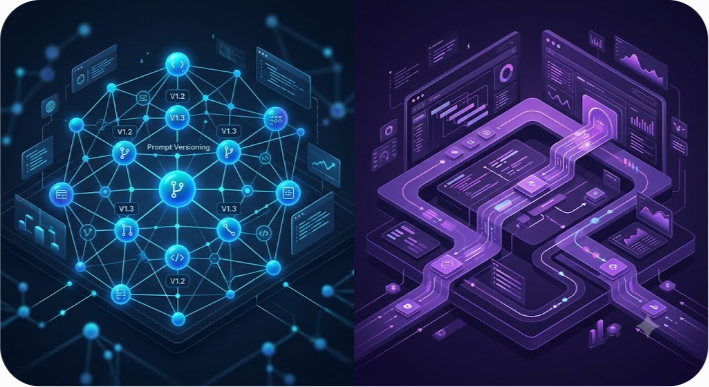
Choosing between LangSmith and Arize Phoenix comes down to a fundamental architectural choice: do you want a full-stack, workflow-heavy agent engineering suite tied closely to the LangChain ecosystem, or a vendor-neutral, open-source evaluation engine built on OpenTelemetry standards?
If your engineering team builds primarily with LangChain and LangGraph, LangSmith provides an unbeatable developer experience with native prompt versioning, automated dataset creation, and human-in-the-loop annotation queues. However, if you require open-source data ownership, local notebook execution, runtime guardrails, or multi-framework flexibility across DSPy, CrewAI, and LlamaIndex, Arize Phoenix is the superior platform.
At Saasbonus, we conduct hands-on testing across enterprise software to help engineering leaders choose the right infrastructure without marketing bias. Below is our definitive, deep-dive technical comparison of LangSmith and Arize Phoenix across tracing depth, evaluation metrics, framework compatibility, deployment modes, and total cost of ownership.
The Core Verdict: When to Pick Which Platform
Before analyzing individual feature matrices, here is the immediate bottom-line recommendation based on engineering workflows:
- Choose LangSmith if: You are heavily invested in the LangChain or LangGraph ecosystem, rely on Prompt Hub versioning, need structured human review queues for domain experts, and want an all-in-one SaaS platform that handles prompt iteration, CI/CD testing, and production monitoring in a single dashboard.
- Choose Arize Phoenix if: You prefer an open-source, vendor-neutral telemetry standard (OpenInference/OpenTelemetry), need local notebook execution for privacy-sensitive data, require real-time inline guardrails to block or modify output, or want zero-licensing cost for self-hosted production deployments.
| Evaluation Dimension | LangSmith | Arize Phoenix |
|---|---|---|
| Primary Architectural Focus | Full agent lifecycle (Build, Test, Deploy, Monitor) | Vendor-neutral evaluation, OTel tracing & runtime guards |
| Licensing | Proprietary SaaS (Paid self-host for Enterprise) | Open Source (Elastic License 2.0 / Apache 2.0 ecosystem) |
| Tracing Standard | Native LangChain RunTree + OpenTelemetry export | OpenInference (OpenTelemetry standard native) |
| Framework Support | First-class LangChain/LangGraph, SDKs for Python/TS | Framework-agnostic (LangChain, LlamaIndex, DSPy, CrewAI, OpenAI) |
| Local Execution | Limited (Requires cloud connection or local server) | First-class (Runs inside Jupyter Notebook or local Docker) |
| Prompt Management | Built-in LangSmith Prompt Hub with versioning | Basic / External integration |
| Runtime Guardrails | Asynchronous online evaluators | Active inline guardrails (Block, regenerate, fallback) |
| Human Annotation | Dedicated queues, labeling criteria, reviewer assignments | Basic annotation queue in Arize Cloud / Phoenix UI |
| Pricing Model | $39/seat/month + trace volume overages | Free self-hosted OSS; $50/mo for Arize AX managed cloud |
Why Traditional APM Tools Fail for LLM Applications
Traditional Application Performance Monitoring (APM) tools like Datadog, New Relic, or Dynatrace excel at tracking CPU utilization, HTTP response status codes, and database query latency. However, large language model (LLM) applications break standard APM paradigms in three major ways:
- Non-Deterministic Outputs: A 200 OK HTTP response from an OpenAI or Anthropic endpoint does not mean the application succeeded. The LLM might have hallucinated, leaked sensitive PII, or returned invalid JSON that breaks downstream parsing.
- Complex Execution Graphs: Modern agentic workflows execute dynamic loops, tool calls, vector database retrievals, and multi-step reasoning chains. Understanding failure modes requires visual span-level execution trees, not simple API timing logs.
- Evaluation Complexity: Assessing an LLM response requires semantic metrics—such as retrieval context relevance, answer faithfulness, and toxicity—which cannot be evaluated using exact-match assertions or standard unit testing frameworks.
Both LangSmith and Arize Phoenix were built specifically to solve these challenges, but their underlying architectures approach evaluation and tracing from different angles.
Deep-Dive Architectural Breakdown
To understand which platform fits your infrastructure, you must evaluate how each tool handles trace ingestion, data structures, and evaluation loops.
LangSmith: The LangChain Ecosystem Engine
Developed by the creators of LangChain, LangSmith was engineered to serve as the unified control plane for LLM development. It views tracing not merely as a passive logging system, but as the foundation of a continuous improvement loop.
In LangSmith, every interaction is captured as a structured run tree. When building complex agents with LangGraph, LangSmith automatically maps state transitions, tool invocations, conditional branching, and model inputs/outputs with zero manual annotation required.
Key architectural pillars of LangSmith include:
- Native Framework Telemetry: Deep integration with LangChain Expression Language (LCEL) allows engineers to attach a single callback parameter to automatically trace every child step inside an agent.
- Automated Dataset Generation: Production traces containing user feedback or unexpected outputs can be pushed directly into evaluation datasets with one click.
- Prompt Hub Integration: Prompts are managed as version-controlled artifacts. Engineers can pull prompts directly into application code, test alternative versions in a side-by-side playground, and benchmark results against historic evaluation datasets.
- Annotation Queues: LangSmith includes enterprise-grade human evaluation queues. Product managers and domain experts can review production traces, assign quality scores, and write ideal target responses to continuously train LLM-as-a-judge evaluators.
Arize Phoenix: Vendor-Neutral OpenInference Telemetry
Arize Phoenix was developed by Arize AI, an enterprise ML observability provider, as an open-source evaluation and tracing engine. Rather than building a closed ecosystem, Arize built Phoenix around the OpenInference standard—an extension of OpenTelemetry designed specifically for AI applications.
Phoenix can run entirely in-memory inside a Jupyter Notebook, inside a local Docker container, or deployed at scale on Kubernetes. This makes it an essential tool for research teams, privacy-conscious enterprise engineers, and developers working on local machines without internet access.
Key architectural pillars of Arize Phoenix include:
- OpenTelemetry Standard Alignment: Spans generated by Phoenix adhere to vendor-agnostic OTel specs. Tracing data can easily be routed to Datadog, Honeycomb, or custom data lakes without vendor lock-in.
- In-Notebook Trace Visualization: Engineers can launch a Phoenix UI directly inside Python environments (`px.launch_app()`), trace RAG chains locally, and visualize embedding spaces without setting up cloud accounts or API keys.
- Active Runtime Guardrails: Unlike asynchronous monitoring tools, Phoenix Guardrails integrate into execution pipelines to actively inspect user inputs and LLM outputs. If a response contains hallucinated text or toxic content, Phoenix can block the request, trigger a fallback, or force a model re-generation in real time.
- Multi-Framework Instrumentors: Phoenix provides explicit auto-instrumentors for LlamaIndex, DSPy, CrewAI, AutoGen, Haystack, Semantic Kernel, and native OpenAI/Anthropic SDKs.

Comparing Evaluation Capabilities: Offline Evals vs Online Guardrails
LLM evaluation must occur across two distinct lifecycle phases: offline evaluation during development (CI/CD) and online evaluation during production monitoring. Both platforms handle these phases differently.
Offline Evaluation and Benchmarking
Offline evaluation involves running a candidate prompt or model against a fixed dataset of inputs and ground-truth reference outputs to calculate performance metrics prior to release.
In LangSmith, offline evaluation revolves around Datasets and Experiments. You upload CSV or JSONL files containing inputs and expected outputs. You then define evaluator functions—either custom Python functions or LLM-as-a-judge prompts. When an evaluation run executes, LangSmith runs requests in parallel, logs metrics (accuracy, conciseness, custom rubrics), and displays a comprehensive comparison grid across model versions.
In Arize Phoenix, offline evaluation is executed programmatically using built-in evaluator modules. Phoenix provides pre-built evaluators for the RAG Triad (QA Correctness, Hallucination, Context Relevance) alongside general NLP metrics. Because Phoenix runs locally, evaluation scripts execute rapidly in parallel pipelines without uploading sensitive test datasets to third-party cloud infrastructure.
Online Production Evaluation and Guardrails
Once an application is live, online evaluation samples live traffic to monitor quality drift and detect failures.
LangSmith approaches online evaluation via background evaluators. You set sampling rules (e.g., run evaluators on 10% of production traffic or only on traces tagged with user negative feedback). These evaluators run asynchronously, adding evaluation scores to live trace logs without introducing user-facing latency.
Arize Phoenix takes online evaluation a step further by offering active runtime guardrails. In addition to asynchronous background evaluations, Phoenix Guards can intercept live requests. If an output triggers a policy violation (e.g., PII exposure, high hallucination index, or prompt injection), Phoenix can intercept the stream and modify the payload before it reaches the end user.
| Evaluation Metric / Feature | LangSmith Implementation | Arize Phoenix Implementation |
|---|---|---|
| RAG Context Relevance | Custom evaluators or LangChain judgment chains | Built-in RAG Triad evaluator module |
| Hallucination Detection | Off-line judgment prompts / Engine beta | Built-in ground-truth vs context evaluator |
| Toxicity & PII Screening | Asynchronous trace labeling | Real-time guardrail blocking / redaction |
| LLM-as-a-Judge Configuration | UI-driven rubric configuration & code prompts | Python-based evaluator functions & rubrics |
| Embedding Drift Analysis | Basic vector visualization | Advanced embedding space drift detection |
Framework Ecosystem & Integration Realities
One of the most consequential architectural decisions in AI engineering is determining how tightly your observability vendor binds you to a specific framework ecosystem.
The LangChain Ecosystem Advantage (and Lock-In)
LangSmith is purpose-built to extract maximum utility from LangChain and LangGraph. If your team writes native LCEL code:
```python from langchain_openai import ChatOpenAI from langchain_core.prompts import ChatPromptTemplate from langchain_core.output_parsers import StrOutputParser
LangSmith auto-traces via environment variables
Set LANGCHAIN_TRACING_V2="true" and LANGCHAIN_API_KEY="ls_..."
prompt = ChatPromptTemplate.from_template("Explain {topic} for an enterprise architecture review.") model = ChatOpenAI(model="gpt-4o") chain = prompt | model | StrOutputParser()
Traced automatically with zero code modification
response = chain.invoke({"topic": "retrieval augmented generation"}) ```
This frictionless setup is a primary reason teams adopt LangSmith. However, if your engineering team transitions to non-LangChain frameworks, such as DSPy for prompt optimization or CrewAI for multi-agent coordination, tracing in LangSmith requires custom SDK wrappers or manual OpenTelemetry exporter configurations.
The OpenInference Framework-Agnostic Advantage
Arize Phoenix approaches tracing from an open-standard perspective. By utilizing `openinference-instrumentation` packages, Phoenix auto-instruments almost any major framework with standard hooks:
```python from phoenix.otel import register from openinference.instrumentation.openai import OpenAIInstrumentor import openai
Register OpenTelemetry tracer pointing to local or hosted Phoenix instance
tracer_provider = register(endpoint="http://localhost:6006/v1/traces") OpenAIInstrumentor().instrument(tracer_provider=tracer_provider)
client = openai.OpenAI()
Standard OpenAI call is automatically captured via OpenTelemetry
response = client.chat.completions.create( model="gpt-4o", messages=[{"role": "user", "content": "Explain vector embeddings"}] ) ```
Because OpenInference standardizes span attributes across frameworks, an agent built with CrewAI, LlamaIndex, or raw OpenAI calls outputs identical trace schemas in Phoenix. This ensures your observability stack remains completely decoupled from your application framework choices.
Deployment Architectures, Security, and Compliance
Data privacy and infrastructure control often dictate platform selection for enterprise organizations dealing with healthcare, financial, or user-sensitive data.

LangSmith Deployment Modes
- Cloud SaaS (Standard): Hosted entirely on LangSmith managed infrastructure. Extremely easy to set up, but all prompt text, completions, and trace metadata are transmitted to LangSmith servers.
- Hybrid / Private Tenant: Allows enterprise users to keep evaluation payloads within their cloud environment while leveraging the hosted control plane.
- Self-Hosted Enterprise: Available exclusively on high-tier Enterprise contracts. Requires deploying a complex Kubernetes cluster (Helm charts, Postgres, Redis, ClickHouse) managed by your internal DevOps team.
Arize Phoenix Deployment Modes
- In-Memory / Local Notebook: Runs instantly inside Jupyter or Colab notebooks via `import phoenix as px; px.launch_app()`. Zero external network calls; perfect for rapid experimentation and local offline testing.
- Self-Hosted Docker / Kubernetes (Open Source): Fully functional, zero-licensing platform deployable via a simple Docker image or Helm chart. You maintain full data sovereignty, storing traces in your own PostgreSQL or database instance.
- Arize AX Cloud: A fully managed cloud offering provided by Arize AI for enterprise teams that want managed scaling, advanced security, role-based access control (RBAC), and SOC 2 Type II compliance without managing infrastructure.
Total Cost of Ownership (TCO) & Detailed Pricing Analysis
Understanding the real-world operational costs of these platforms requires analyzing team headcount, monthly trace volumes, and historical data retention windows.
LangSmith Pricing Structure
LangSmith utilizes a combined seat-based and volume-overage pricing model:
- Developer Tier: Free for 1 user, up to 5,000 traces/month.
- Plus Tier: $39 per seat per month. Includes 10,000 free traces per organization per month. Additional traces cost $0.50 per 1,000 traces (base 14-day retention). Extended retention (e.g., 400 days) increases consumption fees up to $4.50–$5.00 per 1,000 traces.
- Enterprise Tier: Starts around $100,000/year for dedicated support, SSO, custom SLAs, and self-hosted deployment licensing.
Arize Phoenix Pricing Structure
- Open Source (Self-Hosted): $0 licensing cost. You pay only for underlying cloud compute and storage resources (e.g., AWS EC2/RDS or DigitalOcean instances).
- Arize Cloud / AX: Managed hosting starting at $50/month for small teams, scaling up based on ingested spans and retention.
Real-World Cost Comparison Scenario
Consider a mid-sized engineering team with 5 developers generating 200,000 traces per month with standard 30-day retention requirements:
``` LangSmith Plus Calculation:
- Seat Cost: 5 developers × $39/month = $195/month
- Trace Volume: 200,000 total traces - 10,000 included = 190,000 excess traces
- Overage Charge: 190 units × $0.50 = $95/month
- Extended Retention Multiplier: ~$150/month additional
Total LangSmith Cost: ~$440 / month ($5,280 / year)
Arize Phoenix (Self-Hosted Open Source) Calculation:
- Software License Fee: $0
- Cloud Infrastructure (Small Postgres DB + Container instance): ~$120/month
- Seat Fees: $0 (Unlimited team members)
Total Arize Phoenix Cost: ~$120 / month ($1,440 / year) ```
For growing teams with high trace volumes or large engineering departments, self-hosting Arize Phoenix yields massive cost savings over seat-and-trace pricing models. However, teams must factor in internal DevOps overhead required to manage self-hosted databases and service updates.
Comprehensive Feature Comparison Matrix
| Feature / Axis | LangSmith | Arize Phoenix | Architectural Impact |
|---|---|---|---|
| Open Source Licensing | Closed Source SaaS (MIT SDKs) | Apache 2.0 / Elastic License 2.0 | Phoenix allows zero-cost self-hosting and auditability. |
| Trace Standard | Proprietary + OTel Exporter | Native OpenTelemetry / OpenInference | Phoenix avoids telemetry vendor lock-in. |
| Prompt Engineering UI | Advanced Prompt Hub & Playground | Basic Playground in Arize Cloud | LangSmith excels at team prompt versioning. |
| Human Annotation Queues | Enterprise-grade with workflows | Basic labeling in Cloud UI | LangSmith is superior for domain-expert tagging. |
| LangGraph Visualizer | Native 1-to-1 node state mapping | Span tree representations | LangSmith provides better agent debugging. |
| Local Notebook Running | No (Requires cloud backend) | Yes (`px.launch_app()`) | Phoenix is better for local research & rapid testing. |
| Real-Time Guardrails | Asynchronous / Passive | Inline Active Blocking & Modification | Phoenix actively intercepts unsafe production outputs. |
| RAG Evaluation Metrics | Custom evaluators required | Pre-built RAG Triad evaluators | Phoenix offers faster out-of-the-box RAG evals. |
| Dataset Management | First-class UI with versioning | Supported via Python API & UI | LangSmith offers smoother dataset iteration. |
| Multi-Framework Auto-Instrumentation | LangChain focus | DSPy, LlamaIndex, CrewAI, OpenAI | Phoenix provides superior multi-framework versatility. |
How to Migration-Proof Your LLM Observability Architecture
Regardless of whether you select LangSmith or Arize Phoenix today, switching platforms down the line can cause significant engineering friction if your codebase becomes heavily coupled to vendor-specific SDK calls.
Follow these three engineering best practices to maintain platform agility:
- Decouple Observability from Core Application Logic: Wrap evaluation and tracing calls inside an internal abstraction layer or gateway rather than sprinkling vendor-specific SDK decorators across every route handler.
- Adopt OpenTelemetry Instrumentation Standards: Utilize OpenTelemetry trace standards where possible. Because both Arize Phoenix natively supports OpenInference and LangSmith allows OTel ingestion, utilizing standard collectors ensures trace data can be re-routed to new backends without rewriting core code.
- Decouple Prompts from Code Repositories: Store prompt templates, evaluation rubrics, and test datasets in standardized YAML or JSON formats within version control, ensuring your test suite can run against any evaluation framework.
Practical Recommendations: Choosing the Right Tool for Your Stack
To make your final purchasing and architectural decision, evaluate where your organization sits across these common engineering profiles:
Profile A: The LangChain-Native Startup or Enterprise Team
If your stack is built on LangChain, LangGraph, and LangServe, LangSmith is the clear winner. The developer velocity gained from automatic state graph tracing, single-click dataset creation from logs, and seamless prompt versioning far outweighs the subscription cost.
Profile B: The Privacy-Conscious / Open-Source Dedicated Team
If you handle HIPAA-regulated health records, strict financial data, or sensitive customer PII that cannot leave your cloud VPC, Arize Phoenix is the ideal platform. You can run Phoenix inside your secure Kubernetes cluster or local notebooks with complete data residency, zero external API traffic, and no licensing fees.
Profile C: Multi-Framework Agent Developers
If your architecture combines LlamaIndex for advanced vector index retrieval, DSPy for prompt optimization, and CrewAI for autonomous agent orchestration, Arize Phoenix offers superior flexibility. Its vendor-neutral OpenInference instrumentation standardizes spans across disparate frameworks without forcing you into a single library ecosystem.
Streamline Your SaaS Stack Selection with Saasbonus
Navigating the complex landscape of AI infrastructure, developer tooling, and enterprise software requires objective, data-backed insights. At Saasbonus, we publish independent architectural comparisons, cost breakdowns, and technical teardowns to help engineering leaders choose the right tools the first time.
Whether you are evaluating LLM observability platforms, database engines, or vector storage solutions, explore our comprehensive review library on Saasbonus to make confident, infrastructure-grade software decisions.