Perplexity AI vs ChatGPT (2026): Which Tool Is Better?

You are staring at a browser screen on a Tuesday afternoon, mouse hovering over two checkout buttons. On the left is OpenAI's $20-per-month ChatGPT Plus plan. On the right is Perplexity Pro, sitting at the exact same $20 monthly price tag. Both promise to transform how you work, write, code, and research. Both claim to be the ultimate AI companion. But unless you feel like spending $40 every month to hoard subscriptions, you need to make a choice.
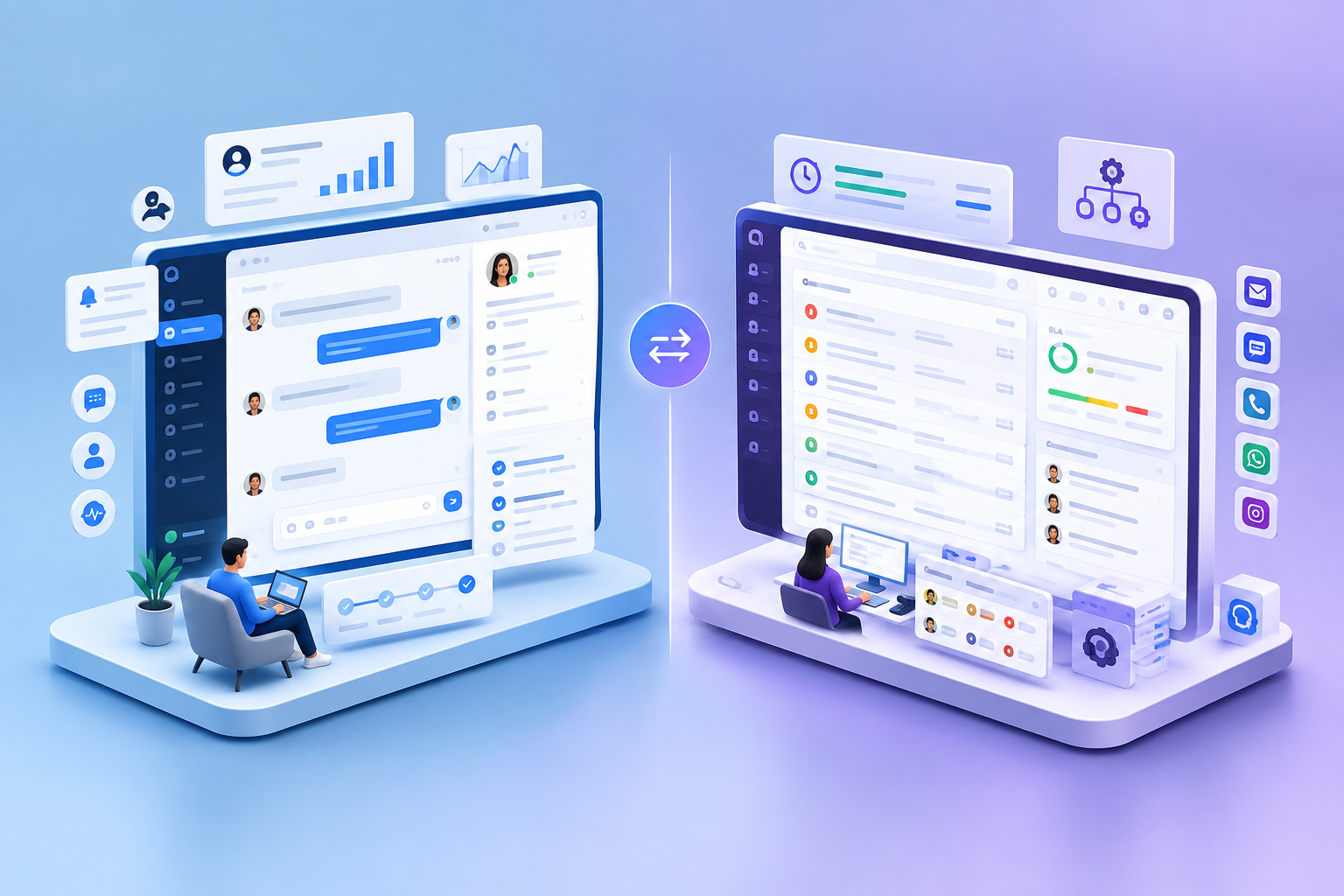
Here is the short answer right up front: Perplexity AI is a retrieval-first answer engine built for fast, verifiable research with mandatory inline citations. ChatGPT is a generation-first universal workspace built for creative writing, multi-step code execution, data manipulation, and multimodal workflows.
If your primary bottleneck is finding accurate, up-to-date facts backed by real sources without sifting through ten blue Google links, Perplexity is the clear winner. If your bottleneck is turning raw ideas into polished drafts, debugging Python scripts, analyzing complex spreadsheets, or creating visual media, ChatGPT remains the top choice.
At Saasbonus, we test software so you do not have to waste money on subscriptions that collect digital dust. In this detailed 2026 comparison, we break down the architecture, pricing tiers, research capabilities, coding performance, and day-to-day trade-offs of Perplexity AI and ChatGPT so you can pick the right engine for your exact workflow.
Core Architectural Differences: Retrieval-First vs. Generation-First
To understand why these two platforms feel so fundamentally different, you have to look at what they were built to do from day one. Most people treat them as direct rivals, but under the hood, they operate on completely opposite engineering philosophies.
Perplexity AI: The Multi-Model Answer Engine
Perplexity does not view itself as a conversational buddy. It is built from the ground up as a live search engine powered by artificial intelligence. When you submit a prompt to Perplexity, the system does not simply draw upon static weights stored inside an AI model. Instead, it performs the following instant pipeline:
- Query Parsing: It breaks your question into core search intents.
- Live Web Crawling: It queries live web indices to pull back relevant articles, papers, news reports, and forum discussions.
- Multi-Model Synthesis: It passes those real-time web search results into a high-reasoning language model (such as Claude 3.5 Sonnet, Claude Opus 4.5, GPT-4o, or Sonar Pro).
- Grounded Generation: It generates a concise summary where every single claim is attached to a clickable inline citation.
Because Perplexity routes your prompt through various underlying models while grounding them in web data, it functions as a flexible research wrapper. You are not locked into one AI lab's worldview—you get access to Anthropic, OpenAI, and custom search-optimized models under a single roof.
ChatGPT: The Integrated Multimodal Assistant
OpenAI's ChatGPT takes a generation-first, model-native approach. ChatGPT is the flagship showcase for OpenAI's proprietary models, running on GPT-4o, GPT-5 variants, and specialized reasoning series.
While ChatGPT can browse the web when instructed or when it deems necessary, web search is an additive layer rather than the core foundation. What makes ChatGPT unique is its deep execution ecosystem:
- Sandboxed Code Interpreter: It runs actual Python code in a secure cloud environment to parse CSVs, clean datasets, build statistical plots, and manipulate files.
- Native Multimodality: It handles real-time voice conversations, native image generation, and video synthesis within a unified interface.
- Long-Term Memory: It maintains cross-session memory about your role, writing style, projects, and personal preferences.
- Canvas & Workspaces: It provides dedicated side-by-side editing canvases where you can refine long documents or codebases iteratively.
In short: Perplexity finds information and synthesizes it with complete transparency. ChatGPT takes information, reasons through it, executes code on it, and helps you create new artifacts.
Head-to-Head Feature Comparison & Pricing Breakdown
Before diving into specific testing scenarios, let us look at how the feature sets and pricing tiers stack up side by side in 2026.
| Feature / Metric | Perplexity AI (Pro) | ChatGPT (Plus / Pro) |
|---|---|---|
| Primary Role | Answer Engine & Fact-Finder | General AI Assistant & Creator |
| Base Entry Price | Free ($0) / Pro ($20/mo) | Free ($0) / Go ($8/mo) / Plus ($20/mo) |
| Model Flexibility | Select Claude, OpenAI, Gemini, or Sonar | OpenAI Proprietary Models Only (GPT-5/4o) |
| Web Search & Citations | Always-on with mandatory inline links | Optional / Built-in search tool |
| Code Execution Environment | Code snippets only (No native execution) | Full Python sandbox execution & rendering |
| Image & Video Generation | Limited third-party image generation | Native DALL-E 3 & Sora video tools |
| Deep Research Capabilities | Fast web-mapping on Claude Opus 4.5 | Structured report synthesis & memo editing |
| Cross-Session Memory | Isolated threads; minimal global memory | Persistent memory across all chats |
| Workflow Automation | Spaces for group research collections | Custom GPTs, ChatGPT Agents, API ties |
The $20/Month Face-Off: Plus vs. Pro
Both companies have anchored their primary consumer offering at $20 per month. However, what that $20 unlocks reflects their core priorities:
- Perplexity Pro ($20/mo): Unlocks unlimited quick searches, 300+ daily Pro searches using top-tier models (Claude 3.5 Sonnet, Claude Opus, GPT-4o), full access to Perplexity Deep Research, document uploads, and project spaces.
- ChatGPT Plus ($20/mo): Unlocks full messaging limits on flagship GPT models, access to ChatGPT Agent tools, sandboxed Python code execution, Advanced Voice Mode, native image and video tools, and Canvas editing features.
If you step above the $20 tier, OpenAI offers higher-tier plans like ChatGPT Pro ($100/mo) and Pro Max ($200/mo) featuring heavy Deep Research allowances and unlimited high-compute reasoning models. Perplexity responds with its Enterprise and Max tiers, offering unlimited Labs access and early browser integrations. But for most business professionals, the decision sits firmly at $20.
Deep Dive 1: Real-Time Web Search, Citations, and Fact-Checking
If you ask an AI tool a question about current market trends, breaking news, or regulatory updates, accuracy is everything. Hallucinations—where an AI confidently presents non-existent information—remain the single biggest hazard for professional knowledge workers.
How Perplexity Eliminates Search Friction
Perplexity was built specifically to solve the search accuracy problem. When you enter a prompt like 'What are the key provisions of the latest EU AI Act compliance deadlines for SaaS vendors?', Perplexity does not rely on static memory.
It immediately displays its searching process: it shows the exact search strings it ran, the domain sources it scanned (such as official EU portals, legal databases, and tech policy journals), and synthesizes a clear bulleted breakdown.
Every paragraph contains numbered superscript badges. Hovering over a badge reveals the source snippet, publication date, and direct link. If a source looks questionable, you can instantly audit it. You can also filter sources by focus area—restricting searches strictly to Academic Papers, YouTube transcripts, Reddit community discussions, or Financial Filings.
Where ChatGPT's Web Search Falls Short
ChatGPT has improved its native web search capabilities significantly with its integrated browsing features. When ChatGPT searches the web, it can pull back accurate summaries. However, the experience remains generation-first rather than search-first:
- Citation Sparsity: ChatGPT often provides a general answer with only two or three broad source links at the bottom of the response, rather than line-by-line inline attributions.
- Inconsistent Triggering: Unless you explicitly click the Search icon or force the model to browse, ChatGPT often relies on its pre-trained weights. If those weights are outdated or slightly off, it may present old information with total confidence.
- Lack of Domain Controls: You cannot easily tell ChatGPT, 'Search only peer-reviewed arXiv papers from the past 6 months.' You have to write long, explicit prompt instructions to constrain its web sources.
The Verdict on Web Search: Perplexity wins decisively. For real-time news, market research, competitor tracking, and rapid fact verification, Perplexity is vastly superior in both speed and source transparency.
Deep Dive 2: Coding, Technical Analysis, and Data Processing
While search engines help you find information, software engineers, data analysts, and technical product managers need tools that actually execute tasks. This is where the gap between Perplexity and ChatGPT widens dramatically.
The Power of ChatGPT's Code Interpreter Engine
ChatGPT is not just a text generator that knows programming syntax—it operates a full, secure Linux environment with Python installed.
Consider a real-world scenario: You drop a 50,000-row CSV file containing raw customer churn data into the chat window and say:
'Clean this data, strip out incomplete records, calculate monthly customer retention cohorts, and generate a stacked bar chart showing churn trends over the last four quarters.'
ChatGPT does not just guess what code to write. It performs a multi-step execution cycle:
- It writes Python code using pandas and matplotlib.
- It executes the script inside its sandboxed runtime.
- If it encounters a syntax error or a missing data type, it catches the exception, modifies the code, and re-runs it automatically.
- It displays the clean dataset available for download alongside a beautifully rendered image of the bar chart.
Furthermore, when writing complex application code, ChatGPT's Canvas UI lets you view your code file on one side of the screen while interacting with the AI on the other. You can highlight specific lines of code, request refactoring, or add inline documentation without re-generating the entire file.
Perplexity's Coding Limitations
Perplexity can certainly help you write and explain code. If you ask Perplexity how to construct a specific SQL query, parse JSON in TypeScript, or fix a React state bug, it will return accurate syntax snippets backed by links to StackOverflow or official documentation.
However, Perplexity cannot execute that code. It cannot open your CSV file, run a script to see if it works, or plot a chart natively. It provides code as static text. If there is a subtle runtime bug, you have to manually copy the snippet into your IDE, run it, copy the error message back to Perplexity, and ask for a fix.
The Verdict on Coding & Data: ChatGPT dominates. For developers, data scientists, and technical operators, ChatGPT's sandboxed execution environment and Canvas interface make it an essential daily workhorse.
Deep Dive 3: Deep Research Features Compared
Both platforms feature specialized Deep Research modes designed to tackle complex, multi-step investigative tasks. Instead of returning a single 300-word answer, Deep Research agents formulate search plans, execute dozens of sequential queries, filter out low-quality web pages, and produce comprehensive research reports.
Here is how their Deep Research agents compare when set loose on identical complex topics.
| Metric / Stage | Perplexity Deep Research | ChatGPT Deep Research |
|---|---|---|
| Primary Engine | Claude Opus 4.5 + Search Crawler | OpenAI Research Agent |
| Core Focus | Fast Web Source Discovery | Strategic Memo Synthesis |
| Search Speed | Scans 30+ URLs in under 2 minutes | Multi-minute, iterative deep dives |
| Document Handling | Extracts external web context | Blends internal uploads with web data |
| Citation Depth | Precise line-by-line inline links | Section-level reference grouping |
Perplexity Deep Research: Web Discovery & Speed
Perplexity's Deep Research mode relies heavily on state-of-the-art models like Claude Opus 4.5 coupled with Perplexity's parallel search crawler.
- Strengths: It is fast at mapping out what exists on the web right now. If you need a rapid competitive analysis of five emerging SaaS rivals, Perplexity will scan 30+ URLs in under two minutes, aggregate pricing tables, extract features, and cite every source cleanly.
- Weaknesses: The generated output can sometimes feel like a high-level collection of summaries rather than a unified, deeply argued strategic report.
ChatGPT Deep Research: Comprehensive Memos & Custom Framing
ChatGPT's Deep Research agent takes a broader, analytical approach. It behaves like an analytical research associate.
- Strengths: When given a vague or sprawling task (e.g., 'Evaluate our company's expansion into the Latin American enterprise software market based on the attached internal financial projections and current regional compliance standards'), ChatGPT spends time structuring a long-form strategic report. It blends your uploaded documents seamlessly with external web discoveries. You can then instruct it to rewrite section 3, adopt a more conservative financial tone, or reformat tables.
- Weaknesses: It can take significantly longer to run, and if you only wanted a quick answer with links, waiting for a long research memo can feel unnecessary.
Deep Dive 4: Multimodality, Creative Content, and Workflow Automation
Modern AI assistants handle far more than simple text prompts. Here is how they compare across audio, images, creative writing, and autonomous workflows.
Creative Writing & Copywriting
When it comes to creative tasks—drafting marketing copy, writing narrative stories, composing sales outreach sequences, or rephrasing brand messaging—ChatGPT remains significantly more adaptable.
Perplexity's retrieval-focused nature makes its writing style dry, academic, and direct. It defaults to short factual statements because its training emphasizes citation alignment.
ChatGPT, on the other hand, excels at matching specific tone guidelines, adopting brand personas, and crafting fluid, engaging prose. You can instruct ChatGPT to 'write an engaging, persuasive launch email with a witty, conversational tone for a B2B SaaS audience,' and it delivers natural, human-sounding copy.
Visual and Voice Features
- Image & Media Generation: ChatGPT comes with native image creation capabilities powered by OpenAI's visual models. You can describe a graphic, diagram, or illustration, and ChatGPT generates it directly inside the chat window. Higher tiers even offer Sora video generation features. Perplexity lacks robust native image generation, offering only basic third-party visual attachments.
- Voice Interaction: ChatGPT's Advanced Voice Mode allows for fluid, natural audio conversations with full emotional inflection, custom accents, and real-time interruptions. Perplexity offers standard speech-to-text dictation, but not an interactive voice assistant experience.
Customization: Spaces vs. Custom GPTs & Agents
- Perplexity Spaces: Allows you to create shared research hubs. You can set custom instructions for a Space (e.g., 'Always prioritize peer-reviewed medical journals'), upload reference files, and invite team members to collaborate on a shared topic.
- ChatGPT Custom GPTs & Agents: Allows you to build standalone AI apps with tailored instructions, private file knowledge bases, and custom API actions. With ChatGPT Agents, the system can perform multi-step web browser tasks, trigger external webhooks, and automate complex background routines.
Practical Decision Guide: Which Tool Matches Your Role?
To make your decision straightforward, here is a breakdown of which platform best supports specific professional roles and daily responsibilities.
| Role | Recommended Tool | Primary Reason |
|---|---|---|
| Market Researcher / Analyst | Perplexity AI | Live citations & fast web mapping |
| Software Engineer / Developer | ChatGPT | Sandboxed code runtime & Canvas editor |
| Content Marketer / Copywriter | ChatGPT | Tone adaptation & creative drafting |
| Academic / Student | Perplexity AI | Verifiable sources & literature search |
| Executive / General Manager | ChatGPT | Document analysis, memory & agents |
Step-by-Step Workflow: How to Combine Both Tools for Maximum Productivity
If your budget allows for both subscriptions, or if you use free tiers strategically, the most effective approach is combining them into a clear two-stage pipeline.
- Stage 1: Discovery & Fact-Gathering (Perplexity)
Start your project in Perplexity AI. Use it to scan the web, gather up-to-date industry stats, find verified case studies, and extract direct quotes with valid URLs. Copy the cited text and source highlights.
- Stage 2: Structuring & Data Processing (ChatGPT)
Take the raw facts and links gathered from Perplexity and paste them into ChatGPT. If you have data files, attach them. Ask ChatGPT to process the data, calculate trends using its Python environment, and draft a structured document outline.
- Stage 3: Creative Drafting & Refinement (ChatGPT Canvas)
Move into ChatGPT's Canvas interface to draft your final deliverable—whether it is a strategic memo, blog post, sales deck outline, or software specification. Refine the tone, generate supporting diagrams or images, and polish the text.
- Stage 4: Final Citation Audit (Perplexity)
Before publishing or sending your deliverable to leadership, take key claims or statistical figures from your draft and run a quick spot-check query in Perplexity to ensure no inaccuracies slipped into the final copy.
Common Mistakes to Avoid When Choosing Between Them
Over the past two years of reviewing SaaS software at Saasbonus, we have seen business teams waste money by misusing these AI platforms. Avoid these three common traps:
Trap 1: Expecting Perplexity to Be a Creative Copywriter or Data Analyst
Many teams purchase Perplexity Pro expecting it to replace ChatGPT across all departments. When their marketing team tries to write engaging email copy or their data team uploads raw databases for analysis, they are disappointed. Perplexity is designed to find and synthesize external facts—it is not built to execute code or write long-form narrative copy.
Trap 2: Trusting ChatGPT's Web Claims Without Verification
ChatGPT sounds confident whether it is citing verified peer-reviewed research or presenting approximate figures. A major mistake is asking ChatGPT for historical numbers, pricing data, or legal facts without checking whether web search was actively triggered. Always double-check factual claims against primary sources.
Trap 3: Ignoring Team Pricing & License Management
If you have a team of five or more people, buying individual $20 consumer accounts on personal credit cards creates administrative friction. Both Perplexity and ChatGPT offer Business and Team tiers ($20 to $25 per user per month) that include administrative controls, centralized billing, SAML SSO, and data privacy guarantees that prevent your internal business files from being used to train public AI models.
Final Verdict: Which AI Tool Should You Buy in 2026?
There is no single winner in the debate between Perplexity AI and ChatGPT because they solve two distinct problems.
- Choose Perplexity AI if: Your daily work revolves around research, news gathering, market tracking, competitive analysis, or academic work. You need fast, accurate answers where every claim is backed by a clickable inline citation.
- Choose ChatGPT if: You need a flexible AI partner that helps you write code, analyze data files, create visual media, generate creative content, and automate multi-step workflows.
If your job requires equal amounts of web research and content creation, paying $20/month for ChatGPT Plus while utilizing Perplexity's powerful free tier is often the practical choice.
For more hands-on software reviews, tool breakdowns, and side-by-side SaaS comparisons, explore our latest guides on Saasbonus. We help you evaluate software options so you can choose the right tool for your team.