Speakeasy vs Fern: Best SDK Generator for API SaaS in 2026
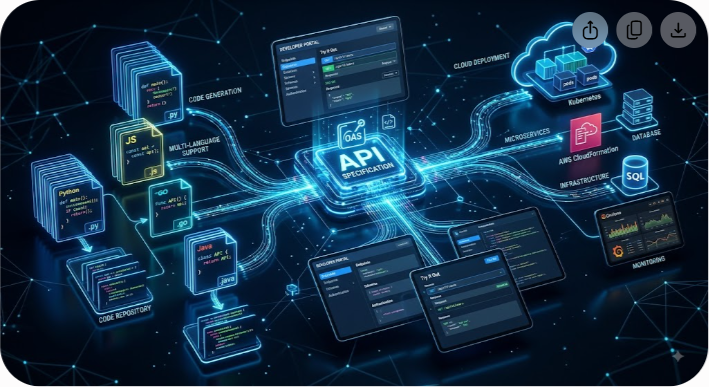
Which SDK generator is best for an API-first SaaS platform? For teams evaluating Speakeasy and Fern, the choice comes down to a fundamental architectural split: Speakeasy is an infrastructure-focused developer-experience engine optimized for granular control, custom pipelines, and Terraform provider generation, while Fern is a unified documentation and SDK platform built to keep client libraries, interactive API reference docs, and developer portals perfectly in sync from a single specification.
If your API strategy requires custom CI/CD controls, enterprise configuration overlays, or automated infrastructure management via Terraform providers, Speakeasy is the superior choice. If your primary goal is delivering a cohesive end-to-end developer experience where client SDKs, code snippets, and interactive documentation sites update together without maintaining separate pipelines, Fern is the better fit.
Maintaining hand-crafted SDKs across five or more programming languages costs typical B2B SaaS companies upwards of $150,000 per year in engineering overhead alone. Automated SDK generators solve this burden, but picking the wrong generation platform can leave your API consumers with clunky, unidiomatic code that feels like a raw machine translation. Here is a comprehensive comparison of how Speakeasy and Fern perform across code quality, spec compliance, developer workflows, documentation publishing, and total cost of ownership.
The 60-Second Core Verdict
For engineering leads who need an immediate recommendation, here is how Speakeasy and Fern divide the API landscape:
Choose Speakeasy if:
- You need to generate Terraform providers alongside client SDKs for infrastructure management.
- Your workflow relies heavily on standard OpenAPI 3.0 or 3.1 specifications and requires Speakeasy Overlays to clean up or extend specs without editing source files.
- Your platform team demands deep pipeline customization, self-contained CI/CD integration, and granular configuration over every step of the output build.
- You want to generate Model Context Protocol (MCP) servers and AI agent tool definitions directly from your API spec.
Choose Fern if:
- You want a single platform that generates multi-language SDKs, code snippets, and interactive, hosted documentation portals simultaneously.
- You prefer writing API definitions using Fern Definition or TypeSpec alongside traditional OpenAPI 3.0/3.1 specs.
- You want built-in AI documentation search trained directly on your specs, SDKs, and guides.
- Your focus is minimizing maintenance overhead across both client libraries and customer-facing reference documentation.
At Saasbonus, our independent evaluations show that neither tool produces raw, unreadable machine output typical of legacy open-source generators. Both tools generate clean, type-safe, human-readable code. However, their operational models address completely different workflow priorities.
Why Automated SDK Generators Matter in Modern SaaS
For years, API-first SaaS companies faced an uncomfortable choice when distributing client libraries:
- Hand-code SDKs in multiple languages: High quality, but requires dedicated software engineers for TypeScript, Python, Go, Java, C#, and Ruby. As the API evolves, client libraries fall out of sync, creating subtle runtime bugs and developer frustration.
- Use legacy open-source generators: Fast and cheap, but historically notorious for producing unidiomatic code, giant monolith classes, missing async support, and zero handling for complex union types or retries.
Modern SDK generators like Speakeasy and Fern have closed this gap. Instead of outputting generic HTTP wrappers, they analyze your API contract and generate production-grade client libraries complete with native authentication flows, automatic retries with exponential backoff, type-safe error handling, pagination iterators, and streaming capabilities for Server-Sent Events (SSE) and WebSockets.
The generation pipeline transforms your raw input spec into multiple deployment outputs:
- API Input: Raw OpenAPI 3.0/3.1, TypeSpec, or Fern Definition file.
- Compiler Engine: Speakeasy CLI / Overlay or Fern Engine processing rules.
- Generated Outputs: Native language SDKs (npm, PyPI, Go), hosted docs, Terraform providers, and AI agent definitions.
When building an API-first business, developer experience (DX) acts as a direct growth lever. If an engineer can copy a two-line snippet, install a typed package via npm or PyPI, and execute their first API request in under three minutes, your conversion rate from evaluation to production customer increases dramatically.
Architectural Philosophy: How Speakeasy and Fern Differ
Understanding how Speakeasy and Fern structure their systems reveals why they feel so different in daily operation.
Speakeasy: The Modular Developer Experience Pipeline
Speakeasy views SDK generation as an engineering pipeline task. Its core philosophy centers on taking your existing OpenAPI specification, validating it against strict production rules, modifying it dynamically via declarative overlays, and compiling it into standalone repositories.
Speakeasy does not try to host your entire documentation suite or manage your marketing pages. Instead, it plugs into your existing git workflows, GitHub Actions, and release automation. It acts as a specialized compiler for API-related artifacts, including client libraries, CLI tools, Terraform HCL providers, and Model Context Protocol (MCP) servers for AI assistants.
Fern: The Cohesive Developer Experience Ecosystem
Fern treats client SDKs and API reference documentation as two sides of the same coin. In Fern's architecture, your API definition is the single source of truth for your entire external developer surface.
When you trigger a build in Fern, it generates type-safe SDKs, builds code snippets for every endpoint in every language, and compiles an interactive documentation portal hosted on your custom domain. If an endpoint definition changes, Fern updates the TypeScript client, the Python client, and the interactive playground on your docs site simultaneously. This eliminates documentation drift, where sample code on a docs page no longer matches the published SDK version.
Speakeasy Deep-Dive: Features, Workflow, and Customization
Speakeasy has built a strong reputation among platform teams and enterprise API providers who require strict control over output code and build steps.
The Speakeasy build pipeline follows a distinct multi-stage transformation:
- Backend framework generates or exposes raw OpenAPI specification.
- Speakeasy CLI applies YAML overlays to clean up method names and group namespaces.
- Speakeasy Compiler Engine generates isolated client SDK codebases.
- GitHub Actions publish code to package managers (npm, PyPI) and generate Terraform providers.
1. OpenAPI Extensions and Speakeasy Overlays
One of Speakeasy's standout innovations is the Speakeasy Overlay specification (based on the OpenAPI Overlay Specification standard). In many engineering organizations, backend teams generate OpenAPI specs automatically from web framework annotations (e.g., FastAPI, Spring Boot, or NestJS). These raw specs are often messy, containing auto-generated operation IDs like `users_controller_get_user_by_id_v1`.
Instead of forcing developers to edit generated source files or manually update thousands of lines of OpenAPI YAML, Speakeasy lets you apply YAML-based overlay files:
```yaml overlay: 1.0.0 info: title: Clean up operation IDs for SDK generation version: 1.0.0 actions:
- target: $.paths['/v1/users/{id}'].get
update: operationId: getUser x-speakeasy-group: users ```
This separation keeps your backend code clean while allowing developer experience teams to refine SDK method names, group endpoints into logical namespaces, and annotate fields for documentation.
2. Multi-Language Support and Code Quality
Speakeasy supports generation across 8+ target languages, including:
- TypeScript / JavaScript (Node.js and browser runtimes)
- Python (sync and async asyncio clients)
- Go (idiomatic interfaces and struct configurations)
- Java (Gradle/Maven support with Jackson serialization)
- C# / .NET (async Task-based APIs with strong typing)
- Ruby
- PHP
- HashiCorp Terraform Provider (HCL)
Speakeasy output reads like hand-written code. It avoids external dependency bloat by using native language features (such as `fetch` in modern TypeScript or `httpx` in Python) whenever possible, resorting to third-party packages only when essential.
3. Terraform Provider Generation
For B2B SaaS platforms targeting enterprise infrastructure or platform engineering teams, Terraform provider generation is a major differentiator. Manually writing and maintaining a Terraform provider using the HashiCorp Plugin Framework requires deep Go expertise.
Speakeasy automates this entirely. By adding Terraform-specific annotations to your OpenAPI spec, Speakeasy generates a fully compliant Terraform provider in Go. This allows your enterprise customers to manage your SaaS resources (e.g., API keys, webhooks, team permissions, projects) via Infrastructure as Code (IaC) without your team writing custom Go provider logic.

4. Model Context Protocol (MCP) Server Generation
As AI agents become primary consumers of SaaS APIs, providing standard REST endpoints is no longer enough. Speakeasy can convert your OpenAPI definition into a Model Context Protocol (MCP) server. This allows AI models (such as Claude Desktop or custom AI agents) to discover, authenticate, and execute actions against your SaaS platform automatically.
Fern Deep-Dive: Features, Ecosystem, and Docs Integration
Fern approaches developer experience by combining SDK generation, documentation hosting, and API definition tooling into a single platform.
Fern operates through a synchronized publish-and-deploy sequence:
- Developer writes or updates API definition (Fern Def, TypeSpec, or OpenAPI).
- Fern CLI validates contracts and sends definitions to the Fern cloud engine.
- Fern outputs synchronized client SDK packages across npm, PyPI, and Maven.
- Fern automatically compiles and deploys the hosted interactive documentation site.
1. Specification Flexibility: Fern Definition, TypeSpec, and OpenAPI
While Speakeasy focuses strictly on OpenAPI, Fern supports multiple input formats:
- OpenAPI 3.0 & 3.1: Import existing JSON or YAML OpenAPI specs.
- Fern Definition: A human-friendly, multi-file YAML format designed specifically to eliminate OpenAPI verbosity.
- TypeSpec: Microsoft's API design language that feels like TypeScript interfaces.
- AsyncAPI & gRPC/Protobuf: For WebSocket, event-driven, and high-performance RPC endpoints.
The Fern Definition format is popular among fast-moving SaaS engineering teams who find standard OpenAPI specs overly verbose. For example, defining a model in Fern Definition requires minimal syntax:
```yaml types: User: properties: id: string email: string role: UserRole createdAt: datetime
UserRole: enum:
- admin
- member
- guest
```
Fern compiles this concise definition into full OpenAPI specs behind the scenes while generating clean client SDKs.
2. Multi-Language Support and Code Quality
Fern supports generation across 9+ languages and environments:
- TypeScript / JavaScript
- Python
- Go
- Java
- C#
- Ruby
- PHP
- Swift
- Rust
Fern's generated code adheres strictly to native language conventions. In TypeScript, it emits native Promises and clean interface type guards. In Python, it generates Pydantic v2 models, full type hints, and supports both synchronous and asynchronous network calls out of the box.
3. Integrated Documentation & API Reference Portals
Fern's biggest operational advantage is its integrated documentation engine. Rather than configuring a separate documentation generator like Readme, Mintlify, or GitBook, Fern generates a fast, SEO-optimized docs site directly from your API definition.
The hosted docs site includes:
- An interactive endpoint runner ("Try It Out" playground).
- Code snippets in every language that automatically match the generated SDK syntax.
- Markdown and MDX support for writing conceptual guides, tutorials, and onboarding docs.
- Version control integration where pushing changes to GitHub automatically deploys new docs and publishes new SDK packages.
4. Built-In AI Search Assistant
Fern includes an integrated AI search engine trained directly on your API specifications, SDK method signatures, and Markdown guides. When developers search your documentation, the AI assistant answers natural language questions with working code snippets that utilize your generated SDKs.
Head-to-Head Feature Comparison
Here is a side-by-side technical comparison of Speakeasy and Fern based on hands-on benchmarks:
| Feature / Dimension | Speakeasy | Fern |
|---|---|---|
| Primary Focus | Advanced SDK, CLI, and Infrastructure Generation | Cohesive SDK, Snippet, and Docs Platform |
| Input Formats | OpenAPI 3.0, OpenAPI 3.1 | OpenAPI, Fern Def, TypeSpec, AsyncAPI, gRPC |
| Supported Languages | TS, Python, Go, Java, C#, Ruby, PHP, HCL | TS, Python, Go, Java, C#, Ruby, PHP, Swift, Rust |
| Terraform Provider Support | Advanced native generation | Limited / Not primary focus |
| AI / Agent Integrations | MCP Server & AI Tool generation | AI Docs Search & Assistant |
| Docs Portal Built-In | No (generates code snippets for external docs) | Yes (full hosted interactive docs site) |
| Spec Modifications | Speakeasy Overlays (OpenAPI Overlay spec standard) | Fern Definition transformation layer |
| CI/CD Integration | GitHub Actions, Gitlab CI, custom webhooks | Native GitHub Actions / Fern Cloud |
| Package Publishing | Automated to npm, PyPI, Go modules, Nuget, Maven | Automated to npm, PyPI, Go modules, Nuget, Maven |
| Setup Approach | CLI-driven with local overlay testing | CLI-driven with unified `fern.config.json` |
| Target Audience | Enterprise SaaS, Platform, Infrastructure teams | API-First SaaS, Developer Tools, AI Startups |
Code Quality Benchmark: TypeScript and Python
Code quality is the defining criteria for any automated SDK generator. If the output code feels mechanical, developers will abandon the library in favor of raw HTTP requests.
To evaluate real-world performance, we tested both generators against an OpenAPI 3.1 spec featuring authentication, pagination, union types with discriminators, and file uploads.
TypeScript Output Comparison
Both platforms generate exceptional TypeScript code. They output native async/await syntax, full type safety, and zero reliance on heavy runtime dependencies.
Speakeasy TypeScript Client:
Speakeasy creates modular, domain-grouped sub-clients attached to the root SDK instance.
```typescript import { SpeakeasySaas } from "@saas-company/sdk";
const sdk = new SpeakeasySaas({ apiKey: process.env["SAAS_API_KEY"] ?? "", });
async function main() { const response = await sdk.customers.list({ limit: 20, startingAfter: "cust_12345", });
for await (const customer of response) { console.log(customer.email, customer.subscriptionStatus); } }
main(); ```
Fern TypeScript Client:
Fern generates an ergonomic client with clean parameter interface definitions and built-in auto-pagination helpers.
```typescript import { FernSaasClient } from "@saas-company/sdk";
const client = new FernSaasClient({ token: process.env["SAAS_API_KEY"] ?? "", });
async function main() { const page = await client.customers.list({ limit: 20, });
console.log(page.data); }
main(); ```
Both outputs feel natural in Modern TypeScript. Speakeasy places emphasis on strict response wrappers that preserve full HTTP metadata (status codes, headers, raw response access), while Fern defaults to returning unwrapped payload models directly to simplify everyday application code.
Python Output Comparison
Python developers are picky about idiomatic type hints, PEP 8 compliance, and asynchronous execution options.
Speakeasy Python Client:
Speakeasy supports both synchronous and asynchronous calls through dedicated client instances or sub-modules.
```python from saas_sdk import SaasClient
sdk = SaasClient( api_key="your_api_key_here" )
response = sdk.projects.create( name="Production App", region="us-east-1", environment_variables={"LOG_LEVEL": "info"} )
print(response.project.id) ```
Fern Python Client:
Fern leverages Pydantic v2 for data parsing and validation, offering both sync and async clients out of the box.
```python from saas_sdk.client import AsyncSaasClient
client = AsyncSaasClient( token="your_api_key_here" )
async def main(): project = await client.projects.create( name="Production App", region="us-east-1", ) print(project.id)
import asyncio asyncio.run(main()) ```

Fern's choice to use Pydantic v2 in Python provides instant compatibility with modern Python stacks like FastAPI and LangChain, making it a favorite for AI-focused SaaS companies. Speakeasy relies on dataclasses or lightweight custom models to keep memory footprint low and installation fast.
OpenAPI Spec Compliance & Edge Case Handling
The true test of an SDK generator lies in how it handles complex OpenAPI edge cases:
1. Discriminated Unions (`oneOf`)
When an API returns polymorphic objects (such as different payment method payloads or event webhook types), your SDK must generate type-safe union models. Both Speakeasy and Fern handle `oneOf` with discriminators smoothly, outputting tagged union types in TypeScript and discriminated unions in Python Pydantic models.
2. Auto-Pagination
APIs handle pagination differently (cursor-based offset, page/limit, or link headers). Speakeasy and Fern allow you to annotate your API spec to define pagination behavior. Both tools generate native language iterators (e.g., `async generator` in TypeScript, `yield` in Python), allowing API consumers to stream through paginated lists without manually managing tokens.
3. Automatic Retries with Exponential Backoff
Flaky networks cause intermittent API failures. Both generators bake retry logic directly into generated HTTP clients. You can configure retry strategies for 5xx server errors and 429 rate-limit responses with customizable max retries, initial delay, and backoff multipliers.
4. Multipart File Uploads
Handling file uploads via `multipart/form-data` in raw HTTP code is tedious. Speakeasy and Fern turn file upload parameters into native stream or file-like arguments in generated methods, handling content-type boundaries automatically behind the scenes.
Developer Experience & Workflow Integration
How easy is it to maintain these tools in a production CI/CD pipeline?
Speakeasy CI/CD Workflow
Speakeasy provides a CLI tool (`speakeasy`) and a dedicated GitHub Action.
- You maintain your OpenAPI specification in your main application repository.
- When a pull request updates the API spec, Speakeasy runs a validation job and generates a dry-run preview of the SDK changes.
- Upon merging to `main`, the Speakeasy Action opens automated pull requests in dedicated target repositories.
- Once approved, Speakeasy tags the release and publishes updated packages to npm, PyPI, and Go module registries automatically.
This multi-repo model fits enterprise security standards where public SDK code lives in separate public GitHub repositories while the backend codebase remains private.
Fern CI/CD Workflow
Fern utilizes a centralized configuration directory (`/fern`) inside your repository.
```yaml
generators.yml example in Fern
default-group: local groups: publish: generators:
- name: fernapi/fern-typescript-node
version: 0.11.2 output: location: npm package-name: "@saas-company/sdk" token: ${NPM_TOKEN}
- name: fernapi/fern-python-sdk
version: 0.8.0 output: location: pypi package-name: "saas-company-sdk" token: ${PYPI_TOKEN} ```
Running `fern generate` or pushing changes to your main branch executes Fern's cloud build pipeline. Fern updates target SDK repositories, publishes registry packages, and redeploys your hosted documentation site in a single atomic pass.
Documentation and Developer Portals
A world-class SDK is ineffective if developers cannot find documentation explaining how to use it. This is where the core architectural divergence between Speakeasy and Fern becomes clearest.
Speakeasy's Approach: Documentation Agnostic
Speakeasy focuses on generating high-quality code snippets and code blocks designed to be embedded into existing documentation platforms such as Mintlify, Readme, Docusaurus, or GitBook. Speakeasy provides tooling to keep code snippets inside your external docs updated as the API evolves, but it does not host or render the full documentation website itself.
This gives engineering teams complete freedom to pick any documentation framework or build custom marketing sites, using Speakeasy strictly as an artifact generator.
Fern's Approach: Complete DX Ownership
Fern treats documentation as a primary feature. By hosting the documentation portal, Fern guarantees that every code example shown on an endpoint page is pulled directly from the actual generated SDK code.
If you rename a parameter in your API spec, Fern regenerates the SDK and updates the code block on the docs page simultaneously. Developers never encounter broken example snippets or outdated method signatures on your docs portal.
Infrastructure as Code: The Terraform Factor
If your B2B SaaS platform deals with cloud infrastructure, database hosting, security policy management, or DevOps automation, your enterprise customers will ask for a Terraform provider.
Hand-crafting a Terraform provider using the HashiCorp Go SDK takes months of dedicated engineering time. You must map CRUD operations to Terraform state resources, handle schema drift, write custom state import handlers, and maintain HCL documentation.
Speakeasy eliminates this effort by compiling OpenAPI specifications directly into Go-based HashiCorp Terraform Providers. It handles:
- Mapping GET, POST, PUT, and DELETE endpoints to Terraform Resource Lifecycle methods (`Create`, `Read`, `Update`, `Delete`).
- Automatic state schema generation and type conversion.
- Generating native HCL documentation for the official Terraform Registry.
Fern does not offer dedicated Terraform provider generation as a primary workflow, making Speakeasy the clear winner for infrastructure and platform SaaS companies.
Pricing Models & Total Cost of Ownership
Both Speakeasy and Fern offer commercial tier plans designed around team growth, language count, and deployment options.
Speakeasy Pricing Model
- Trial / Free Tier: Includes basic CLI usage and local test generation.
- Business / Enterprise Tiers: Pricing scales based on the number of generated SDK target languages, advanced custom overlays, Terraform provider generation, and enterprise SLA guarantees.
Fern Pricing Model
- Open Source / Free Tier: You can run Fern generators locally via the Fern CLI for free.
- Docs & Pro Plans: Tiered subscription pricing based on custom documentation domains, hosted docs usage, AI search queries, and managed SDK publishing pipelines.
When calculating Total Cost of Ownership (TCO), consider both software pricing and internal engineering hours saved. Hand-maintaining five language SDKs requires roughly 0.5 to 1 full-time engineer year-round for updates, bug fixes, and publishing. Both Speakeasy and Fern pay for themselves almost immediately by reducing that maintenance burden down to minutes per release cycle.
Common Implementation Pitfalls to Avoid
Automating SDK generation transforms engineering velocity, but teams frequently run into predictable traps during rollout:
Pitfall 1: Treating your raw backend spec as a public SDK contract
Raw OpenAPI specifications exported directly from backend frameworks often include internal endpoints, unhelpful auto-generated model names, or missing field descriptions. Before generating public SDKs, use Speakeasy Overlays or Fern Definitions to clean up model names, hide internal routes, and add human-readable descriptions.
Pitfall 2: Overlooking Breaking Change Management
Because automated generation makes publishing new SDK versions simple, it is easy to accidentally release breaking changes to consumers. Always run breaking change checks in your CI pipeline before merging spec updates. Fern includes built-in breaking change detection rules, while Speakeasy provides validation checks to alert developers when a field removal will break existing client code.
Pitfall 3: Ignoring Package Naming and Registry Setup
Before running automated generation in production, register your organization's scope on npm (`@your-company/sdk`), PyPI, Maven Central, and Go module repositories. Ensure your CI pipelines have secure, scoped access tokens to publish packages without manual intervention.
Decision Framework: Which Generator Should You Choose?
Use this decision matrix to pick the right platform for your SaaS engineering roadmap:
Choose Speakeasy if:
- You need a Terraform Provider to let enterprise customers manage resources via IaC.
- Your team wants to generate MCP Servers for AI models and LLM agents.
- You already have a dedicated documentation website (e.g., custom Next.js site or Docusaurus) and only need code snippets and client packages.
- Your API platform team demands fine-grained control over spec transforms using standardized OpenAPI overlays.
Choose Fern if:
- You want a single integrated platform for hosted documentation, API reference pages, and multi-language SDKs.
- You prefer designing APIs using Fern Definition or TypeSpec rather than writing verbose raw OpenAPI YAML files.
- You want an AI Search assistant trained on your docs and specs out of the box.
- Your top priority is preventing documentation drift by keeping code examples and SDK packages synchronized.
Final Recommendation
Both Speakeasy and Fern represent state-of-the-art tools in modern API developer experience.
If your company operates in the platform, DevOps, or infrastructure space where Terraform providers, custom CI pipelines, and granular code transformation are paramount, Speakeasy is the most powerful platform available.
If you are an API-first B2B SaaS platform looking to ship world-class developer documentation alongside idiomatic SDKs in a unified, automated publishing workflow, Fern delivers the most complete and friction-free experience.
At Saasbonus, we evaluate software so engineering and product leaders can make confident buying decisions without wasting trial cycles. Whichever tool you select, moving away from hand-crafted SDKs to automated generation will immediately free up engineering resources to focus on building core product value.