The CISO's Content Dilemma: Securing SaaS Tools Without Killing Velocity

You are sitting in a conference room, or more likely a crowded Zoom call, surrounded by your Chief Information Security Officer (CISO), two compliance officers, and a representative from legal. On your screen is a presentation deck for a collaborative content tool your team has been desperate to adopt for the past six months. It is a tool that promises to shave thirty percent off your content production cycle, eliminate version-control nightmares, and finally let your writers collaborate in real-time.
But as you run through the features, the room feels cold. The CISO is looking at a security questionnaire your vendor filled out with the enthusiasm of a teenager doing chores.
'Does this tool support SAML SSO out of the box on their standard tier?' the CISO asks.
'Well, it is behind an Enterprise paywall that costs four times the base price,' you admit.
'And what is their data retention policy for generative AI prompts? Are they using our inputs to train their models?'
Silence.
This is the starting point of the enterprise content dilemma. On one side, you have content and marketing teams who live and die by velocity. In a world where search landscape shifts happen weekly, waiting three months for security approvals feels like a death sentence. On the other side, the CISO's office is tasked with shielding the organization from multi-million dollar data breaches, regulatory fines, and brand-damaging leaks.
To the creative team, the CISO looks like a bureaucrat whose sole job is to say 'no.' To the CISO, the creative team looks like a pack of reckless cowboys pasting sensitive IP into unvetted browser extensions.
This guide is about dismantling that standoff. We will map out how enterprise organizations can build a reliable bridge between creative freedom and ironclad security, ensuring you can deploy the best modern content software without turning your legal department into a software graveyard.
Section 1: The Invisible Explosion of Creative Shadow IT
When security processes are too slow, teams do not stop using software; they just stop asking for permission. This is the origin of shadow IT in content operations.
Consider the typical day of an enterprise content writer. They are juggling an AI copy assistant, a digital asset manager, an image generator, a grammar checker, and three different collaborative editors. If the organization only officially approves a legacy word processor from 2012, the writer faces a choice: suffer through excruciating inefficiency, or quietly sign up for a modern tool using a personal Gmail account and a corporate credit card.
Nearly every creative director we talk to at SaaSBonus admits to harboring at least one or two unapproved tools in their daily stack. The motivations are never malicious. Writers and editors simply want to produce great work quickly. But the risks are massive:
- The Grammar Checker Leak: A writer copies a draft of an unreleased financial earnings report or a highly confidential product roadmap into a free online grammar checker. If that tool's terms of service state they retain ownership or processing rights of all pasted text, a major corporate secret is now sitting on an external server.
- The Ex-Employee Backdoor: An agency contractor is invited to a collaborative whiteboarding tool via their personal email. Six months after the contract ends, their access is never revoked because the tool is completely invisible to the centralized IT department.
- The AI Model Training Nightmare: An editor uses an unvetted AI writing assistant to clean up a legal brief. Because the tool is a free or low-tier consumer version, the provider uses the inputted data to train its public models, potentially exposing proprietary trade secrets to competitors who query the same AI.
To solve this, we have to understand that the goal is not to police every keyboard stroke, but to build an ecosystem where the secure choice is also the easiest choice.
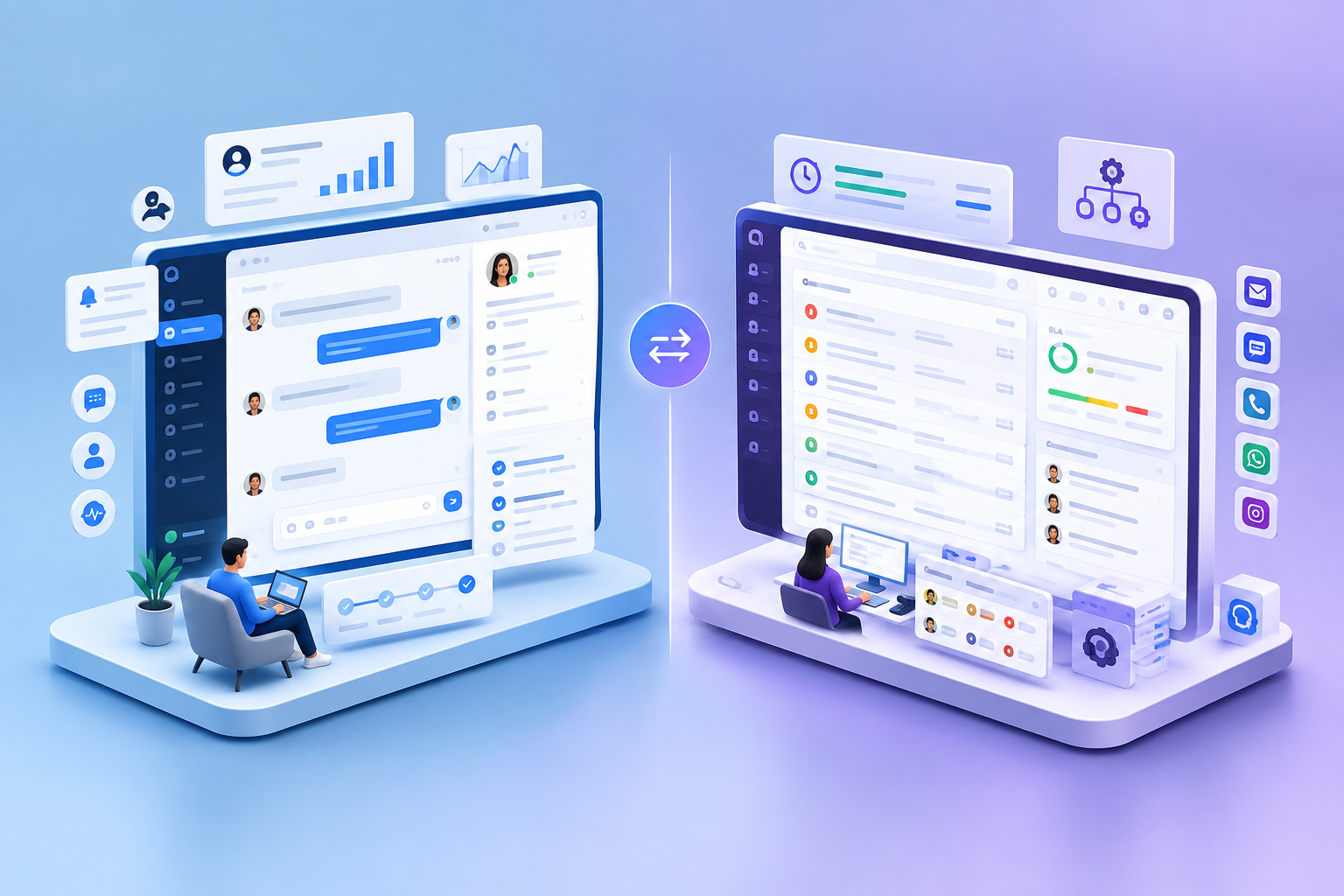
[Creative Team: Wants Speed & Usability] ? ? (The Classic Friction Point) ? [CISO Team: Wants Control & Security]
To bridge this gap, we have to look closely at what actually keeps security officers awake at night.
Section 2: What Your CISO Actually Cares About (And Why)
To negotiate effectively with your security team, you need to speak their language. They do not care about the sleekness of an interface or whether a tool has a beautiful dark mode. They care about risk mitigation.
Here are the five pillars of enterprise SaaS security that every content director should understand before bringing a new vendor to the evaluation table.

1. Data Governance and Residency
Where does the data live, and who can see it? If your enterprise operates in the European Union or handles data for EU citizens, GDPR compliance is non-negotiable. If you are in healthcare, it is HIPAA. A CISO needs to know if a SaaS provider stores data in AWS US-East-1, on physical servers in Europe, or in a decentralized network with poor physical security controls.
2. Encryption (In Transit and At Rest)
If a bad actor intercepts the traffic between your writer's laptop and the cloud editor, can they read the content? This is encryption in transit (typically handled via HTTPS/TLS 1.3). Similarly, if the vendor's database is breached, is your stored data encrypted (encryption at rest, often via AES-256)? If a SaaS vendor cannot answer this clearly on their pricing page or security documentation, they will be rejected instantly.
3. Identity and Access Management (IAM)
This is where Single Sign-On (SSO) comes in. CISOs want all employee access managed through a central identity provider like Okta, Azure AD, or Ping Identity. Why? Because when an employee leaves the company, IT can disable their corporate identity in one click, immediately cutting off access to fifty different SaaS tools at once. If a tool relies on individual passwords, it is a liability.
4. SOC 2 Type II Certification
A SOC 2 Type II report is the gold standard for SaaS security. Unlike a Type I report (which is just a snapshot of a vendor's security setup at a specific moment), a Type II report proves that the vendor has maintained rigorous security controls over a continuous period (usually 6 to 12 months). It is audited by an independent third party and covers security, availability, processing integrity, confidentiality, and privacy.
5. AI Safety and Data Ownership
In the era of integrated AI writing assistants, this has become the top priority for enterprise security teams. CISOs need absolute assurance that any data inputted into an AI feature is:
- Not used to train the vendor's foundation models.
- Isolated to the organization's specific tenant.
- Subject to the same retention and deletion policies as standard text.
Section 3: The Velocity Tax: The Hidden Cost of Bad Security Pipelines
While security is vital, we cannot ignore the cost of operational friction. When a software vetting process takes six to nine months, the business pays a silent but steep price.
"We had a mid-market enterprise team tell us they spent $45,000 in internal engineering hours and legal fees just to clear a $1,200-a-year content planning tool," says an operations consultant we interviewed. "By the time the tool was approved, the campaign it was purchased for had already ended."
This is the Velocity Tax. Here is how it manifests in enterprise content teams:
| Operational Stage | The High-Velocity Ideal | The Low-Velocity Security Trap |
|---|---|---|
| Vendor Discovery | Team identifies a tool, runs a 14-day trial, validates the workflow. | Team spends months guessing if a tool will pass security before they can even test it. |
| Procurement | Standard legal review; payment via corporate procurement card. | Vendor is buried in a 200-question spreadsheet; endless negotiations over minor liability clauses. |
| Onboarding | Automated SSO setup; team is writing and publishing within 48 hours. | Manual account creation, custom permission requests, IT ticket backlog delays launch by weeks. |
| Optimization | Quick integration with other tools via native APIs or Zapier. | API keys are blocked; integrations require custom security reviews for every connected node. |
When this tax becomes too high, the quality of your output drops. Writers get burnt out by clunky legacy software. The marketing team misses market trends because they cannot launch landing pages fast enough. The company loses ground to nimbler, agile competitors who have figured out how to balance safety with speed.
Section 4: A Collaborative Framework for Fast Vetting
How do we fix this? By shifting security from a gatekeeper model to an enablement model. Instead of throwing a tool over the wall to IT and hoping it survives, content operations and security teams must collaborate on an agile vetting pipeline.
Here is a repeatable framework designed to accelerate approvals without compromising safety.
Step 1: Establish Data Sensitivity Tiers
Not all content operations are created equal. A tool used to draft highly confidential financial guidance or health-related product launches requires much tighter controls than a tool used to generate social media posts about national coffee day.
Create a simple matrix to categorize your content tech stack:
- Tier 1: High Sensitivity. Tools that ingest, process, or store intellectual property, customer data, unreleased product plans, or financial records. (e.g., your primary CMS, customer relationship databases, enterprise collaborative hubs like Notion or internal wikis).
- Security Requirement: Full SOC 2 Type II, SAML SSO, strict data residency controls, custom DPAs (Data Processing Agreements).
- Tier 2: Medium Sensitivity. Tools used for public-facing draft creation, general brainstorming, and workflow management where no customer PII (Personally Identifiable Information) or deep trade secrets are stored. (e.g., project management tools, wireframing platforms, basic digital asset managers).
- Security Requirement: SOC 2 Type I or equivalent self-assessment, secure login (Google Workspace SSO), clear privacy policy regarding data ownership.
- Tier 3: Low Sensitivity. Point solutions, utility apps, and design assistants that do not store continuous data or access corporate databases. (e.g., image compressors, stock photo platforms, generic headline analyzers).
- Security Requirement: Basic terms of service review, secure password policy, payment via virtual corporate cards with isolated limits.
By triaging tools this way, you avoid wasting your security team's valuable hours running Tier 1 evaluations on Tier 3 utilities.
Step 2: Use the 'Pre-Vetted' SaaS Directory Model
Instead of letting teams search the wild west of the internet every time they need a tool, the IT and content departments should co-create a catalog of pre-approved technologies.
For example, if your team needs an AI writer, you should already have one approved platform in the directory. If a team member wants to use a new one, they must prove that the existing tool cannot solve their specific problem. This limits vendor sprawl and keeps your security surface area tight.

At SaaSBonus, we maintain comprehensive databases of tools categorized by their security profiles, helping content directors find tools that already have enterprise-grade features built-in, saving you hundreds of hours in this step.
Step 3: Standardize the Questionnaire
Most security questionnaires are massive, legacy documents built for on-premise software. Work with your CISO to create a lightweight, modern SaaS security questionnaire specifically for content tools. Keep it focused on the issues that matter today:
- Where is the data hosted?
- Do you support our identity provider (Okta/Azure)?
- What is your AI model data usage policy?
- Do you have a current SOC 2 report or equivalent independent certification?
If a SaaS vendor cannot answer these four questions satisfactorily within their public-facing trust center, your content team can immediately filter them out without involving the CISO.
Section 5: Essential Features of a Secure, Fast Content Tool
When you are reviewing software options—whether on SaaSBonus or directly on a vendor's site—there are specific features that indicate the vendor understands the enterprise market. If you spot these features early, you can confidently fast-track the tool through your procurement pipeline.
1. Role-Based Access Control (RBAC)
In a large content team, you will have external agencies, freelance writers, internal editors, and executive stakeholders. You do not want a freelance writer to have the ability to delete your entire content repository, nor do you want an external contractor accessing your enterprise analytics dashboard.
Look for tools that offer granular RBAC, allowing you to assign roles such as:
- Viewer: Can read and comment on drafts but cannot edit or publish.
- Writer/Contributor: Can draft content but cannot change workspace settings or publish to production.
- Editor: Can edit and approve drafts, but cannot manage integrations.
- Admin: Full control over billing, integrations, and user management.
2. Zero Data Retention (ZDR) APIs for AI Features
If a content tool includes AI writing or editing features, look for providers that utilize Enterprise APIs with Zero Data Retention policies. This guarantees that any text processed by the AI engine is deleted immediately after the output is generated, and is never used for training purposes. This single feature can turn a 'no' from a CISO into a green light.
3. Detailed Audit Logs
If a piece of critical content is altered, a draft is leaked, or a setting is changed, your security team must be able to trace exactly who did it, when they did it, and from what IP address. Enterprise-grade content tools keep comprehensive, immutable audit trails that can be exported directly to your security information and event management (SIEM) systems.
4. Custom Data Processing Addendums (DPAs)
For companies handling sensitive user data, standard terms of service are rarely enough. The best enterprise SaaS platforms offer custom DPAs that align with global compliance regulations (GDPR, CCPA) and establish clear parameters for data breach notifications.
Section 6: How to Pitch a SaaS Tool to Your Security Team
If you have found a tool that your creative team loves and you are ready to bring it to your CISO, do not just send them a link and a request for a budget. You need to package the request like a seasoned operations manager.
Here is the exact pitch script and preparation checklist you can use to secure rapid buy-in.
The Preparation Checklist
Before you schedule the meeting, gather the following documents:
- [ ] The Vendor's SOC 2 Type II Report: (Or their SOC 2 Type I if they are an early-stage company, along with a security whitepaper).
- [ ] The Vendor's Trust Center URL: Modern SaaS companies put their security details on a public subdomain (e.g., trust.vendor.com or security.vendor.com).
- [ ] The Data Flow Diagram: A simple sketch showing how data enters the tool, where it is stored, and where it goes (e.g., to an AI model, to your CMS, etc.).
- [ ] A Clear Business Case: The concrete metrics of what this tool will save the company (e.g., 'This tool saves our 20-person writing team 15 hours a week, which equates to roughly $12,000 a month in operational efficiency').
The Pitch Blueprint
When you sit down with your CISO, structure the conversation around collaboration, not confrontation. Use this framing:
"We want to adopt [Tool Name] to solve a major operational bottleneck in our content creation flow. We know that protecting our intellectual property is paramount, so we have already done a preliminary security check. Here is what we confirmed: 1. They have a current SOC 2 Type II audit. 2. They support SAML SSO, which means we can manage all user access through our Okta dashboard. 3. Their AI feature uses an enterprise API that guarantees zero data retention, meaning our creative inputs will never train external models. We have classified this as a Tier 2 tool because it will only handle drafts that are destined for public release anyway. We would love your team's help to review their standard DPA so we can get this safely deployed before our Q3 push."
By presenting the tool this way, you show your security team that you respect their mission. You are not treating them as an obstacle; you are treating them as a strategic partner.
Moving Beyond the Standoff
The most successful modern enterprises do not choose between security and speed; they build systems where the two concepts reinforce each other. When security protocols are fast, clear, and collaborative, creative teams have no reason to hide their software usage in the shadows. When creative teams understand the basic tenets of data safety, they select tools that are built to survive the enterprise vetting pipeline from day one.
At SaaSBonus, we are committed to making this evaluation easier. Our independent, hands-on reviews do more than just analyze a tool's user experience or feature list—we dive deep into pricing tiers, enterprise capabilities, security structures, and compliance integrations. We help you cut through the marketing noise so you can pick the right software the first time, keeping your content moving at the speed of your market.
Before you sign up for your next content operations platform, run it through our comparisons, read our direct guides, and make sure you are choosing a partner that your CISO will approve as enthusiastically as your writers will use it.