Together AI vs Anyscale: Best LLM Infrastructure?
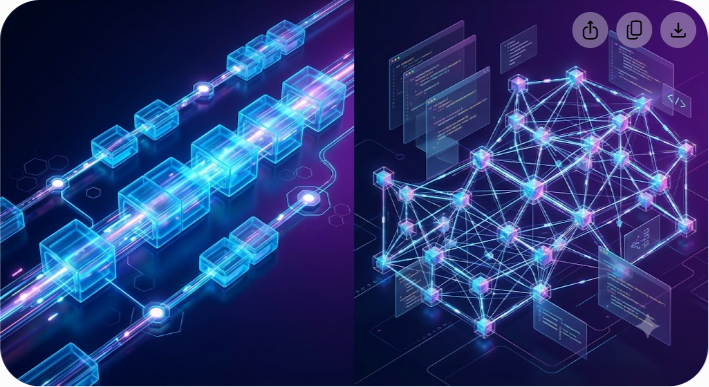
Choosing between Together AI and Anyscale comes down to a fundamental architectural question: do you need a high-performance managed API engine that turns open-source models into instant serverless endpoints, or do you need a distributed compute substrate that gives you total Pythonic control over every GPU cluster, worker node, and custom pipeline step?
If your goal is to call open-source models like Llama 3 or DeepSeek with single-digit millisecond response overhead and zero cluster management, Together AI is the faster path to production. If you are training proprietary models from scratch, orchestrating complex multi-agent workflows across thousands of GPU cores, or running native Ray clusters inside your own virtual private cloud (VPC), Anyscale is the superior platform.
Here is how these two AI infrastructure powerhouses stack up in production environments, covering core mechanics, performance numbers, pricing structures, and architectural trade-offs.
Core Architectural Differences: How They Work
To understand where each platform excels, you have to look at the foundational abstractions they expose to software engineers and ML platform teams.
Together AI: The High-Throughput Inference Engine
Together AI is designed ground-up for extreme efficiency in model serving and fine-tuning. While they offer dedicated GPU cluster rentals, their core flagships are serverless API endpoints and dedicated managed instances.
Together AI achieved its market share by innovating directly on the GPU kernel level. By implementing custom FlashAttention kernels, speculative decoding, and optimized vLLM-backed runtimes, Together delivers high token-per-second throughput per GPU. For developers, interacting with Together feels like using OpenAI: you point an API client at a unified base URL (https://api.together.xyz/v1), specify a model string, and start streaming tokens immediately.
Anyscale: The Production Home of Distributed Ray
Anyscale was founded by the original creators of Ray, the open-source unified compute framework that powers massive AI infrastructure at companies like OpenAI, Uber, and Spotify.
Anyscale is not a simple wrapper around model APIs. It is a managed, enterprise-grade cloud environment for Ray. It abstracts away cloud cluster provisioning on AWS, GCP, or Azure, multi-node fault tolerance, and dynamic auto-scaling. With Anyscale, you write native Python code, annotate tasks or actors with Ray decorators, and distribute training, batch inference, reinforcement learning (RLHF), and real-time model serving across hundreds of bare-metal GPUs seamlessly.
Feature Breakdown and Workload Comparison
| Capability / Feature | Together AI | Anyscale | Advantage |
|---|---|---|---|
| Primary Abstraction | REST / OpenAI-compatible API & Managed Endpoints | Distributed Python runtime & managed Ray clusters | Together AI for fast integration; Anyscale for custom pipelines |
| Serverless LLM Serving | Instant pay-per-token access to 100+ open models | Requires configuring Ray Serve applications | Together AI |
| Custom Pipeline Orchestration | Limited (Standard HTTP/gRPC pipelines) | Complete control over CPU/GPU memory, worker pools, & state | Anyscale |
| Model Fine-Tuning | Managed SFT / LoRA via simple API calls or web UI | Scalable distributed training using Ray Train & PyTorch | Together AI for ease; Anyscale for massive custom jobs |
| Batch Data Processing | Basic API batch requests | High-throughput multi-modal batch processing via Ray Data | Anyscale |
| Multi-Cloud Deployment | Together Cloud (Bare metal) or Dedicated Instances | Runs inside your own cloud VPC (AWS, GCP, Azure) | Anyscale (Zero data egress / strict compliance) |
| Developer Onboarding Time | Less than 5 minutes | Hours to days (requires understanding distributed computing) | Together AI |
Performance and Latency: Who Serves Tokens Faster?
When evaluating LLM serving infrastructure, latency boils down to three core metrics: Time to First Token (TTFT), Inter-Token Latency (ITL), and total Tokens Per Second (TPS) throughput under concurrent load.
Together AI's Speed Optimization
Together AI focuses heavily on optimizing inference execution paths. On modern open weights, Together consistently pushes high tokens per second per GPU rates.

- Optimized Runtimes: Together's serverless endpoints use custom compilation stacks that maximize GPU memory bandwidth utilization.
- Prefill and Decode Decoupling: Together distributes the prefill stage (processing prompt context) and the decode stage (generating output tokens) across separate GPU groups, minimizing lag when handling long context windows.
- Global Caching: Intelligent prompt caching reduces TTFT significantly for repetitive system prompts or agent context histories.
Anyscale and Ray Serve Flexibility
Anyscale relies on Ray Serve as its serving layer. Ray Serve allows you to compose complex inference pipelines—such as routing a query through an embedding model, passing it to a vector database, calling a fine-tuned reranker, and executing an LLM generation step—all within a single Python script.
- Fractional GPU Allocation: Ray Serve lets you run multiple small models on a single GPU or split a 70B parameter model across multiple GPUs using tensor parallelism.
- Latency Trade-offs: Out of the box, an unoptimized Ray Serve deployment using raw Hugging Face pipelines will lag behind Together AI's custom engine. However, when paired with high-performance engines like vLLM or TensorRT-LLM inside Ray Serve, Anyscale delivers near-identical raw inference speeds with vastly superior routing logic.
Performance Verdict: If you want immediate, optimized speed without tuning CUDA kernels or tensor parallel settings, Together AI takes the lead. If you need custom model orchestration—such as cascading small and large models dynamically—Anyscale gives you the code-level hooks to build custom high-speed pipelines.
Pricing and Economics: Serverless Tokens vs. Reserved Hardware
Understanding the cost structures of Together AI and Anyscale requires breaking down your expected usage pattern into two distinct operational modes: variable serverless consumption and fixed hardware utilization.
- Variable Workloads: For unpredictable or early-stage traffic, Together AI's serverless token pricing ($0.20 to $2.50 per million tokens) ensures you only pay for what you generate without idle compute costs.
- High Constant Workloads: For massive volume or multi-node training, running dedicated hardware via Anyscale or Together Dedicated ($2.00 to $6.50+ per GPU-hour) eliminates vendor token markups.
Together AI Pricing Mechanics
Together AI operates on four distinct billing meters:
- Serverless Inference: Billed per million tokens (input + output). Rates range from $0.20 per million tokens for lightweight models up to $2.50+ per million tokens for massive architectures.
- Dedicated Endpoints: You pay a fixed fee per GPU-hour (for example, around $6.49/hr for an NVIDIA H100 dedicated instance) regardless of token volume.
- GPU Clusters: Hardware rentals billed per GPU-hour for large-scale training and custom pre-training jobs.
- Fine-Tuning: Charged per million training tokens, plus a separate ongoing hourly charge to host the resulting adapter or model checkpoint on a dedicated endpoint.
Anyscale Pricing Mechanics
Anyscale pricing revolves around compute abstraction rather than token counting:
- Bring Your Own Cloud (BYOC): Anyscale deploys inside your AWS, GCP, or Azure account. You pay your cloud provider directly for the raw compute.
- Anyscale Platform Fee: Anyscale charges a premium on top of your underlying cloud bill, typically calculated per Anyscale Compute Unit or GPU-hour used.
- Zero Idle Token Tax: Since you manage the infrastructure scaling policies, you do not pay token markups. When running 24/7 high-volume inference, running raw GPUs via Anyscale is drastically cheaper than paying per-token serverless fees at scale.
Economic Verdict: For early-stage products, low-throughput applications, or erratic traffic spikes, Together AI's serverless tier is significantly more cost-effective. For enterprise engineering teams spending heavily on inference each month, moving to dedicated GPU clusters via Anyscale BYOC eliminates vendor markup on tokens and reduces overall cloud spend.
Security, Compliance, and Data Governance
Data privacy is frequently the deciding factor for enterprise platform teams choosing between these platforms.
Together AI Compliance Model
Together AI operates as a managed platform-as-a-service (PaaS). Standard terms ensure that customer data is not used to train foundation models. They offer SOC 2 Type II compliance, HIPAA-compliant configurations, and dedicated single-tenant clusters where your data never touches shared hardware. However, data must still cross external network boundaries to reach Together's infrastructure unless you deploy dedicated private links.
Anyscale In-VPC Deployment
Anyscale provides an architectural model that enterprise security teams favor: In-VPC Deployment.
The control plane is managed by Anyscale, but the data plane—where your GPUs reside, your data is processed, and your weights are stored—runs entirely inside your organization's AWS or GCP VPC.
- Proprietary training datasets never leave your perimeter.
- Model endpoints run behind your existing corporate firewalls and VPNs.
- Compliance sign-offs (SOC 2, ISO 27001, FedRAMP alignment) become much simpler because data processing remains in your own environment.
How to Choose: Decision Framework
To pick the right platform, evaluate your team's engineering resources, traffic volume, and architectural goals.
Choose Together AI If:

- You want to ship an AI feature in days without managing infrastructure, Docker containers, or Kubernetes pods.
- You rely heavily on standard open-source models (Llama, Qwen, DeepSeek, Mistral) and want instant access via an OpenAI-compatible API.
- Your application traffic is unpredictable or prone to sudden spikes and prolonged lulls.
- You want straightforward fine-tuning using LoRA or SFT without writing custom PyTorch distributed training scripts.
Choose Anyscale If:
- You already use Ray or need fine-grained Python control over distributed training, data processing, and serving.
- Your workload involves complex multi-model pipelines, reinforcement learning, or agentic frameworks requiring shared memory and fast inter-process communication.
- You must keep all training data and model weights inside your enterprise cloud VPC due to strict regulatory requirements.
- Your inference volume is high enough that serverless token billing is no longer financially sustainable compared to raw GPU instance costs.
Practical Walkthrough: Deploying a Fine-Tuned Model
To see how the developer experience differs in practice, let's look at how you deploy a model on both platforms.
Together AI Deployment Workflow
With Together AI, fine-tuning and deploying a model requires zero infrastructure setup. You submit your JSONL dataset, trigger the job, and deploy the resulting checkpoint via an API call:
- Upload Dataset: Submit your JSONL formatted training data via the API or CLI.
- Run Fine-Tuning: Launch a LoRA fine-tuning job specifying your base model.
- Deploy Endpoint: Once training completes, spin up a dedicated endpoint with a single request:
python import together
Start a dedicated endpoint for your custom model
response = together.Endpoints.create( model="your-org/llama-3-8b-custom-v1", hardware="NVIDIA-A10G", autoscaling={"min_nodes": 1, "max_nodes": 3} )
print(f"Endpoint live at ID: {response['id']}")
Within minutes, your custom model is accessible through the same unified REST interface as any standard open-source model.
Anyscale Ray Serve Workflow
On Anyscale, you define the complete distributed application architecture in Python code. You have explicit control over how resources are provisioned across your nodes:
python import ray from ray import serve from vllm import LLM, SamplingParams
@serve.deployment( num_replicas=2, ray_actor_options={"num_gpus": 1} ) class VLLMDeployment: def __init__(self):
Initialize vLLM engine inside the Ray actor
self.llm = LLM(model="meta-llama/Meta-Llama-3-8B-Instruct")
async def __call__(self, request) -> dict: json_inputs = await request.json() prompt = json_inputs["prompt"] sampling_params = SamplingParams(temperature=0.7, max_tokens=256)
outputs = self.llm.generate([prompt], sampling_params) return {"text": outputs[0].outputs[0].text}
Deploy the Ray application to your Anyscale cluster
entrypoint = VLLMDeployment.bind()
This Python-native approach requires managing dependencies, configuring auto-scaling policies, and defining health checks. In exchange, you get total visibility into hardware allocation and worker-level execution.
Common Pitfalls to Avoid
- Underestimating Fine-Tune Hosting Costs on Together AI: While fine-tuning a model on Together AI is inexpensive upfront, running that custom model on a dedicated endpoint requires paying for dedicated GPU-hours 24/7. If your custom model receives low traffic, that idle cost can quickly add up.
- Over-engineering with Anyscale Too Early: Choosing Anyscale when you only need standard LLM completion endpoints introduces unnecessary operational overhead. Managing Ray clusters, cluster YAML files, and worker nodes takes engineering focus away from building product features.
- Ignoring Network Egress and Region Latency: Placing your application servers on AWS US-East-1 while using a serverless model endpoint located in a different cloud region introduces network round-trip delays that can outweigh model inference optimizations.
Finding the Right Infrastructure Balance
Both Together AI and Anyscale represent the modern standard for AI infrastructure, but they serve different engineering problems.
If you want to move quickly, minimize operational overhead, and consume state-of-the-art open-source LLMs through a fast API, Together AI is the clear choice. If you are building complex distributed AI systems, running multi-stage ML pipelines, or scaling heavy workloads inside your own private cloud, Anyscale provides the control and flexibility you need.
If you are evaluating AI infrastructure, developer tools, or cloud platforms for your tech stack, check out Saasbonus for detailed comparisons, hands-on software reviews, and practical guides to help you scale your SaaS platform efficiently.