What Is Google AppSheet? Features, Use Cases, and How It Works

The Exact Afternoon the Spreadsheet Dies
It usually happens on a Tuesday around 2:15 PM. You are staring at a Google Sheet that has ballooned into an unmanageable beast. It has forty-seven columns, endless color-coded rows, half-baked conditional formatting, and three broken formulas that someone accidentally deleted during lunch.
Your field technicians are trying to open this behemoth on their phones while standing on a windy job site. Your inventory manager is texting you photos of handwritten paper logs because typing into cell AZ104 on a mobile browser is a recipe for madness. Meanwhile, your operations lead is begging for a custom mobile app to streamline the mess, but the internal IT quote just came back: $85,000 and six months of development time.
This is the exact moment small business owners, department leaders, and operations managers reach a breaking point. You do not need a multi-million-dollar custom software project, but you cannot survive another week relying on a fragile spreadsheet held together by hope and duct tape.
Enter Google AppSheet.
AppSheet is Google's intent-driven, no-code app development platform. It takes the data you already collect in Google Sheets, Excel, or Cloud databases and converts it into native mobile and web applications in minutes. You do not need to learn Swift, Kotlin, or JavaScript. You do not need an engineering degree. If you know how to structure a table in a spreadsheet, you already possess 80% of the skills required to build functional business software on AppSheet.
At SaaSbonus, we spend our days dissecting software tools so you do not waste time or money on tech that fails to deliver. In this comprehensive guide, we will break down what Google AppSheet actually is, how its underlying engine works, its most powerful features, real-world use cases, and whether it is the right fit for your stack.
What Is Google AppSheet?
At its core, Google AppSheet is a no-code platform that enables anyone to build custom mobile and web applications directly from existing data sources. Acquired by Google in 2020 and deeply integrated into the Google Cloud and Google Workspace ecosystems, AppSheet acts as an intelligent bridge between raw data structures and user-friendly visual interfaces.
+-------------------------------------------------------------+
| YOUR DATA |
| Google Sheets | MS Excel | SQL | Salesforce / APIs | +-------------------------------------------------------------+ | (Real-Time Sync) v +-------------------------------------------------------------+
| APPSHEET ENGINE |
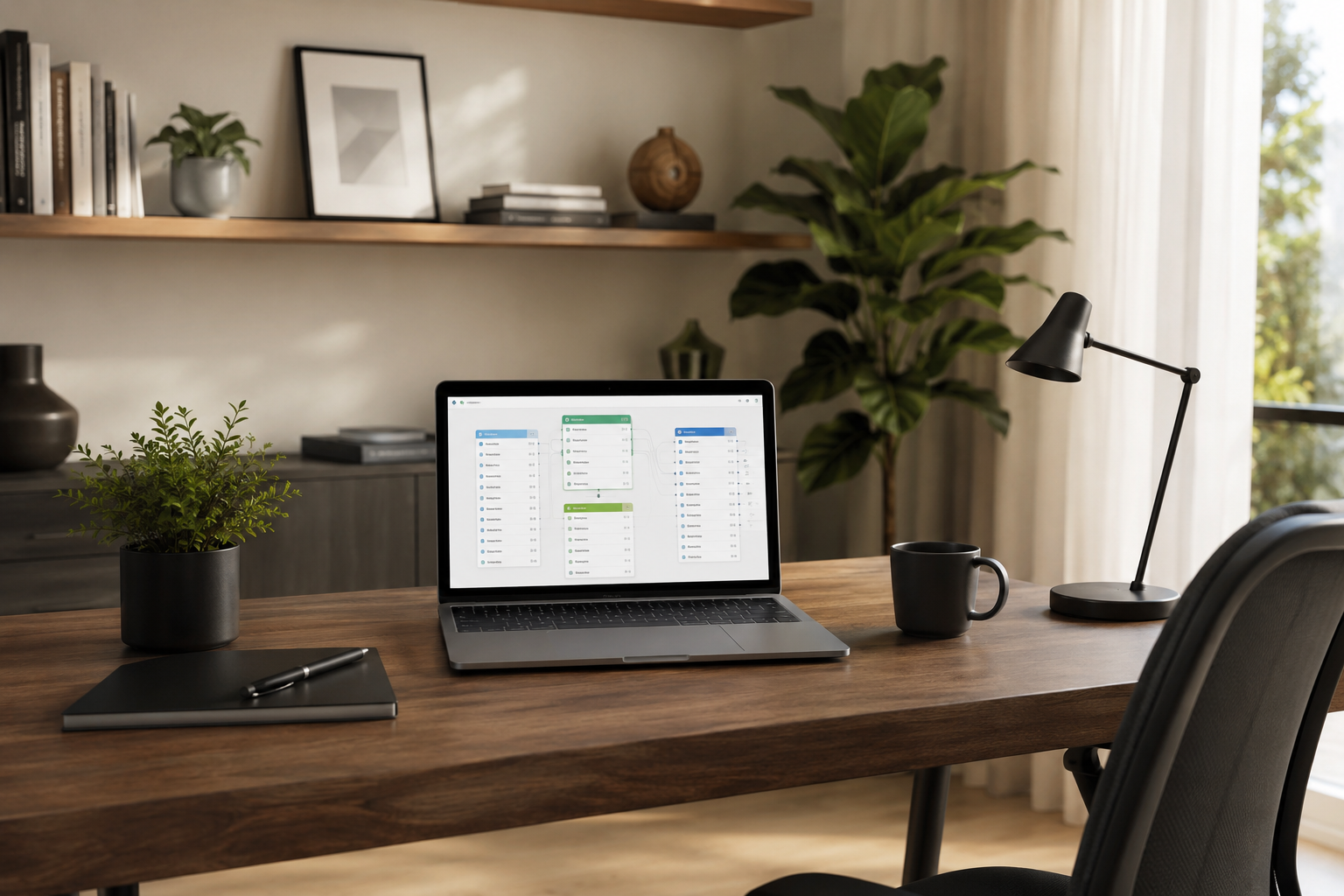
| Intent Detection UX / UI View Generation |
| Business Logic Rules Role-Based Access Control | +-------------------------------------------------------------+ | (Renders UI) v +-------------------------------------------------------------+
| NATIVE USER APP |
| Mobile (iOS / Android) | Tablet | Web Browser | +-------------------------------------------------------------+
Traditional application development requires writing front-end code for user interfaces, back-end code for database queries, and custom logic to manage business rules. AppSheet flips this paradigm on its head through intent-driven development.
Instead of asking you to design screens element by element, AppSheet reads your underlying data source—for example, a Google Sheet containing customer orders—and automatically infers what kind of app you want to build.
- If your spreadsheet contains address columns, AppSheet automatically generates interactive map views.
- If it contains dates and schedules, AppSheet generates calendar and timeline views.
- If it tracks statuses or stages, AppSheet creates kanban boards and detail cards.
Because AppSheet acts as a dynamic layer on top of your data, it does not lock your information into a proprietary black box. Your data remains where it lives—in your Google Workspace, Microsoft 365 environment, or cloud database—while users interact with a clean, responsive mobile interface.
How Google AppSheet Works: From Spreadsheet to App
Understanding how AppSheet operates helps demystify the platform. The app creation process follows a clear, logical progression.
[ Step 1 ] Connect Data (Sheets, SQL, APIs) | v [ Step 2 ] AppSheet Auto-Detects Schema & Relationships | v [ Step 3 ] Define UX Views (Forms, Maps, Dashboards) | v [ Step 4 ] Configure Logic & Automations (Workflows, Emails) | v [ Step 5 ] Deploy App & Manage Access Permissions
1. Data Source Connection
You start by pointing AppSheet toward your primary data source. This could be a simple Google Sheet stored in Google Drive, an Excel workbook on OneDrive, a Cloud SQL database, or an enterprise service like Salesforce.
2. Schema and Relationship Detection
Once connected, the AppSheet engine analyzes the structure of your data tables. It identifies data types for each column—distinguishing between plain text, numbers, email addresses, phone numbers, images, and GPS coordinates. It also detects relationships between different tables using primary and foreign keys (for instance, linking an 'Orders' table to a 'Customers' table).
3. User Experience (UX) Configuration
AppSheet automatically constructs a working prototype UI based on its schema analysis. From the dashboard, you customize how this data looks and behaves. You can tweak color schemes, set primary and secondary display headers, configure search filters, and organize navigation menus.
4. Adding Logic and Automations

Next, you layer in business logic using expression languages similar to standard spreadsheet formulas (SUM(), FILTER(), SELECT(), IFS()). You can configure automated workflows that trigger when specific events happen—such as sending a push notification when an order status updates to 'Shipped' or generating a PDF invoice when a form is submitted.
5. Deployment and Governance
Finally, you invite team members to use the application by entering their email addresses. Users access the app through the native AppSheet container application on iOS or Android, or directly through any modern web browser on desktop.
Core Features That Make AppSheet Stand Out
While there are dozens of no-code builders on the market today, AppSheet possesses several distinct capabilities that set it apart for business operations.
1. Offline-First Functionality
One of AppSheet's greatest operational superpowers is its robust offline mode. Many field service apps fail the moment a worker enters a basement, a remote construction site, or a warehouse with poor cellular coverage.
AppSheet stores data locally on the user's mobile device. Field workers can fill out forms, capture signatures, capture images, and inspect equipment without an active internet connection. As soon as the device reconnects to Wi-Fi or cellular data, AppSheet automatically syncs those queued changes back to the main spreadsheet or database, resolving data conflicts seamlessly.
2. Rich Data Capture Capabilities
Mobile devices are packed with hardware sensors, and AppSheet leverages almost all of them without requiring custom mobile plugins. Out of the box, your app can collect:
- Barcodes and QR Codes: Use the device camera to instantly scan assets, inventory tags, or shipping labels.
- GPS and Image Geotagging: Capture accurate physical coordinates during inspections or delivery drops.
- Digital Signatures: Collect client or manager sign-offs directly on touchscreen devices.
- Photo Annotation: Take photos directly inside a form and draw or highlight specific areas before uploading.
- NFC Scanning: Read near-field communication tags on equipment or employee badges.
3. Granular Security and Role-Based Access Control (RBAC)
Data privacy and security matter, especially when replacing ad-hoc spreadsheets. AppSheet integrates natively with identity providers like Google Workspace, Microsoft Active Directory, and Domain Authentication.
You can set up security filters so users only see the data relevant to their role. For instance, a sales representative in Chicago only sees Midwest leads on their mobile app, while the national manager sees overall company analytics—all driven by a single central spreadsheet using security formulas like:
text [Assigned_Rep_Email] = USEREMAIL()
4. Declarative Expression Language
If you know how to write an IF statement in Excel or Google Sheets, you already understand the fundamentals of AppSheet expressions. The platform utilizes a spreadsheet-like syntax to calculate dynamic values, build validation rules, show or hide specific screens based on user conditions, and filter lists on the fly.
5. Automated Workflows and Bot Triggers
AppSheet includes a powerful process automation engine called Bots. Bots monitor your underlying data for specific changes or schedule events to run on a set cadence. Examples include:
- Automatically generating a formatted PDF receipt and emailing it to a client upon purchase.
- Sending a real-time Slack or SMS alert when inventory falls below critical threshold levels.
- Creating a scheduled daily summary report delivered to management every morning at 8:00 AM.