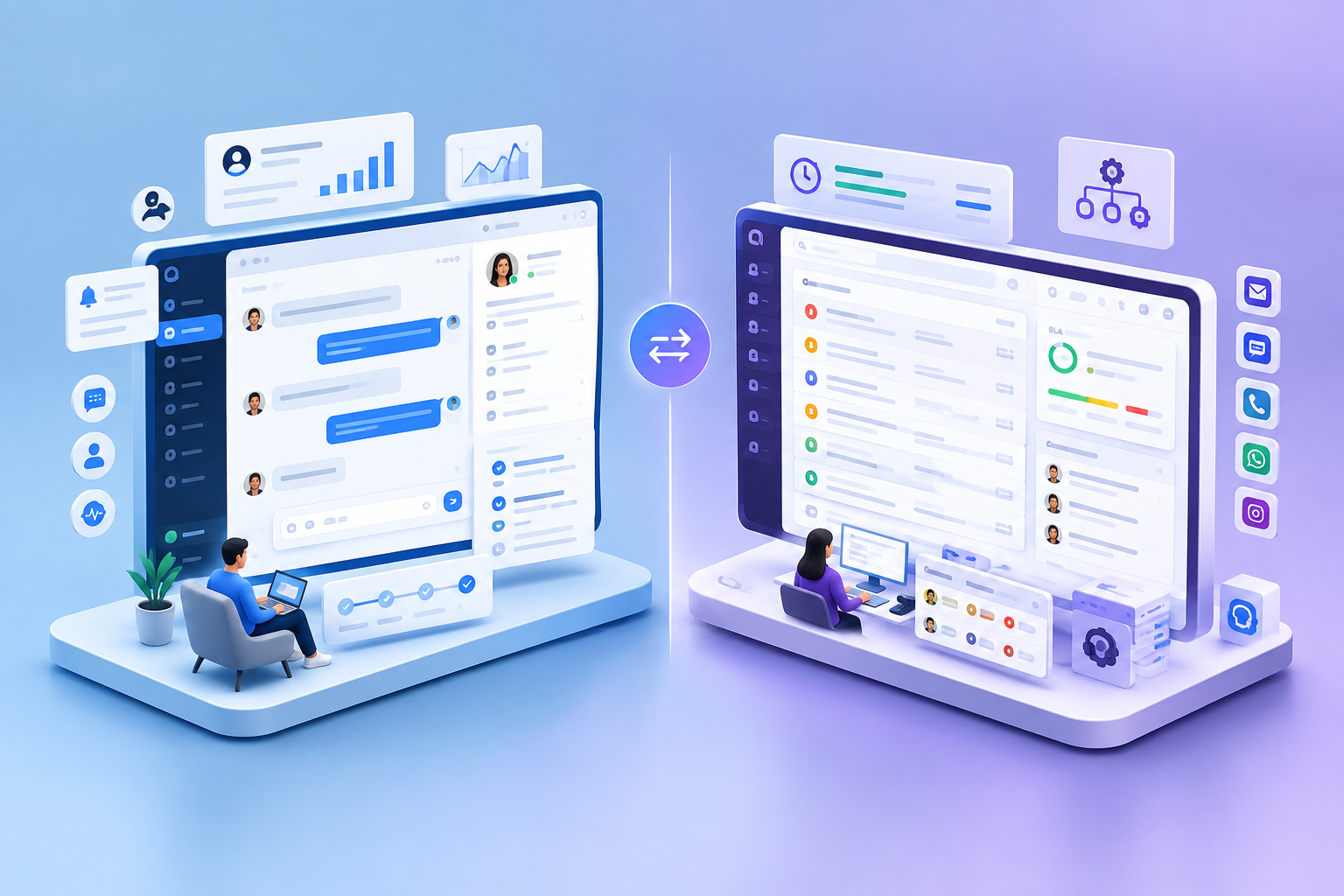
WorkOS vs Clerk: Best Auth Engine for Enterprise SaaS?

WorkOS is the clear winner for B2B SaaS teams selling to enterprise buyers who require SAML SSO, SCIM provisioning, and Fine-Grained Authorization. Clerk remains the top choice for developer experience when building self-serve, multi-tenant B2C or product-led B2B applications where client-side UI components and rapid iteration matter most.
Choosing an authentication engine for a B2B SaaS platform used to be simple: drop in a third-party login widget, store a JWT in HTTP-only cookies, and call it a day. But the moment your sales team lands its first mid-market or enterprise prospect, that basic setup collapses under the weight of procurement security questionnaires.
Enterprise security teams do not care how fast your login form renders. They care whether your platform connects to Okta via SAML 2.0, automatically de-provisions terminated employees through SCIM directory sync, streams security audit logs directly into their Splunk SIEM, and enforces relationship-based access controls.
Both WorkOS and Clerk have emerged as dominant authentication tools for modern software development, yet they were built with fundamentally different architectural visions. Let's look closely at how WorkOS and Clerk compare across enterprise security, developer experience, authorization models, and total cost of ownership.
The Fundamental Distinction: Auth Platform vs Enterprise Bridge
To pick the right engine, you must first understand the architectural intent behind each vendor.
Clerk was designed from day one to deliver the best developer experience for full-stack JavaScript and TypeScript applications. It provides drop-in React, Next.js, and Remix components (`
WorkOS, on the other hand, was built explicitly as an infrastructure bridge to turn standard software applications into enterprise-ready platforms. While WorkOS now offers a complete authentication system called AuthKit (powered by Radix UI and Tailwind), its core strength remains modular enterprise infrastructure. It abstracts away the complex, protocol-heavy plumbing of enterprise Identity Providers (IdPs) like PingIdentity, Microsoft Entra ID (Azure AD), and Okta. You can use WorkOS as your sole auth provider or plug WorkOS modules into your existing custom database.
| Architectural Dimension | WorkOS | Clerk |
|---|---|---|
| Core Philosophy | Enterprise-readiness modular infrastructure | Full-stack auth & session management |
| Primary Target Audience | B2B Enterprise SaaS applications | PLG Startups, B2C, & B2B SMBs |
| SSO Implementation | Native SAML / OIDC bridge with self-serve IT portals | Metered SAML/OIDC (Pro/Enterprise) |
| Directory Sync (SCIM) | First-class native support across 20+ IdPs | Not natively supported |
| Access Control | Native RBAC + Fine-Grained Authorization (FGA) | Basic Organization Roles & Permissions |
| UI Layer | AuthKit (Customizable, headless, or pre-built) | Unstyled/Styled drop-in React components |
| Free Tier Allowance | First 1,000,000 MAUs free for AuthKit | Up to 10,000 MAUs free |
Enterprise SSO and SAML 2.0: Where Deals Are Won
When an enterprise IT administrator tells your sales team, "We require Single Sign-On before signing this $50,000 contract," they mean SAML 2.0 or OIDC enterprise federation.
WorkOS: The Enterprise Standard
WorkOS treats enterprise SSO as a primary workflow, not a premium upsell. Integrating WorkOS Single Sign-On allows your app to hook into dozens of enterprise identity providers with a unified API structure.
What truly sets WorkOS apart for enterprise sales operations is the Admin Portal. Setting up SAML manually requires exchanging XML metadata, configuring ACS (Assertion Consumer Service) URLs, and mapping custom attributes between your app and the buyer's Okta or Azure AD instance. WorkOS eliminates engineering involvement in this process entirely:
- Your customer success team generates a magic link to the WorkOS Admin Portal for your buyer's IT department.
- The buyer's IT admin opens the self-serve link, selects their IdP (Okta, Entra ID, OneLogin, PingFederate), and follows step-by-step instructions.
- WorkOS verifies the domain, tests the SAML handshake, and activates the connection automatically.
This self-serve pipeline slashes enterprise onboarding times from weeks of back-and-forth emails to roughly ten minutes.
Clerk: Great for SMBs, Metered for Enterprise

Clerk supports SAML and OIDC enterprise connections through its Organization management tools. For applications serving mid-market accounts, Clerk's domain-based SSO (EASIE SSO) allows users with specific domain names (e.g., `@acme.com`) to be routed to custom SAML login flows.
However, Clerk's enterprise SSO capabilities have two distinct friction points:
- Pricing Escalation: Enterprise SSO connections on Clerk require upgrading to higher-tier plans, where connections are metered individually. If you have dozens of enterprise accounts, these add-ons can quickly cause your monthly bill to balloon.
- Lack of Self-Service IT Portals: Unlike WorkOS's dedicated Admin Portal, Clerk requires your customer support engineers or system administrators to assist in configuring identity provider metadata in the Clerk dashboard.
SCIM Directory Sync: The Unsung Enterprise Requirement
Single Sign-On solves authentication (who you are), but it does not solve user lifecycle management (who works at the company today).
When an employee leaves an enterprise client, their IT department revokes their identity in Okta. With SSO alone, that employee cannot log in again. However, their account, database records, API keys, and assigned seats remain active inside your SaaS app until someone manually removes them.
This is why enterprise procurement mandates SCIM (System for Cross-domain Identity Management) Directory Sync. SCIM listens to direct events from the enterprise identity provider to automatically provision new hires and instantly de-provision departed employees in real time.
- WorkOS includes full SCIM Directory Sync out of the box. It normalizes user profiles and directory trees across Microsoft Entra ID, Okta Workflows, Rippling, BambooHR, and JumpCloud. When a user is removed from human resources software, WorkOS sends a webhook to your system to clean up permissions immediately.
- Clerk does not natively offer full SCIM Directory Sync capabilities. If your enterprise customer requires automated SCIM user provisioning, you will either need to build custom webhooks or bolt on an external SCIM vendor alongside Clerk.
Authorization: RBAC vs. Zanzibar-Style Fine-Grained Authorization (FGA)
As SaaS platforms mature, access control requirements become significantly more granular. It is no longer enough to check if a user is an `Admin` or a `Member`.
Clerk's Organization and RBAC Model
Clerk provides a clear, highly polished Role-Based Access Control (RBAC) model out of the box. You can assign roles (`org:admin`, `org:member`) and define custom permissions inside the Clerk dashboard or directly in your code using SDK helpers like `
This works seamlessly for standard multi-tenant applications where permissions are static and scoped at the organization level. However, if your application needs deep contextual permissions—such as "Allow user X to edit Document Y only if they belong to Team Z and own the parent folder"—Clerk's flat RBAC structure requires you to write and maintain extensive custom authorization logic in your backend.
WorkOS FGA: ReBAC at Scale
WorkOS addresses complex authorization by offering native Fine-Grained Authorization (FGA) based on Google's Zanzibar paper.
WorkOS FGA allows developers to define Relationship-Based Access Control (ReBAC) policies using simple tuple declarations. Instead of querying custom database tables with nested SQL queries during every API request, you can ask WorkOS FGA a fast, low-latency question:
```json // Example: Checking permission via WorkOS FGA SDK const allowed = await workos.fga.check({ user: "User:usr_123", relation: "editor", resource: "Document:doc_456" }); ```
For enterprise SaaS platforms with hierarchical permissions, dynamic resource sharing, and folder-level access, WorkOS FGA provides infrastructure that would otherwise take engineering teams months to design and scale.
Developer Experience and UI Integration
While enterprise features favor WorkOS, developer experience (DX) for frontend engineers tells a much more nuanced story.
The Clerk Experience: Unmatched Frontend Speed
Clerk continues to set the benchmark for developer velocity in the JS/TS ecosystem. Installing Clerk in a Next.js App Router project takes under 10 minutes:
- Wrap your root layout in `
`. - Add middleware to enforce public and private routes.
- Drop in `
` and ` ` components.
Clerk handles modal dialogs, session persistence, token refreshes, profile image uploads, active device management, and multi-organization context switching seamlessly. Everything works instantly out of the box with zero custom CSS required.

The WorkOS Experience: Headless Flexibility and AuthKit
Historically, WorkOS was entirely headless, providing backend SDKs in Node, Python, Go, Ruby, and Java while leaving frontend UI design completely to the developer.
To bridge this gap, WorkOS launched AuthKit, an open-source UI authentication framework built on top of Radix UI. AuthKit offers beautiful, accessible sign-in and registration pages that support passkeys, magic links, social providers, and enterprise SSO.
While AuthKit is fast to deploy, WorkOS gives you the freedom to completely decouple the frontend. If you want to build custom, bespoke authentication forms directly inside your design system while using WorkOS solely as an API gateway for enterprise connections, you can do so without fighting against pre-styled iframe constraints.
Pricing Model Breakdown: MAU vs. Enterprise Connections
Understanding the real total cost of ownership (TCO) between WorkOS and Clerk requires analyzing how each platform meters usage as your application scales.
| Pricing Dimension | Clerk | WorkOS |
|---|---|---|
| Core Cost Drivers | Base subscription + MAUs + Metered enterprise SSO connections | Active enterprise SSO connections + Active SCIM directories + AuthKit usage tiers |
| Free Tier Allowance | Up to 10,000 MAUs and 100 Monthly Active Organizations | Up to 1,000,000 MAUs free for AuthKit |
| Paid Tier Structure | Starts at ~$25/month + volume charges per active user beyond 10,000 | Flat per-connection rates (e.g., ~$125/month per active SSO connection) |
Clerk Pricing Realities
Clerk operates primarily on a Monthly Active User (MAU) model:
- Free Tier: Up to 10,000 MAUs and 100 Monthly Active Organizations. Excellent for bootstrapped side projects and early product validation.
- Pro Tier: Starts at ~$25/month plus volume charges per active user as your base grows beyond 10,000.
- Enterprise Add-ons: Enabling enterprise features like SAML SSO requires moving to higher monthly tiers or paying add-on fees per SSO connection, which can cause costs to scale rapidly if you support many small enterprise teams.
If you build a product-led B2B app with 100,000 active free-tier end users, Clerk's MAU billing will represent a substantial monthly operational expense.
WorkOS Pricing Realities
WorkOS structures its pricing around corporate connections rather than punishing B2B apps for consumer-scale user counts:
- AuthKit (User Authentication): Remarkably generous free tier covering your first 1,000,000 MAUs for standard email/password, social logins, and passkeys.
- Enterprise Connections: WorkOS charges flat modular rates for enterprise features (e.g., ~$125 per active enterprise SSO connection per month, with volume discounts as connection counts scale).
This pricing structure aligns cleanly with B2B SaaS economics: you only pay for enterprise connections when you are actively monetizing those enterprise accounts with high-value contracts.
Security, Compliance, and Audit Logs
Enterprise procurement teams perform exhaustive compliance checks before approving software vendors.
- SOC 2 Type II & Compliance: Both WorkOS and Clerk maintain SOC 2 Type II certifications and comply with GDPR and CCPA standards. WorkOS holds ISO 27001 certification and offers HIPAA compliance support.
- Audit Logs: Enterprise customers often demand real-time audit trails of every administrative action, user login, and permission update. WorkOS offers an Audit Logs product out of the box, allowing you to embed structured, searchable audit event streams inside your app or forward them directly to customer SIEMs like Datadog, Splunk, or Panther. Clerk provides session activity logging inside its dashboard, but lacks an embeddable, enterprise-grade audit log stream.
When to Choose Clerk
Choose Clerk if your product meets these criteria:
- You are building a B2C application or PLG SaaS focused on self-serve tiers: Clerk's 10,000 free MAUs and polished drop-in components let you launch rapidly without designing login screens.
- You build primarily with Next.js, React, or Remix: Clerk's hooks, middleware integrations, and server-side utilities offer unmatched DX within the React ecosystem.
- Your customer base is predominantly self-serve SMBs: If your users log in with Google, GitHub, or standard email passwords and do not require corporate SAML SSO or SCIM directory sync, Clerk is easier to manage.
When to Choose WorkOS
Choose WorkOS if your product meets these criteria:
- You are an enterprise-focused B2B SaaS platform: If mid-market or enterprise buyers are asking for SAML 2.0, Okta/Azure AD integration, or SCIM provisioning, WorkOS is built specifically for your sales engine.
- You need a self-service IT portal: The WorkOS Admin Portal eliminates support overhead by allowing your customers' IT teams to configure their own IdP connections.
- You require Fine-Grained Authorization (FGA) or Audit Logs: If your platform manages complex permissions or needs to export audit event streams, WorkOS provides ready-to-use infrastructure.
- You want high MAU scale without per-user penalties: The 1,000,000 free MAU allowance on AuthKit ensures you never get penalized for organic user growth on free or low-tier plans.
Making the Decision for Your Architecture
The choice between WorkOS and Clerk comes down to who you are selling to and how your software makes money.
If you are scaling a product-led application where rapid frontend setup and effortless session management matter most, Clerk provides an outstanding developer experience. But if your revenue strategy depends on moving upmarket, closing high-ACV enterprise contracts, and satisfying strict security procurement requirements, WorkOS provides the dedicated enterprise infrastructure you need.
At Saasbonus, we help engineering leaders and SaaS founders evaluate developer tools, infrastructure platforms, and enterprise software stack choices with independent, hands-on benchmarks. Selecting the right authentication engine early prevents costly identity migrations down the road—allowing your team to focus on building your core product.