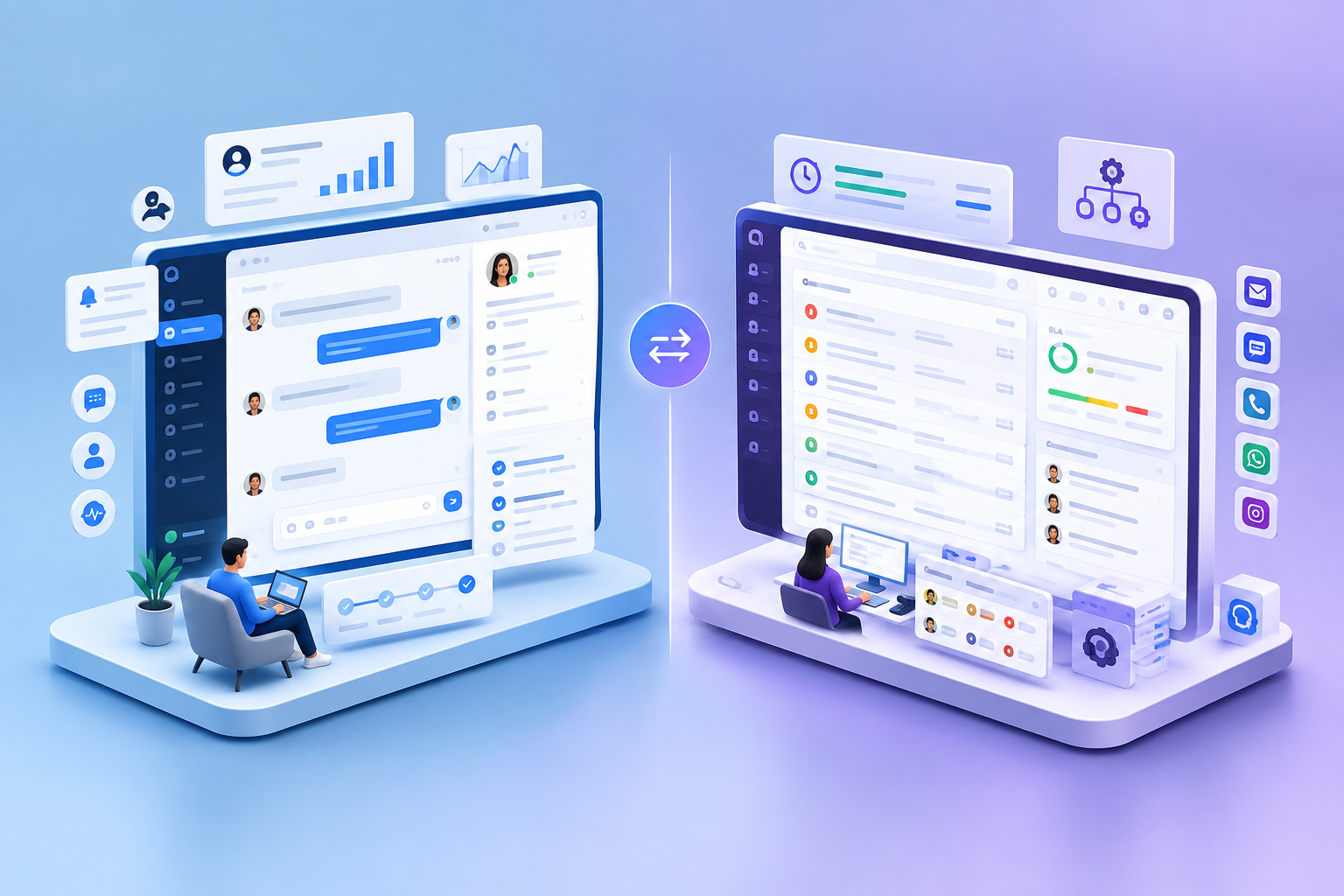
7 Best SaaS Contract Management Tools for 2026

SaaS contract management is about more than keeping signed PDFs in one place. The right system helps your team find every software agreement, understand the commercial terms, track notice periods, manage approvals, and make renewal decisions before another contract rolls over.
For most businesses, the best platform depends on who owns the process. Legal teams tend to need strong drafting, negotiation, approval, and clause-management workflows. Finance and procurement teams often care more about renewal visibility, software spend, vendor records, and license usage. IT and security teams need a reliable view of vendors, data obligations, and risk.
This guide compares seven SaaS contract management tools for 2026: Ironclad, SpotDraft, CloudEagle, Gatekeeper, Juro, Agiloft, and PandaDoc. They are not interchangeable, and there is no single winner for every organization. The right choice comes down to your contract volume, workflow complexity, internal ownership, integrations, and how much of your SaaS estate you want to manage beyond the legal document itself.
Quick Summary: The 7 Best SaaS Contract Management Tools
| Tool | Primary Focus | Best For | Standout Strength |
|---|---|---|---|
| Ironclad | Contract lifecycle management | Mid-market and enterprise legal teams | Flexible legal workflows and contract intelligence |
| SpotDraft | Contract creation and management | Fast-growing businesses and commercial legal teams | Streamlined drafting and negotiation workflows |
| CloudEagle | SaaS spend and contract operations | Finance, IT, and procurement teams | Linking SaaS discovery, usage, spend, and contracts |
| Gatekeeper | Vendor management and contracts | Procurement and vendor-risk teams | Supplier workflows and centralized vendor records |
| Juro | Browser-based contract workflows | Growing teams that value collaboration | Simple contract creation, negotiation, and execution |
| Agiloft | Configurable CLM | Complex enterprise environments | Extensive no-code workflow customization |
| PandaDoc | Document creation and e-signature | SMBs and revenue teams | Accessible document workflows and signing |
What Is SaaS Contract Management Software?
SaaS contract management software helps organizations manage the agreements behind their software subscriptions. Depending on the platform, that can include vendor contracts, order forms, statements of work, amendments, service-level agreements, data-processing agreements, renewal terms, and related supplier information.
Many platforms sit within the broader category of Contract Lifecycle Management, or CLM. A CLM system can support the full journey of a contract, from intake and drafting through negotiation, approval, signature, storage, renewal, and post-signature management.
A SaaS-focused approach adds another layer. Software agreements frequently contain seat limits, usage thresholds, tiered pricing, implementation fees, automatic renewal provisions, notice periods, service commitments, security requirements, and data-processing terms. Those details can affect both the legal relationship and the actual cost of running your technology stack.
A contract repository gives you a central place to find the documents. A stronger contract management process goes further by turning important terms into searchable, trackable information. For example, instead of opening a PDF to find the renewal date, a team member can search the repository or dashboard and see the relevant date alongside the vendor, contract value, owner, term, and notice period.
That distinction matters. Storing contracts is useful, but knowing what is in those contracts is what makes the system operationally valuable.
Why SaaS Contract Management Is Different
Software contracts have several characteristics that make them harder to manage than a simple document archive.
Renewal dates are not the whole story
A contract's expiration date and its cancellation deadline are often different. A SaaS agreement might end on December 31 but require written notice several weeks or months earlier to prevent automatic renewal.
That means a useful renewal workflow needs to track the notice period, not just the final day of the contract. It should also give the responsible owner enough time to review usage, negotiate pricing, obtain approvals, and send any required notice.
Pricing can change as usage changes
SaaS pricing is often tied to seats, usage, product tiers, transaction volume, storage, or other consumption measures. A contract that looked reasonable when it was signed may no longer match how the business uses the product.
A good review process therefore compares contractual entitlements with actual usage where reliable usage data is available. That can reveal unused seats, plans that have become too large, or products that overlap with another tool already in the stack.
Software purchases can happen outside procurement
Teams can adopt software through formal procurement, but smaller purchases may also begin with a department request, a corporate card, or a direct sales conversation. If those purchases never enter a central system, finance and IT can lose visibility into the vendor relationship.
This is one reason SaaS contract management often overlaps with SaaS management and procurement. The contract is only one part of the vendor record.
Security and data terms matter after signature
A software agreement may include commitments around security, privacy, data processing, service levels, support, or breach notification. Those terms can be relevant long after the contract is signed.
A contract platform won't replace a security or compliance program, but it can give those teams a reliable place to find the obligations and documents associated with a vendor.
The 7 Best SaaS Contract Management Tools for 2026
1. Ironclad: Best for Legal-Led Contract Lifecycle Management
Ironclad is a strong choice for organizations where legal owns or heavily influences the contract lifecycle. Rather than treating contracts as documents that are simply stored after signature, the platform is designed around workflows for creating, reviewing, approving, signing, and managing agreements.
Its appeal is particularly clear when a company has multiple contract types, approval paths, stakeholders, and business systems. Legal teams can build structured processes around contract requests and standardize how agreements move through review.
Key capabilities:
- Contract workflows: Configure intake and approval processes around different contract types and business requirements.
- AI-assisted contract work: Use AI capabilities to help teams analyze agreements and find relevant contract information.
- Central repository: Store executed agreements in a searchable environment rather than leaving them scattered across folders and inboxes.
- Integrations: Connect contract workflows with other business systems so teams can reduce manual handoffs.
Where it shines: Ironclad is well suited to mid-market and enterprise legal teams that need more than basic renewal reminders. It makes the most sense when contract intake, approvals, negotiation, and post-signature visibility are all important.
Where it falls short: A sophisticated CLM can be more platform than a small company needs. If your primary requirement is simply to store SaaS contracts and receive renewal reminders, a broader legal workflow platform may require more implementation and administration than necessary.

2. SpotDraft: Best for Fast-Moving Contract Teams
SpotDraft is designed around making contract work faster for legal and business teams. It combines contract creation, collaboration, negotiation, approvals, execution, and repository capabilities in one environment.
The platform is particularly relevant to companies that want legal to stay closely connected to sales, procurement, and other teams requesting contracts. Structured intake and workflow automation can reduce the back-and-forth that otherwise happens through email and informal requests.
Key capabilities:
- Contract creation and editing: Support structured drafting and collaboration across contract workflows.
- AI-assisted review: Help identify relevant terms and potential deviations from preferred language during review.
- Contract intake: Give business teams a defined process for requesting legal or contract support.
- Repository: Maintain searchable records of executed agreements and associated information.
Where it shines: SpotDraft is a good fit for growing businesses that need a modern contract process without making legal the bottleneck for every commercial agreement.
Where it falls short: Organizations with highly specialized enterprise requirements should test the platform against their actual approval structures, data model, integrations, and reporting needs before committing. A fast workflow is useful only if it can accommodate the governance your business actually requires.
3. CloudEagle: Best for SaaS Spend, Discovery, and Renewal Management
CloudEagle takes a different route from a traditional legal-first CLM. Its focus is closely tied to SaaS management, software spend, vendor management, and contract visibility.
That makes it especially relevant when the question is not simply, "Where is the contract?" but also, "What are we paying for, who is using it, and what happens when this agreement renews?"
CloudEagle can connect SaaS discovery and usage information with contract and spend data, giving finance, IT, and procurement teams a broader view of the software estate. This can be useful when organizations have grown quickly and accumulated subscriptions across multiple departments.
Key capabilities:
- Contract management: Centralize software agreements and surface important commercial and renewal information.
- SaaS discovery: Help identify software used across the organization through connected systems and spend data.
- Renewal management: Track upcoming renewals and create workflows around review and action deadlines.
- Usage and spend visibility: Compare available software and license information with usage data where integrations support it.
Where it shines: CloudEagle is a strong candidate for finance, IT, and procurement teams that want contract management tied closely to SaaS spend and software operations.
Where it falls short: If your primary problem is sophisticated legal drafting, clause negotiation, or highly customized legal workflows, a dedicated CLM may be a better starting point. CloudEagle's value is strongest when SaaS operations and financial visibility are central to the buying decision.
4. Gatekeeper: Best for Vendor Management and Procurement
Gatekeeper approaches contract management through the broader vendor relationship. That makes it useful for procurement teams that need to manage suppliers, contracts, approvals, and vendor information together rather than treating the agreement as an isolated file.
For SaaS buyers, this broader context can be important. A software vendor may have a signed agreement, security documentation, renewal terms, service commitments, and internal stakeholders spread across several departments. Keeping those records connected can make vendor reviews easier to manage.
Key capabilities:
- Vendor management: Maintain structured information about suppliers alongside their contracts.
- Contract workflows: Route requests, reviews, approvals, and renewals through defined processes.
- Vendor portals: Give suppliers a controlled way to provide requested information or documentation.
- Risk and compliance tracking: Help procurement teams organize vendor-related requirements and supporting records.
Where it shines: Gatekeeper is a natural fit for procurement-led organizations where vendor governance and contract management need to work together.
Where it falls short: Teams primarily looking for a lightweight contract repository may find its broader vendor-management approach unnecessary. Evaluate the user experience with both procurement specialists and occasional business users before choosing it.
5. Juro: Best for Browser-Based Contract Collaboration
Juro focuses on making contract work accessible inside the browser. Its approach is well suited to teams that want to create, negotiate, approve, sign, and store agreements without relying on a collection of disconnected tools.
The browser-based experience can be particularly attractive for business teams that participate in contract processes but don't work in legal software every day. A straightforward interface can improve adoption because users don't have to learn a complex system just to submit or review a routine agreement.
Key capabilities:
- Browser-based editor: Create and manage contracts in a collaborative online environment.
- Real-time collaboration: Bring internal and external participants into the same contract workflow.
- Approval and signing workflows: Move agreements from drafting through execution with structured steps.
- Central repository: Keep signed agreements and associated contract information organized for later retrieval.
Where it shines: Juro is a strong option for growing companies that value ease of use and want business teams to participate directly in contract workflows.
Where it falls short: Companies with highly specialized document formats, complex legacy processes, or extensive Word-based negotiation requirements should test representative contracts during evaluation. Browser-first workflows are not automatically better for every legal team.
6. Agiloft: Best for Complex Enterprise Requirements
Agiloft stands out when contract management needs to fit an organization's existing processes rather than forcing the organization into a simple predefined workflow.
Its no-code approach gives administrators significant control over fields, workflows, permissions, rules, and reporting. That flexibility can be valuable for large organizations with multiple business units, entities, contract types, approval rules, and integration requirements.
The trade-off is straightforward: flexibility comes with administration. A highly configurable platform needs someone to own the configuration, governance, testing, and ongoing maintenance.
Key capabilities:
- No-code configuration: Customize workflows, fields, rules, permissions, and reports without building a bespoke application from scratch.
- Contract lifecycle management: Support contract processes from request and drafting through approval, signature, and ongoing management.
- Clause and template management: Help teams standardize commonly used contractual language and documents.
- Enterprise integrations: Connect contract data and workflows with other business applications where supported.
Where it shines: Agiloft makes sense for enterprises with complex requirements that would overwhelm a lightweight contract management system.
Where it falls short: Smaller organizations may not need its level of configurability. Before buying, estimate the administrative work required to design and maintain the system rather than evaluating only the feature list.
7. PandaDoc: Best for Straightforward Document Workflows and SMBs
PandaDoc is better known for document creation and electronic signatures than for deep enterprise CLM. That distinction matters. It can be a practical choice when a small or growing team primarily needs to create, send, sign, track, and store standard agreements without introducing a complex CLM program.
For SaaS businesses with relatively straightforward vendor or commercial documents, an accessible document workflow can cover the basics. Teams can use templates to standardize documents, collect signatures, and maintain a digital record of completed agreements.
Key capabilities:
- Document templates: Standardize frequently used agreements and reduce repetitive document preparation.
- Electronic signatures: Handle signing within the same broader document workflow.
- Document tracking: Monitor document status and maintain records of completed documents.
- Collaboration: Give internal stakeholders a shared process for preparing and reviewing documents.
Where it shines: PandaDoc is a sensible option for smaller teams that need document execution and basic contract organization without the cost or administration of a full enterprise CLM deployment.
Where it falls short: Organizations that need sophisticated clause analysis, vendor-risk management, complex approval structures, or detailed SaaS spend optimization should look at dedicated CLM or SaaS management platforms instead.
SaaS Contract Management Software Compared
The best tool changes depending on the problem you're trying to solve. A legal department replacing email-based contract approvals has different requirements from a procurement team trying to understand hundreds of software renewals.
| If your priority is... | Start by evaluating... | Why |
|---|---|---|
| Legal workflow automation | Ironclad or SpotDraft | Strong focus on intake, review, approval, and contract lifecycle processes |
| SaaS spend and renewal visibility | CloudEagle | Connects contract management with SaaS discovery, usage, and spend operations |
| Vendor management | Gatekeeper | Treats contracts as part of the broader supplier relationship |
| Easy browser-based collaboration | Juro | Designed around accessible contract creation and collaboration |
| Deep enterprise customization | Agiloft | Offers extensive workflow and data configuration options |
| Simple document execution | PandaDoc | Stronger fit for straightforward document and signing workflows |

This comparison also explains why searches such as "Ironclad vs SpotDraft" or "CloudEagle vs Gatekeeper" don't have a universal answer. The better platform is the one that matches your operating model, not necessarily the one with the longest feature list.
How to Choose the Right SaaS Contract Management Tool
A successful implementation starts before the software demo. Define the problem, map the current process, and decide what information needs to be reliable after the contracts are loaded.
1. Decide who owns the process
Start with the team responsible for keeping the system accurate. Legal, procurement, finance, and IT can all be involved, but one group should own the operating process.
If legal owns the workflow, prioritize drafting, negotiation, approvals, clause management, and repository capabilities. If procurement owns it, vendor records, intake, renewal workflows, and supplier governance may carry more weight. If finance or IT owns the initiative, SaaS discovery, spend visibility, usage information, and renewal planning may be more important.
2. Build an inventory of existing agreements
Before comparing platforms, find out what you're actually managing. Collect current SaaS contracts, order forms, amendments, statements of work, data-processing agreements, and related documents.
Pay particular attention to agreements stored in individual inboxes, shared drives, procurement folders, and local files. Your contract repository will only be as useful as the information that makes it into the system.
3. Map the current intake and approval process
Write down what happens when an employee wants to buy a new SaaS product. Who approves the purchase? Who reviews security? Who negotiates the contract? Who records the vendor? Who receives the renewal notice?
Then look for gaps. If the answers depend on knowing the right person or searching through old email threads, that is a workflow problem the new system should address.
4. Test contract extraction with real documents
AI-assisted extraction can save substantial manual work, but don't judge it using only polished sample contracts supplied during a sales demonstration.
Give vendors representative documents from your own environment, including older PDFs, amendments, order forms, and agreements with unusual formatting. Check whether the system correctly identifies the vendor, effective date, term, renewal provisions, notice period, contract value, and other fields that matter to your process.
The goal isn't to ask whether an AI feature sounds impressive. The useful question is whether the extracted information is reliable enough for your team to act on.
5. Check integrations before signing
Contract management rarely operates in isolation. Depending on your process, the platform may need to connect with identity systems, finance applications, CRM software, collaboration tools, procurement systems, or security platforms.
Ask vendors exactly what each integration supports. A connection that imports basic records is not equivalent to a two-way workflow integration. Confirm the data exchanged, update frequency, authentication method, and administrative requirements.
What to Track in a SaaS Contract Repository
A useful SaaS contract repository should capture more than the document itself. The exact fields depend on your organization, but a practical record often includes:
| Contract field | Why it matters |
|---|---|
| Vendor name | Identifies the supplier and supports reporting across agreements |
| Contract owner | Establishes who is responsible for review and renewal decisions |
| Effective date | Shows when the current term begins |
| Expiration date | Identifies when the current term ends |
| Renewal date or term | Helps determine when the next commercial decision is due |
| Notice period | Determines the deadline for cancellation or non-renewal |
| Contract value | Supports budgeting and spend analysis |
| Seat or usage commitment | Provides a baseline for usage and license reviews |
| Pricing terms | Helps teams understand increases, tiers, and commercial changes |
| Payment terms | Supports finance and procurement reviews |
| SLA commitments | Gives operational teams access to service obligations |
| Data-processing terms | Helps privacy and security teams locate relevant obligations |
| Supporting documents | Keeps amendments, order forms, and related records connected |
The goal is not to capture every possible field. Capture the information your teams actually use to make decisions.
Common Mistakes to Avoid
Treating the repository as a one-time migration
Uploading a backlog of contracts is not the end of contract management. If new agreements continue to arrive through unmanaged channels, the repository will become incomplete again.
Create a standard intake process for new software purchases and define who is responsible for entering or approving contract records. The process should be simple enough that employees will actually use it.
Tracking expiration dates but not notice deadlines
This is one of the easiest mistakes to make. A December 31 expiration date does not tell you when the business must provide notice of non-renewal.
Track both dates and give the owner enough lead time to investigate usage, negotiate changes, obtain approvals, and send formal notice when required.
Assuming every renewal deserves the same treatment
A low-cost, widely used tool may need only a straightforward renewal check. A major platform with a large annual commitment, sensitive data, or difficult exit process deserves a much earlier review.
Use contract value, business criticality, data sensitivity, usage, and negotiation complexity to determine how much attention each renewal receives.
Ignoring actual software usage
A contract may say the organization has 200 seats, but that doesn't mean all 200 are being used. Where reliable usage information is available, review it before renewing or expanding a subscription.
Usage data shouldn't be treated as the sole basis for a renewal decision. Some applications are important even when login frequency is low. The point is to give procurement and business owners evidence for the discussion.
Keeping legal, finance, procurement, and IT in separate silos
Each team sees a different part of the vendor relationship. Legal cares about contractual obligations and risk. Finance cares about cost and payment commitments. Procurement cares about commercial terms and suppliers. IT and security care about technology, access, usage, and risk.
A shared system doesn't eliminate those responsibilities. It gives each team access to the information it needs without forcing everyone to maintain a separate spreadsheet.
A Practical SaaS Renewal Process
Once contracts are centralized, create a repeatable renewal process rather than relying on individual reminders.
- Identify the upcoming renewal: Confirm the contract, owner, current term, and notice deadline.
- Review usage: Compare current usage or business adoption with the contracted quantity where reliable data is available.
- Confirm business need: Ask the owning team whether the software remains necessary and whether another product already covers the same requirement.
- Review commercial terms: Check current pricing, increases, minimum commitments, discounts, and proposed changes.
- Review risk and obligations: Confirm whether security, privacy, service levels, or other contractual requirements need attention.
- Negotiate if needed: Give procurement or the responsible commercial owner enough time to negotiate before the notice deadline.
- Approve the decision: Record whether the business will renew, reduce, replace, or cancel the service.
- Update the repository: Store the new agreement or amendment and update the relevant dates, values, owners, and commitments.
This process is simple by design. The software should make it easier to follow, not turn a straightforward renewal into a complicated administrative exercise.
Questions to Ask During a Vendor Demo
Feature lists rarely tell you whether a contract platform will work in your environment. Use the demo to test your actual process.
Ask the vendor:
- How does a new SaaS purchase enter the system?
- Can different contract types follow different approval workflows?
- How are renewal notice periods stored and monitored?
- Can the system distinguish expiration dates from cancellation deadlines?
- How does contract extraction handle scanned or poorly formatted documents?
- Can users review and correct extracted metadata before it becomes part of the record?
- How are amendments and order forms connected to the main agreement?
- What happens when a contract is renewed or replaced?
- Which integrations are included, and which require additional configuration or fees?
- Can finance, procurement, IT, and legal have different permissions?
- How are audit trails maintained?
- What reporting is available for upcoming renewals and contract values?
- How much administrative work is required after implementation?
Bring several real contracts to the evaluation. A platform that performs well on your difficult documents is more meaningful than one that looks polished in a generic demo.
Final Takeaways
The best SaaS contract management tool is the one that fits the way your organization actually buys, reviews, uses, and renews software.
Choose Ironclad or SpotDraft when legal-led contract workflows are the main priority. Consider CloudEagle when SaaS spend, discovery, usage, and renewal management need to sit closely together. Gatekeeper is worth evaluating when vendor management and procurement governance are central. Juro is a strong candidate for teams that value browser-based collaboration, while Agiloft is better suited to organizations that need extensive configuration. PandaDoc can make sense for smaller teams focused on straightforward document creation and signing.
Before buying, define your contract inventory, renewal process, owners, required integrations, and reporting needs. Then test the shortlisted platforms using real agreements and real workflows.
The objective isn't to collect another software system. It's to make sure your team knows what it has signed, when it can act, who owns the decision, and what happens next.